Introduction/Overview
In the field of natural product chemistry and pharmacology research, compounds derived from hops (Humulus lupulus L.) have attracted much attention due to their unique biological activity. Hops are not only a key source of flavor and bitterness in brewing beer, but also have a long history of application as a traditional herb. Among the numerous bioactive secondary metabolites in hops, bitter acid compounds occupy a central position. Hovenic acid (CAS: 1891-42-5), as the main oxidation product of alpha acid during storage, processing, or brewing, has gradually emerged from its simple role as a "degradation product" in recent years. Its potential biological activity, especially in the field of anti-inflammatory effects, is becoming an emerging research hotspot. Inflammation is the basic defense response of the body to injury or infection, but its excess or chronicity is the common pathological basis of major diseases such as rheumatoid arthritis, atherosclerosis, neurodegenerative diseases and a variety of cancers. Therefore, finding efficient and low toxicity new anti-inflammatory drugs has always been one of the core directions of drug development. The purpose of this article is to systematically review the chemical properties, plant sources, pharmacological activities, especially the multi-target anti-inflammatory mechanism of hop acid, and to scientifically evaluate and prospect its pharmacological properties and clinical application prospects, in order to provide theoretical references for the in-depth development of this compound.
Chemical structure and physicochemical properties
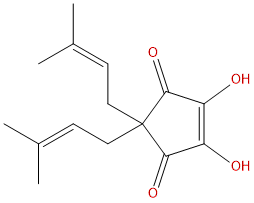
Hops acid, chemical name (4R) -4-hydroxy-3- (3-methyl-2-buten-1-yl) -4- (4-methyl-3-penten-1-yl) -1 (4H) - naphthone, molecular formula C16H24O3, molecular weight 264.3210 g/mol. Its structure can be regarded as a partially hydrogenated naphthalene ring skeleton, with isoprene side chains connected to it, and containing one ketone group and one hydroxyl group. It belongs to the sesquiterpene derivatives of terpenes. This structure is formed by a series of complex reactions, such as oxidation and rearrangement, of primitive alpha acids (such as humulone and coumarin) in hops under conditions of light exposure, heating, or long-term storage.
From the analysis of physicochemical parameters related to drug properties, the lipid water partition coefficient (LogP) of hops acid is 2.4804, indicating its moderate lipophilicity, which is conducive to transmembrane transport and absorption. Its topological polar surface area (TPSA) is 74.6000 Å ², which is relatively moderate and suggests that it may have some oral bioavailability. The water solubility parameter is 0.4551 mg/mL, which belongs to the category of slightly soluble to poorly soluble. This may to some extent limit its dispersion and absorption in aqueous media, which is a problem that needs to be considered in formulation development. Moderate molecular weight, meeting the basic requirements of the five rules for generic drugs. Overall, hop acid has the basic physicochemical characteristics as a lead compound, but its solubility is one of the key parameters that needs to be optimized.
Plant sources and extraction methods
Hops acid is not a native compound in hop plants, but rather a product of the oxidative transformation of its signature component - alpha acid (also known as humulone compounds). Humulus lupulus L. is a perennial climbing herbaceous plant in the family Cannabis, belonging to the genus Humulus. Its female flower inflorescence (commonly known as "hop cones") is rich in resin, with alpha acid being the main bitter and antibacterial component.
The generation of hop acid mainly occurs in two stages: firstly, during the drying and storage process of hop raw materials after harvesting, especially under improper storage conditions such as high temperature, high humidity, and light, alpha acid will gradually oxidize and degrade; Secondly, during the beer brewing process, the high temperature during the wort boiling stage promotes the isomerization of alpha acids to isoalpha acids (giving beer a bitter taste), while some alpha acids and isoalpha acids are further oxidized to produce various oxidative derivatives including hop acids. Therefore, aged hops, waste hops from beer brewing, or specific oxidation products are the main sources of raw materials for obtaining hop acid.
The extraction and separation of hop acid usually use organic solvent extraction combined with chromatographic separation technology. The common process is as follows: Firstly, the hops raw material (or hop extract) rich in oxidation products is leached or Soxhlet extracted with a moderately polar organic solvent (such as dichloromethane, ethyl acetate, or acetone) to obtain the crude extract. Subsequently, preliminary separation was performed using silica gel column chromatography, with gradient elution using different ratios of petroleum ether ethyl acetate or n-hexane ethyl acetate mixed solvents. Due to the similar polarity of hop acid and its analogues, further purification using high-performance liquid chromatography (HPLC) or preparative thin layer chromatography (PTLC) is often necessary to obtain high-purity monomer compounds. Modern analytical techniques such as liquid chromatography-mass spectrometry (LC-MS) and nuclear magnetic resonance (NMR) are key means for identifying the structure and purity of hop acids.
Pharmacological activity research
Numerous in vitro and in vivo pharmacological studies have shown that the core biological activity of hops acid is concentrated in the anti-inflammatory field and exhibits multi-target and multi pathway characteristics.
1. In vitro anti-inflammatory activity:
In various models of cellular inflammation, hop acid has shown significant inhibitory effects. For example, in the lipopolysaccharide (LPS) - induced mouse macrophage (RAW 264.7) inflammation model, hop acid can dose dependently inhibit the excessive production of nitric oxide (NO) and prostaglandin E2 (PGE2), which are key factors in acute inflammatory response. Meanwhile, it can effectively downregulate the mRNA and protein expression levels of various pro-inflammatory cytokines (such as TNF - α, IL-6, IL-1 β). Hops acid also exhibits similar anti-inflammatory effects in the inflammatory response of human peripheral blood mononuclear cells (PBMCs) induced by carrageenan or LPS.
2. In vivo anti-inflammatory and analgesic activity:
Animal experiments have confirmed the effectiveness of hops acid at the overall animal level. In the mouse ear xylene induced inflammation model, rat carrageenan induced paw swelling model, and cotton ball induced chronic inflammation model, oral or intraperitoneal administration of hops acid can significantly reduce tissue edema and inflammatory proliferation. Its anti-inflammatory effect is comparable or slightly weaker than the positive control drugs indomethacin or dexamethasone, but shows a trend towards better safety. In addition, hop acid showed clear analgesic effects in the second phase (inflammatory pain) of acetic acid-induced mouse torsion and formalin experiments, suggesting that its analgesic effect is closely related to the anti-inflammatory mechanism.
3. Other potential activities:
In addition to its core anti-inflammatory effect, preliminary studies also suggest that hop acid may have antioxidant activity, which can clear free radicals and alleviate oxidative stress. Oxidative stress and inflammatory processes often promote each other. In addition, there are sporadic reports of its inhibitory activity on the proliferation of certain tumor cell lines, but this may be indirectly related to its anti-inflammatory properties and further research is needed.
Mechanism of action and molecular targets
The anti-inflammatory effect of hops acid is not achieved through a single target, but through regulating a complex inflammatory signaling network. Its targets involve multiple levels such as transcription factors, enzymes, ion channels, and cytokines, as follows:
1. Inhibit the nuclear transcription factor kappa B (NF - κ B) signaling pathway:
NF - κ B is a core transcription factor that regulates the expression of numerous pro-inflammatory genes. Research has shown that hop acid can inhibit the phosphorylation and degradation of I κ B α, thereby preventing the translocation of NF - κ B p65 subunit to the nucleus. This directly leads to the inhibition of transcription of a series of pro-inflammatory mediator genes downstream, including TNF-α、IL-6、IL-1β、 Inducible nitric oxide synthase (iNOS/NOS2) and cyclooxygenase-2 (COX-2/PTGS2)This is one of the core mechanisms by which it exerts broad-spectrum anti-inflammatory effects.
2. Regulating the STAT3 signaling pathway:
Signal transducer and activator of transcription factor 3 (STAT3) is another important pro-inflammatory and pro survival signaling pathway closely associated with chronic inflammation and cancer. Hops acid has been shown to inhibit STAT3 phosphorylation (activation) induced by cytokines such as IL-6, block its dimerization and nuclear translocation, and thus suppress the expression of inflammatory genes driven by STAT3.
3. Inhibit inflammasome activation:
The assembly and activation of inflammasomes (such as NLRP3) are key steps leading to the mature release of IL-1 β and IL-18. Research suggests that hop acid may inhibit Caspase-1 (CASP1) To block the signal transduction of inflammatory bodies and reduce the secretion of mature IL-1 β, which has potential significance in the treatment of gout, type 2 diabetes and other diseases related to the over activation of inflammatory bodies.
4. Regulating cyclooxygenase (COX) activity:
Cyclooxygenase is the rate limiting enzyme for prostaglandin synthesis. Hops acid COX-2(PTGS2) The expression of [substance] has an inhibitory effect (through pathways such as NF - κ B), and studies have also shown that it has an effect on [substance]COX-1(PTGS1) The activity of COX-1/COX-2 is directly inhibited to a certain extent, and this dual regulation may contribute to its anti-inflammatory and analgesic effects, and may have gastrointestinal side effect characteristics different from traditional nonsteroidal anti-inflammatory drugs (NSAIDs).
5. Acting on transient receptor potential (TRP) channels:
Transient receptor potential vanillic acid subtype 1 (TRPV1) and transient receptor potential anchor protein subtype 1 (TRPA1) are key ion channels that sense nociceptive stimuli (such as heat and chemicals) and mediate inflammatory pain. Hops acid has been found to be a regulator (possibly an antagonist) of TRPV1 and TRPA1 channels. By blocking the activation of these channels, it reduces calcium ion influx and subsequent release of neuropeptides (such as substance P), thereby directly producing peripheral analgesic effects and indirectly alleviating neurogenic inflammation.
6. Inhibition of inducible nitric oxide synthase (iNOS/NOS2):
As mentioned earlier, hop acid inhibits pathways such as NF - κ B, downregulates iNOS expression, reduces excessive NO production under inflammatory conditions, and thus alleviates NO mediated vasodilation, tissue damage, and pain sensitization.
In summary, hop acid acts simultaneously on NFKB1, STAT3, CASP1, PTGS1/2, TRPV1, TRPA1, NOS2, as well as cytokines TNF and IL-6 By targeting multiple key targets, a synergistic anti-inflammatory network has been formed, which may be the molecular basis for its excellent anti-inflammatory efficacy and is also in line with the trend of modern multi-target drug development.
Evaluation of drug properties and pharmacokinetics
Based on the provided pharmacological parameters and existing research, the preliminary evaluation of the pharmacological properties of hops acid is as follows:
Advantage:
1. Good security potential: The Ames test result is 0.0, indicating that it has no mutagenicity and low genetic toxicity risk. HERG inhibition is' no ', indicating a low likelihood of inducing QT interval prolongation in the heart (a serious risk of arrhythmia), which is an important positive signal for drug cardiac safety.
2. Comply with the basic rules of drug properties: The molecular weight (264.3) is moderate, LogP (2.48) is within the ideal range (1-3), and TPSA (74.6) does not exceed the common limit of 140 Å ². These parameters suggest that it may have good membrane permeability and oral absorption potential.
3. Multi target effect: As mentioned earlier, its multi-target anti-inflammatory mechanism may bring synergistic therapeutic effects and may reduce side effects caused by excessive inhibition of single targets.
Challenges and unknowns:
1. Poor water solubility: The low water solubility (0.4551 mg/mL) may affect the dissolution and bioavailability of its oral formulation, and may also pose difficulties for the development of injectable formulations. Improvements need to be made through formulation techniques, such as the production of cyclodextrin inclusion complexes, nanocrystals, liposomes, or prodrugs.
2. Low blood-brain barrier permeability: The parameters show that its blood-brain barrier (BBB) permeability is low. This is an unfavorable factor for treating central nervous system (CNS) inflammatory diseases such as meningitis and neurodegenerative diseases, but for anti-inflammatory and analgesic drugs that mainly act on the peripheral system, it may actually reduce central nervous system side effects such as drowsiness and dizziness.
3. Lack of pharmacokinetic (PK) data: At present, there are very few reports on pharmacokinetic studies of the hop acid system (such as absorption, distribution, metabolism, excretion, ADME). The key PK parameters such as oral bioavailability, plasma protein binding rate, major metabolic organs, metabolites, and elimination half-life are still blank. This is the core research gap that must be filled in the process of transforming active compounds into candidate drugs. The hydroxyl and ketone groups in its structure may be sites for II phase binding reactions such as glucuronidation and sulfation.
4. Potential toxicity: Despite positive Ames and hERG data, comprehensive preclinical toxicological evaluations (such as acute toxicity, subchronic toxicity, reproductive toxicity, etc.) have not been systematically reported.
Clinical application prospects and prospects
Hops acid, as a natural product with clear multi-target anti-inflammatory activity, has promising clinical application prospects, but the road ahead is long.
Potential application directions:
1. Chronic inflammatory diseases: Based on its inhibitory effects on NF - κ B, COX-2, and cytokines, it can be considered for the development of treatments for rheumatoid arthritis, osteoarthritis, inflammatory bowel disease (such as ulcerative colitis), etc.
2. Inflammatory pain management: It has a dual effect of inhibiting inflammatory mediators and blocking pain receptors (TRPV1/TRPA1), making it a promising new analgesic for the treatment of postoperative pain, neuropathic pain, migraine, and other conditions.
3. Application of Dermatology: Topical preparations may be used to treat skin inflammatory diseases such as eczema, psoriasis, and contact dermatitis, and their poor BBB permeability is not a problem in this scenario.
4. As a lead compound for structural optimization: Due to its poor water solubility and low BBB permeability, medicinal chemists can modify its structure and synthesize a series of derivatives or analogues in order to improve its pharmacokinetic properties and targeting while retaining or enhancing its activity.
Future research prospects:
1. In depth mechanism research: It is necessary to validate its efficacy in more disease-related models, such as animal models of autoimmune diseases, and use techniques such as molecular docking and surface plasmon resonance (SPR) to clarify its direct interaction sites and patterns with various targets, such as STAT3 and CASP1.
2. Systematic pharmacokinetics and toxicology research: It is necessary to carry out systematic ADME research and comprehensive preclinical toxicology evaluation as soon as possible, which is the cornerstone for promoting its entry into the drug development process.
3. Pharmaceutical research: Actively exploring new drug delivery systems targeting low water solubility, such as solid dispersions, self microemulsions, etc., to improve their bioavailability.
4. Exploring synergies: Studying the combined effects of hops acid and existing anti-inflammatory drugs (such as NSAIDs and biologics) may lead to the discovery of enhanced efficacy and reduced toxicity strategies.
5. Pay attention to its dual identity as a "natural source" and "oxidized product": It is necessary to clarify its content and safety in beer or related foods, and evaluate its potential as a functional food ingredient or dietary supplement.
Conclusion
Hops acid, a natural compound that has been "reborn" from traditional brewing by-products, is increasingly highlighting its value in modern pharmacological research due to its unique multi-target anti-inflammatory mechanism. It exhibits significant anti-inflammatory and analgesic potential by synergistically regulating multiple key inflammatory nodes such as NF - κ B, STAT3, inflammasomes, COX enzymes, and TRP channels. Although it has demonstrated a good safety starting point (no mutagenicity, no hERG inhibition) and basic drug like properties in terms of drug development, challenges such as poor water solubility, low blood-brain barrier permeability, and missing key pharmacokinetic data cannot be ignored. Future research needs to continue to focus on deepening the mechanism of action, improving pharmacokinetic and toxicological evaluations, and developing innovative formulations. The research on hops acid not only provides valuable lead compounds for the development of new anti-inflammatory drugs, but also demonstrates the enormous potential of extracting bioactive molecules from traditional resources (even their "degradation products"), making it a vivid example of the combination of natural product chemistry and innovative drug research.