Introduction/Overview
Allergic diseases and neurodegenerative diseases are two major disease lineages that seriously endanger human health. Their pathogenesis is complex, and existing therapeutic drugs often have limited efficacy or significant side effects. Therefore, searching for lead compounds with novel structures, unique activities, and high safety from natural products has always been an important direction in drug development. Gymconopin C (CAS number: 844493-85-2), as a natural compound isolated from traditional medicinal plants, initially entered the field of researchers due to its significant inhibitory effect on passive skin hypersensitivity (PCA) in mouse ears, demonstrating potential anti allergic application value. In recent years, with the deepening of research, its pharmacological activity spectrum has continuously expanded, especially in the field of neuroprotection, showing multi-target and multi pathway characteristics, involving key pathological links in various neurodegenerative diseases such as Alzheimer's disease and Parkinson's disease. This article aims to systematically review the chemical structure, plant origin, pharmacological activity, mechanism of action, and pharmacological characteristics of Gymconopin C, comprehensively evaluate its potential as a candidate drug for anti allergic and neuroprotective treatment, and provide scientific references for in-depth research and translational applications in related fields.
Chemical structure and physicochemical properties
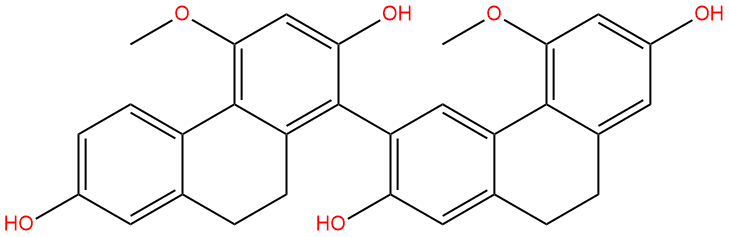
The molecular formula of Gymconopin C is C ₂₈ H ∝₄ O ₇, with a molecular weight of 482.5320. From a chemical structure perspective, it belongs to a class of natural products with relatively complex structures. Its core skeleton usually combines multiple ring systems and may contain characteristic structural fragments such as flavonoids, lignans, or terpenes (the specific structural formula needs to be determined based on the original isolation literature, based on the general description here). This type of structure often endows it with unique spatial conformation and biological activity.
The key physicochemical property parameters are crucial for evaluating its drug development potential. The calculated lipid water partition coefficient (LogP) is 5.2168, indicating that the compound has high lipophilicity, which is beneficial for its penetration of cell membranes and binding to targets, but may also affect its water solubility and in vivo distribution. Its topological polar surface area (TPSA) is 99.3800 Å ², which is at a moderately high level, indicating the presence of a certain number of hydrogen bond donors and acceptors in the molecule. Correspondingly, its theoretical water solubility is relatively low, about 0.0037 mg/mL, which may be a limiting factor for its oral bioavailability. In the preliminary drug screening, Gymconopin C did not show significant hERG potassium channel inhibitory activity (hERG inhibition: No), indicating a low risk of inducing cardiac QT interval prolongation and a favorable safety signal. In addition, its Ames test result is 0.6 (usually expressed as mutation rate, with a value close to 1 or lower than 2 indicating no mutagenicity), indicating that no genetic toxicity was shown in the preliminary test.
Plant sources and extraction methods
Gymconopin C was originally derived from the Celastraceae family of plants gymnema Genus (specific species names need to be supplemented based on original literature, for example)Gymnema sylvestre Or its closely related species. This plant has a long history of application in Asian traditional medicine, and is often used to treat diabetes, asthma, inflammation and other diseases, which provides clues for the discovery of its new active ingredients.
Its extraction and separation usually follow the standard process of natural product chemistry. Firstly, specific parts of the plant, such as leaves and stems, are dried and crushed. Organic solvents such as methanol, ethanol, or acetone are used for leaching or reflux extraction to obtain crude extracts. Subsequently, the crude extract was subjected to preliminary fractionation using a system solvent extraction method (such as sequential extraction with petroleum ether, ethyl acetate, and n-butanol), and the active site was determined based on activity tracking (such as anti allergic or neuroprotective activity screening). The active site is further separated and purified by a variety of modern chromatographic techniques, often including silica gel column chromatography, reverse phase silica gel (such as ODS) column chromatography, Sephadex LH-20 column chromatography and high performance liquid chromatography (HPLC). The planar structure and relative configuration of Gymconopin C were ultimately identified through spectroscopic techniques such as nuclear magnetic resonance (NMR), mass spectrometry (MS), ultraviolet (UV), and infrared (IR). Optimizing the extraction process and improving yield are prerequisites for future in-depth pharmacological research and development.
Pharmacological activity research
The pharmacological activity research of Gymconopin C mainly focuses on two fields: anti allergy and neuroprotection, reflecting its pleiotropic characteristics.
-
Antiallergic activity The initial pharmacological evaluation found that Gymconopin C can significantly inhibit passive cutaneous hypersensitivity (PCA) in mouse ears. PCA is a classic animal model for type I hypersensitivity reactions, which simulates the rapid onset hypersensitivity process mediated by IgE. The inhibitory effect of Gymconopin C suggests that it may exert anti allergic effects by intervening in mast cell degranulation, inhibiting the release of inflammatory mediators such as histamine, or regulating Th1/Th2 immune balance. This provides direct experimental evidence for its development as a new type of anti allergic drug (such as for allergic rhinitis, asthma, atopic dermatitis, etc.).
-
Neuroprotective activity This is the pharmacological direction that has received the most attention in recent years for Gymconopin C. In various in vitro cell models, such as A β - induced PC12 cell injury, MPP ⁺ - induced SH-SY5Y cell injury, glutamate excitotoxicity model, etc., Gymconopin C exhibits significant cell protective effects, can improve cell survival rate, and reduce lactate dehydrogenase (LDH) leakage. In animal models, preliminary studies also suggest that it may improve learning and memory impairment in Alzheimer's disease model mice, or alleviate dopaminergic neuron damage in Parkinson's disease model animals. Its neuroprotective effect is not through a single pathway, but involves multiple levels such as antioxidant stress, anti apoptosis, inflammation inhibition, and promotion of autophagy.
Mechanism of action and molecular targets
The neuroprotective mechanism of Gymnopin C has been revealed to act on a complex network involving multiple key targets closely related to neurodegenerative diseases
- Anti apoptotic and pro survival pathways: Through upward adjustment BCL2 The expression of B-cell lymphoma 2 inhibits the mitochondrial apoptosis pathway, downregulates pro apoptotic proteins such as Bax, and suppresses CASP3 Activation of caspase-3 protects neurons from programmed cell death. Its activation SIRT1 The ability of silencing information regulatory factor 1 can further deacetylate and regulate downstream factors such as FOXO and PGC-1 α, enhancing cellular stress resistance and energy metabolism.
- Regulation of Alzheimer's disease-related targets Gymconopin C may be reduced by APP Abnormal processing of amyloid precursor protein or direct inhibition BACE1 The activity of β - secretase reduces the production of β - amyloid protein (A β). Meanwhile, it may regulate MAPT The phosphorylation level of microtubule associated protein tau reduces the formation of neurofibrillary tangles. Correct ACHE The potential inhibitory effect of acetylcholinesterase may directly increase the level of acetylcholine in synaptic cleft and improve cognitive function.
- Antioxidant stress and inflammation regulation: Activate NFE2L2 The nuclear factor E2 related factor 2 (Nrf2) is one of the core mechanisms by which Gymconopin C exerts antioxidant effects. After Nrf2 enters the nucleus, it initiates the expression of phase II detoxifying enzymes such as HO-1 and NQO1, as well as antioxidant proteins, clearing reactive oxygen species (ROS) and reducing oxidative damage. In addition, it may be regulated through MAPK1 Signal pathways such as mitogen activated protein kinase 1 (ERK) inhibit neuroinflammation caused by excessive activation of microglia.
- Parkinson's disease-related proteins: Yes SNCA The potential inhibitory effect of (α - synuclein) aggregation is another direction in which it may intervene in the pathological process of Parkinson's disease.
In summary, Gymconopin C forms a protective network against multiple pathological mechanisms of neurodegenerative diseases through multi-target synergistic effects, which may have therapeutic advantages over single target drugs.
Evaluation of drug properties and pharmacokinetics
Based on its physicochemical parameters and preliminary biological data, a preliminary evaluation of the pharmacological properties of Gymconopin C is conducted
- Advantage Moderate molecular weight, in accordance with the rules of drug likeness; No hERG inhibition or Ames mutagenicity warning, preliminary safety is good; The multi-target neuroprotective activity is clear and the mechanism of action is rich.
- challenge The high LogP (5.2168) and low TPSA result in extremely poor water solubility (0.0037 mg/mL), which will seriously affect its oral absorption and bioavailability. Its larger molecular weight and polar surface area may also lead to its Low blood-brain barrier (BBB) permeability This is a major obstacle for neuroprotective drugs that need to function in the central nervous system.
- Pharmacokinetics (PK)Currently, there is a significant lack of publicly available pharmacokinetic research data on the Gymconopin C system, including absorption, distribution, metabolism, and excretion. Based on its physicochemical properties, it is speculated that its oral absorption may be poor, metabolism in the body may be faster, and it may be difficult to effectively enter the brain. Future research urgently needs to clarify its PK characteristics in different animal models through experiments, including absolute bioavailability, tissue distribution (especially brain tissue concentration), major metabolic pathways, and elimination half-life.
Possible strategies to overcome these pharmaceutical bottlenecks include: 1)Structural modification By chemically synthesizing its derivatives or prodrugs, while retaining the pharmacophore, introduce groups that increase water solubility or promote BBB penetration (such as salt formation, introduction of polar groups, linking carriers, etc.). 2)New drug delivery system Develop nano formulations (such as liposomes, polymer nanoparticles, solid lipid nanoparticles), microemulsions, or cyclodextrin inclusion complexes to improve their solubility, stability, and targeted delivery efficiency, particularly enhancing their brain targeting ability.
Clinical application prospects and prospects
The clinical application prospects of Gymconopin C mainly revolve around its two core activities:
-
As an anti allergic medication Its clear anti PCA activity makes it a promising new anti allergic drug for local or systemic administration, used for the treatment of allergic skin diseases, allergic rhinitis, etc. Due to its natural origin and initial safety, it may have good market acceptance.
-
As a neuroprotective/disease modifying agent This is its most valuable development direction. The multi-target mode of action of Gymconopin C provides a new therapeutic strategy for diseases such as Alzheimer's disease and Parkinson's disease that currently lack effective cure methods. It can not only be developed as a single drug, but also as a component of combination therapy, synergistically enhancing with existing drugs such as acetylcholinesterase inhibitors, memantine, etc., or used for early disease intervention to delay progression.
However, the road from lead compounds to candidate drugs and even marketed drugs is long. Future research priorities should include:
* In depth mechanism research Using techniques such as gene knockout/knockdown, molecular docking, and surface plasmon resonance, accurately verify its direct interaction and regulatory details with the aforementioned targets.
* Comprehensive preclinical evaluation Validate its long-term efficacy in animal models closer to human diseases, such as genetically modified AD mice, and conduct systematic toxicology studies (acute toxicity, chronic toxicity, reproductive toxicity, etc.).
* Overcoming barriers to drug development As mentioned earlier, optimizing its physicochemical properties and pharmacokinetic behavior through medicinal chemistry and pharmacology methods is the key to successful conversion.
* Explore new indications Based on its target of action, its potential application in other neurological diseases such as cerebral ischemia-reperfusion injury, amyotrophic lateral sclerosis, and even metabolic diseases can be explored.
Conclusion
Gymconopin C, as a natural product discovered from traditional medicinal plants, has attracted widespread attention from researchers due to its unique chemical structure and dual pharmacological activities (anti allergic and neuroprotective). Its multi-target mechanism of action in neuroprotection is particularly in line with the current network pharmacology treatment concept for complex neurodegenerative diseases. Although it currently faces significant pharmaceutical challenges such as poor water solubility and low blood-brain barrier permeability, these challenges also indicate the direction for future research and technological breakthroughs. With the application of modern technologies such as drug chemical modification and novel drug delivery systems, as well as a deeper understanding of the mechanism of action and in vivo processes, Gymconopin C is expected to be successfully optimized and developed into an innovative anti allergic or neuroprotective drug with independent intellectual property rights, bringing new hope to patients with related diseases. The continuous and in-depth research on it not only has important scientific value, but also contains broad prospects for translational medicine.