| Catalog No | Package | Original Price | Price | Inventory | Quantity | Operating |
|---|---|---|---|---|---|---|
| BP4358-20mg | 20mg | $130.00 | Sign in |
|


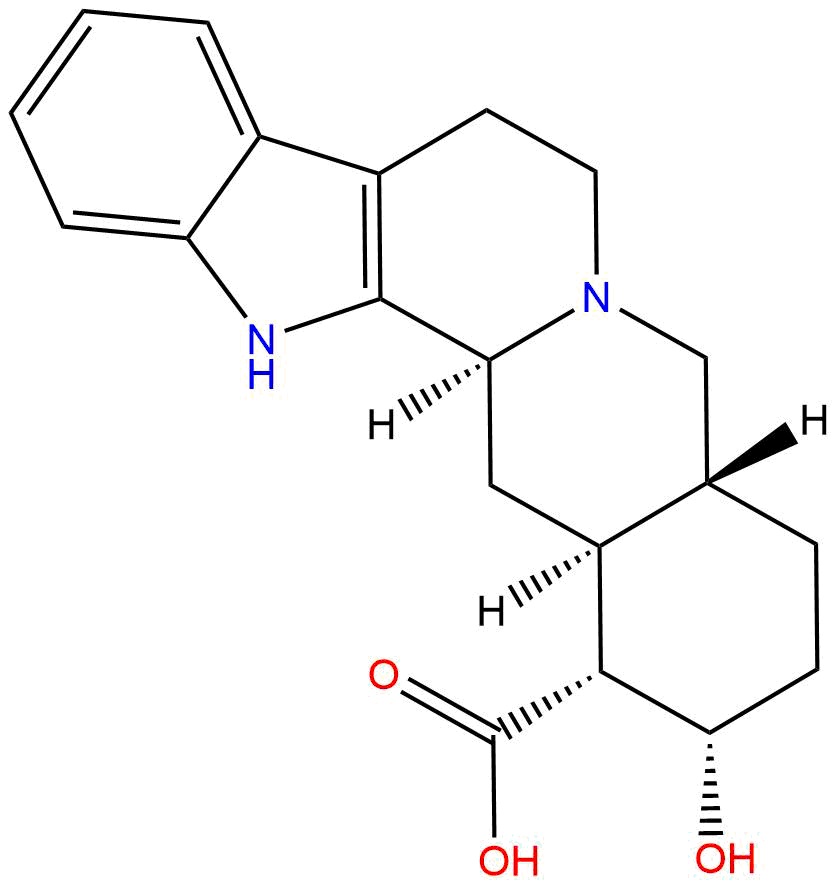
Product name: Yohimbic acid
Synonym name: Yohimbine acid; Yohimbinic acid; Yohimbolcarboxylic acid
Catalogue No.: BP4358
Cas No.: 522-87-2
Formula: C20H24N2O3
Mol Weight: 340.423
Botanical Source:
Type of Compound:
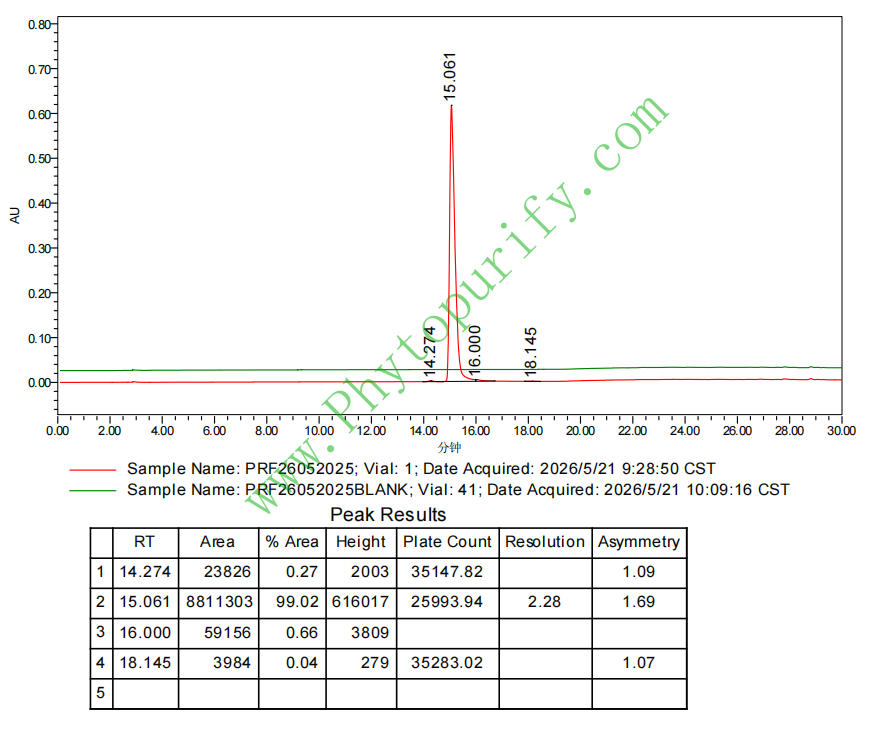
Purity: 95%~99%
Analysis Method: HPLC-DAD or/and HPLC-ELSD
Identification Method: Mass, NMR
Packing: Brown vial or HDPE plastic bottle
Storage: Store in a well closed container, protected from air and light. Put into refrigerate or freeze for long term storage.
Whenever possible, you should prepare and use solutions on the same day. However, if you need to make up stock solutions in advance, we recommend that you store the solution as aliquots in tightly sealed vials at -20℃. Generally, these will be useable for up to two weeks.
The product could be supplied from milligrams to grams
Inquire for bulk scale.
For Reference Standard and R&D, Not for Human Use Directly.
HPLC of Yohimbic acid
Storage conditions:Short-term storage at 2~8℃, long-term storage at -20 ~ -80℃
Yohimbic acid (CAS number: 522-87-2), as a natural product derivative, has attracted widespread attention in the field of pharmacology in recent years. Its structure is a zwitterionic demethylated derivative of Yohimbine, which exhibits unique biological activity, especially in the research of vasodilation and osteoarthritis (OA), showing potential therapeutic value. Yuheng acid not only plays an important role in the regulation of targets related to male sexual dysfunction, but also has become a hot topic in natural product pharmacology research due to its good safety and pharmacological parameters. This article aims to provide a systematic review of the chemical structure, plant origin, pharmacological activity, mechanism of action, pharmacological evaluation, and clinical application prospects of yohimbine, in order to provide theoretical basis and reference for further in-depth research and drug development.
The molecular formula of Yuheng acid is C21H28N2O4, with a molecular weight of 340.4230. Its structure is based on the framework of berberine, formed through amphoteric demethylation modification, endowing it with unique physicochemical properties. The LogP value of Yuheng acid is 0.6363, indicating its moderate lipophilicity, which facilitates cell membrane penetration but is not prone to excessive accumulation in a lipid environment. The polar surface area (TPSA) is 76.5600, indicating good solubility in polar environments. The water solubility is 0.3574, indicating that Yuheng acid has a certain solubility in the aqueous phase, which is conducive to absorption and distribution in vivo.
The low blood-brain barrier permeability of yohimbine suggests that its role in the central nervous system may be limited, which is beneficial for reducing central side effects. The negative result of hERG channel inhibition experiment indicates a low risk of cardiac toxicity. The Ames mutagenicity test result is 0.0, indicating that yohimbine has no significant genotoxicity and high safety.
Yuheng acid mainly comes from the bark of the Pausinystalia yohimbe tree, which is widely distributed in tropical regions of western Africa. The bark of the Yuheng tree contains various alkaloids, and Yuheng acid, as a derivative of Yuheng alkaloid, is usually obtained through chemical modification or biosynthetic pathways.
Traditional extraction methods include solvent extraction, acid-base extraction, and column chromatography separation. Modern technologies such as ultrasound assisted extraction, microwave-assisted extraction, and high-performance liquid chromatography (HPLC) purification have significantly improved the extraction efficiency and purity of yohimbine. During the extraction process, controlling pH and temperature are key factors in ensuring the stability and activity of humic acid.
Yuheng acid exhibits multiple pharmacological activities, especially showing significant potential in research on vasodilation and the treatment of osteoarthritis.
Vasodilatory effect
Yuheng acid regulates the signaling pathway of vascular smooth muscle cells, promotes the production of nitric oxide (NO), dilates blood vessels, and lowers blood pressure. In vitro experiments have shown that yohimbine can enhance endothelial nitric oxide synthase (eNOS) activity, promote NO release, and improve hemodynamic status.
Potential for research on osteoarthritis (OA)
In the OA model, yohimbine exhibits anti-inflammatory and cartilage protective effects. It reduces joint inflammation by inhibiting the expression of inflammatory mediators such as tumor necrosis factor alpha (TNF - α) and interleukin-1 β (IL-1 β). In addition, yohimbine can regulate the activity of matrix metalloproteinases (MMPs), slow down the degradation of cartilage matrix, and delay the progression of osteoarthritis.
Male sexual dysfunction
Yuheng acid acts on various molecular targets related to male sexual function, such as CNR1, AR, NOS1, PDE5A, DRD2, HTR1A, ADRA2A, NOS3, SRD5A2, and ADRA2B. By regulating these targets, yohimbine can improve blood flow supply, enhance nerve conduction and hormone regulation, and improve sexual performance.
The pharmacological effects of Yuheng acid depend on its ability to regulate multiple targets, mainly involving the following mechanisms:
Neurotransmitter regulation
Yuheng acid regulates neurotransmitter release in the central nervous system by acting on dopamine D2 receptor (DRD2) and 5-hydroxytryptamine 1A receptor (HTR1A), improving libido and sexual function.
Vascular dilation mechanism
Yuheng acid enhances the activity of nitric oxide synthase (NOS3) in endothelial cells, promotes NO synthesis, activates the guanylate cyclase (sGC) - cGMP signaling pathway, leading to vascular smooth muscle relaxation and achieving vasodilation.
Regulation of androgen receptor (AR)
The regulatory effect of luteinizing acid on AR helps maintain male hormone levels and promote sexual function recovery.
Phosphodiesterase 5A (PDE5A) inhibition
By partially inhibiting PDE5A, yohimbine prolongs the action time of cGMP and enhances vasodilation, similar to the mechanism of action of PDE5 inhibitors.
Adrenergic receptor regulation
Yuheng acid has a regulatory effect on α 2A and α 2B adrenergic receptors (ADRA2A, ADRA2B), affecting the sympathetic nervous system, regulating blood flow and neural excitability.
Anti inflammatory mechanism in osteoarthritis
By inhibiting inflammatory factors and regulating matrix metalloproteinase activity, yohimbine reduces joint inflammation and cartilage damage, exerting a protective effect.
Yuheng acid has good medicinal properties:
In terms of pharmacokinetics, Yuheng acid exhibits good oral absorption and in vivo distribution characteristics. Its metabolic pathway is mainly carried out through the liver enzyme system, and the safety of its metabolites is good. Excretion is mainly completed through the kidneys. The half-life of Yuheng acid is moderate, supporting a reasonable frequency of administration.
Yuheng acid has shown broad clinical application prospects in the fields of male sexual dysfunction and osteoarthritis. Its multi-target regulatory ability and good safety provide strong support for the development of new therapeutic drugs.
Treatment for male sexual dysfunction
Yuheng acid is expected to become a new drug for treating erectile dysfunction, decreased libido, and other diseases by regulating multiple mechanisms such as neurotransmitters, vasodilation, and hormone receptors. Compared with existing PDE5 inhibitors, yohimbine may have a more comprehensive mechanism of action and lower side effects.
Adjuvant treatment of osteoarthritis
The anti-inflammatory and cartilage protective effects of Yuheng acid provide a new treatment approach for OA patients. In the future, existing drugs can be combined to develop composite formulations to enhance efficacy and improve patients' quality of life.
Drug development and optimization
Designing and synthesizing derivatives based on the skeletal structure of yuhengacid, optimizing their pharmacological and pharmacokinetic properties, will be an important direction for future research. At the same time, in-depth analysis of its mechanism of action, conducting preclinical and clinical research, and promoting its clinical translation.
Research on Safety and Tolerance
Despite the good safety demonstrated by yohimbine, a systematic evaluation of its long-term toxicological properties and potential drug interactions is still needed to provide assurance for clinical application.
As a amphoteric demethylated derivative of yohimbine, yohimbine has shown broad research and application prospects in fields such as vasodilation, male sexual dysfunction, and osteoarthritis due to its unique chemical structure and multi-target pharmacological activity. Its good pharmacological parameters and safety provide a solid foundation for the development of natural product drugs. In the future, through in-depth mechanism research and clinical validation, yohimbine is expected to become an emerging drug for treating related diseases, bringing good news to patients. The continuous development of pharmacology of natural products will further promote the innovative drug research and development of yohimbine and its derivatives, and promote the rational utilization and value enhancement of natural product resources.
