| Catalog No | Package | Original Price | Price | Inventory | Quantity | Operating |
|---|---|---|---|---|---|---|
| BP4957-5mg | 5mg | $630.00 | Sign in |
|


Storage conditions:Short-term storage at 2~8℃, long-term storage at -20 ~ -80℃
34.1400
2.8376
2.8379
.0373
8.2584
33.5703
High
71.1649
4.3875
No
Yes
No
No
Yes
No
0.0
Yes
Yes
No
Yes
Natural products, as an important source of drug discovery, play an irreplaceable role in the long history of human fight against diseases. Fungi, as one of the most diverse groups of organisms on Earth, have enormous chemical novelty and biological activity potential in their metabolic product pools. In recent years, the isolation and identification of secondary metabolites with anti-tumor activity from higher fungi have become a hot topic in natural product chemistry and pharmacology research. Among the numerous active molecules derived from fungi, sesquiterpenes have attracted much attention due to their structural diversity and significant biological activity. Aristolane type sesquiterpenes are an important subclass of sesquiterpenes in the sesquiterpene family, characterized by a unique bicyclic [5.3.0] decane system and often accompanied by complex oxidation and rearrangement modifications, endowing these molecules with rich stereochemistry and biological activity.
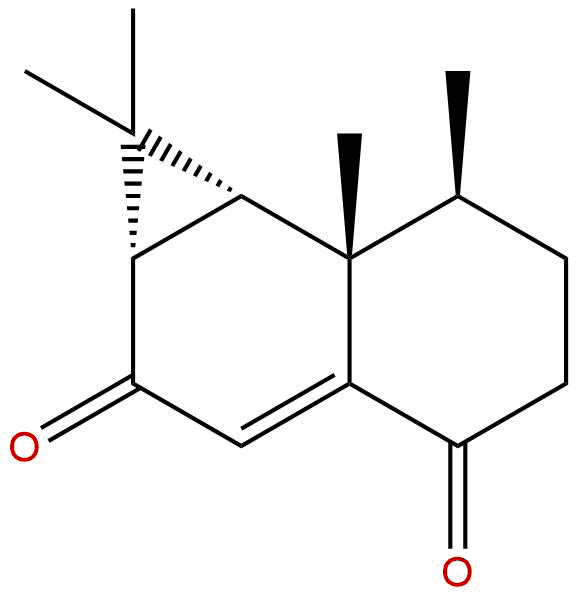
Anthracophyllone (CAS number: 1801750-22-0) is a novel aristolochic sesquiterpene discovered in this research context. This compound was originally developed by researchers from the mushroom genus fungi of the Basidiomycota phylum Anthracophyllum Separated from the middle. Its discovery not only enriched the chemical structure library of aristolochic sesquiterpenes, but also aroused strong interest among medicinal chemists due to its broad-spectrum cytotoxic activity. Preliminary studies show that Anthrachyllone has cytotoxicity to many human tumor cell lines, including breast cancer cell line MCF-7, oral epidermoid cancer cell line KB, non-small cell lung cancer cell line NCI-H187, and even to normal cell line Vero (African green monkey kidney cell) to a certain extent. Its IC50 values are 32.97 μ M, 18.02 μ M, 15.17 μ M, and 18.06 μ M, respectively. This activity spectrum suggests that it may have a multi-target mechanism of action, but also poses a challenge to selectivity.
This article aims to provide a systematic professional review of Anthracophyllone, a natural sesquiterpene compound. We will trace its fungal origin and extraction methods based on its chemical structure and physicochemical properties, deeply analyze its reported pharmacological activities, and explore its potential mechanisms of action and molecular targets based on existing research. At the same time, based on the evaluation criteria of modern medicinal chemistry, evaluate its pharmacological parameters and pharmacokinetic characteristics. Finally, we will look forward to its clinical application prospects and challenges in the field of anti-tumor drug development, in order to provide a comprehensive and solid theoretical basis for further in-depth research.
The chemical structure of Anthracophyllone belongs to the Aristolochian type sesquiterpenes. Sesquiterpenes are terpenoids composed of three isoprene units (C15), and their skeletal diversity is derived from the different cyclization modes of isoprene units. The core of the Aristolochian skeleton is a bicyclic system composed of five membered and seven membered rings, known as the hydrogenated azulene structure. In a typical Aristolochian skeleton, the C-7 position is usually connected to an isopropyl group, while the C-10 position is often a methyl group. The structural feature of Anthracophyllone is the specific oxidation mode on its skeleton. Based on its name and known structures of Aristolochian derivatives, it is speculated that its structure may contain one carbonyl (ketone) group and one or more hydroxyl groups. Specifically, its molecular formula can usually be determined as C15H20O2, with a molecular weight of 232.3230 g/mol. The molecule is composed of a complete aristolochic carbon skeleton, an extra - or intra cyclic double bond, and a ketone carbonyl group. Its precise stereochemical configuration (such as the absolute configuration of chiral centers C-1, C-5, C-6, C-7, etc.) needs to be determined through X-ray single crystal diffraction or advanced nuclear magnetic resonance (NMR) spectroscopy techniques (such as NOESY).
From the perspective of physical and chemical properties, Anthracophyllone exhibits typical lipophilic small molecule characteristics. Its oil-water partition coefficient (LogP) is 2.8376, indicating that the compound has a moderate degree of lipophilicity, which is beneficial for its penetration of cell membranes, but may also affect its solubility in aqueous environments. In fact, its water solubility is only 0.0373 mg/mL, making it a poorly soluble compound, which may be one of the main obstacles to its oral bioavailability. The polar surface area (TPSA) of the compound is 34.1400 Å ², which is a relatively small value. According to Rule of 5 and empirical rules for blood-brain barrier (BBB) penetration, molecules with TPSA less than 60-70 Å ² typically have good BBB penetration ability. Therefore, the prediction shows that Anthracophyllone has high BBB penetration, which suggests its potential value in the treatment of central nervous system (CNS) tumors, but may also bring about central nervous system related toxic side effects. In addition, its molecular weight (232.3230 Da) is much smaller than 500 Da, which conforms to the basic characteristics of small molecule drugs. These physicochemical properties collectively determine the absorption, distribution, metabolism, and excretion (ADME) behavior of Anthracophyllone in the body.
The discovery of Anthracophyllone was based on a systematic screening of secondary metabolites in fungi. Its only known natural source is belonging to the phylum Basidiomycota, class Agaricales, order Agaricales, and family Marasmiaceae Anthracophyllum Belonging to fungi. This genus of fungi usually grows on decaying wood in tropical and subtropical regions and is known for its black gills. The genus name "Anthracophyllum" means "charcoal leaf". At present, the types of compounds isolated from this genus of fungi are relatively limited, and the discovery of Anthracophyllone provides important basis for the chemical taxonomy research of this genus.
from Anthracophyllum The extraction of Anthracophyllone from fungi usually follows the standard process of natural product chemistry. Firstly, large-scale fermentation and cultivation of fungi are required. Solid culture media (such as rice, wheat, or sawdust culture media) or liquid static/shaking culture are usually used to obtain sufficient mycelium or fermentation broth. The fermentation cycle is generally several weeks to several months to accumulate secondary metabolites. After harvesting, separate the mycelium from the fermentation broth. Mycelium is usually dried, crushed, and soaked in organic solvents for extraction. Common extraction solvents include methanol, ethanol, ethyl acetate, or their mixed solvents. Due to the high LogP value of Anthracophyllone, medium polarity solvents such as ethyl acetate and dichloromethane may have better extraction efficiency for it. After filtration and vacuum concentration of the extract, crude extract is obtained.
The crude extract contains a large amount of lipids, pigments, and other secondary metabolites, which require systematic separation and purification. The separation process typically relies on a combination of multiple chromatographic techniques. Firstly, the crude extract can be preliminarily classified by liquid-liquid partitioning extraction (such as n-hexane methanol water system) to enrich the target compound in the moderately polar component. Subsequently, normal phase silica gel column chromatography was used, with different ratios of petroleum ether ethyl acetate or dichloromethane methanol gradient elution. Similar components were combined based on thin layer chromatography (TLC) detection results. For further purification, reverse phase column chromatography (such as C18 silica gel) is a commonly used method, using methanol water or acetonitrile water systems for gradient elution. Finally, the target fraction was refined by preparative HPLC to obtain high-purity Anthracophyllone monomer. The entire separation process needs to be guided by activity tracking (such as cytotoxicity experiments) to ensure that the target active ingredient is not missed. Finally, the purified compound was structurally identified by high-resolution mass spectrometry (HRMS) and nuclear magnetic resonance spectroscopy (1D and 2D NMR), confirming its identity as Anthracophyllone.
At present, research on the pharmacological activity of Anthracophyllone mainly focuses on its cytotoxicity, especially its inhibitory effect on various tumor cell lines. According to existing literature reports, this compound exhibits broad-spectrum anti proliferative activity.
Antitumor cytotoxicity This is the core pharmacological activity of Anthracophyllone. Research data shows that it has varying degrees of killing effects on tumor cell lines from different tissue sources.
Other potential activities Given its unique aristolochic skeleton and preliminary cytotoxicity data, it can be inferred that Anthracophyllone may have a wider range of pharmacological activities. For example, many sesquiterpenes have anti-inflammatory, antibacterial, or antiviral effects. However, there are currently no systematic research reports on Anthracophyllone in these areas in publicly available literature. Future research can explore whether it has anti-inflammatory activity (such as inhibiting NO production or promoting the release of inflammatory cytokines), or whether it has antibacterial activity against certain drug-resistant strains. In addition, its toxicity to Vero cells itself suggests that it may have antiviral potential, as many antiviral drugs were initially discovered due to their cytotoxicity.
Although the cytotoxic activity of Anthracophyllone has been confirmed, its exact mechanism of action and molecular targets have not been fully elucidated. However, based on its chemical structure (aristolochic sesquiterpenes) and preliminary activity data, combined with a list of related diseases and targets, we can construct a reasonable mechanism hypothesis and point out key directions for future research.
Inducing cell apoptosis This is the classic pathway through which most cytotoxic compounds exert their effects. Anthracophyllone may kill tumor cells by activating endogenous or exogenous apoptotic pathways. The list of related targets includes MCL1 and BCL2 Both of these are key anti apoptotic proteins in the Bcl-2 family. Many anticancer drugs counteract the function of MCL1 or BCL2 by downregulating their expression, or by mimicking BH3 only proteins, thereby releasing inhibition of mitochondrial outer membrane permeabilization, releasing cytochrome c, activating the Caspase cascade reaction, and ultimately leading to cell apoptosis. Anthracophyllone may promote tumor cell apoptosis by inhibiting the function of MCL1 or BCL2, or affecting their expression levels. In addition,STAT3 It is an important transcription factor that is continuously activated in various tumors and upregulates anti apoptotic genes including MCL1 and BCL2. Inhibiting the STAT3 signaling pathway is a popular target for anti-cancer drug development. Therefore, Anthracophyllone may downregulate the expression of downstream target genes and induce apoptosis by inhibiting the phosphorylation and nuclear translocation of STAT3.
Inhibit cell proliferation and metastasis:MAPK1(also known as ERK2) is a key kinase in the RAS-RAF-MEK-ERK signaling pathway, which plays a central role in cell proliferation, differentiation, and survival. This pathway is abnormally activated in many tumors. Anthracophyllone may inhibit tumor cell proliferation by suppressing the activity of MAPK1, blocking the transmission of growth factor signals. In addition,MMP2 Matrix metalloproteinase-2 is a key enzyme that degrades the extracellular matrix (ECM) and is closely related to tumor invasion and metastasis. Inhibiting the activity or expression of MMP2 can effectively prevent the migration and infiltration of tumor cells. Therefore, Anthracophyllone may exert anti metastatic effects by downregulating MMP2.
Interference with DNA topology and transcriptional regulation:TOP1 and TOP2A They are DNA topoisomerases responsible for regulating the supercoiled structure of DNA, which is crucial for DNA replication, transcription, and repair. Many clinically effective anti-cancer drugs, such as camptothecin inhibitor TOP1 and etoposide inhibitor TOP2A, induce cell death by stabilizing topoisomerase DNA cleavable complexes, leading to DNA damage. Anthracophyllone may inhibit the activity of TOP1 or TOP2A through a similar mechanism, causing DNA damage and triggering cell cycle arrest and apoptosis. In addition,ESR1(Estrogen receptor alpha) and CYP19A1 Aromatase is an important target for endocrine therapy of breast cancer. Given its activity against MCF-7 (ER+) cells, it is necessary to investigate whether Anthracophyllone has anti estrogenic or aromatase inhibitory activity.HIF1A Hypoxia inducible factor 1 alpha is a key regulatory factor for tumor adaptation to the hypoxic microenvironment, and its overexpression is associated with tumor drug resistance and poor prognosis. Inhibiting the stability or transcriptional activity of HIF1A can suppress angiogenesis and glycolysis, thereby inhibiting tumor growth.
Oxidative stress and DNA damage Many natural sesquiterpenes, especially compounds containing alpha, beta unsaturated carbonyl structures, can act as Michael addition receptors, covalently binding to intracellular thiol containing proteins (such as glutathione GSH) or DNA, thereby depleting GSH, inducing reactive oxygen species (ROS) bursts, causing oxidative stress and DNA damage. It is worth further exploring whether the ketone carbonyl groups in the Anthracophyllone structure have such reactivity.
In summary, Anthracophyllone is likely a compound with multi-target effects. Its mechanism of action may involve inducing apoptosis (via MCL1, BCL2, STAT3), inhibiting proliferation (via MAPK1), anti metastasis (via MMP2), interfering with DNA topology (via TOP1/TOP2A), as well as potential hormone regulation (via ESR1/CYP19A1) and anti hypoxia (via HIF1A). However, these hypotheses need to be validated one by one through systematic molecular biology experiments such as Western blot, qPCR, Caspase activity detection, target knockout/overexpression, molecular docking, surface plasmon resonance SPR, etc. Identifying its primary and directly acting molecular targets is key to understanding its pharmacological effects and guiding subsequent structural optimization.
To develop natural products into clinical drugs, it is not only necessary for them to have strong biological activity, but also to have good drug properties, namely suitable ADME (absorption, distribution, metabolism, excretion) properties and safety. Based on the provided pharmacological parameters, we can conduct a preliminary pharmacological evaluation of Anthracophyllone.
Analysis of drug properties According to Lipinski's "Rule of Five", an orally active drug should typically meet the following criteria: molecular weight<500, LogP<5, The number of hydrogen bond donors is less than 5, and the number of hydrogen bond acceptors is less than 10. The molecular weight (232.32) and LogP (2.84) of Anthracophyllone meet the requirements. Its TPSA (34.14) is also much lower than the threshold of 140 Å ², indicating that it has good cell membrane permeability. Therefore, from the perspective of basic physicochemical properties, Anthracophyllone conforms to the characteristics of drug like properties.
Absorption and bioavailability Although LogP and TPSA indicate good permeability, its extremely low water solubility (0.0373 mg/mL) is a serious shortcoming. According to the Biopharmaceutical Classification System (BCS), Anthracophyllone is likely to belong to Class II drugs with low solubility and high permeability. Its oral absorption will be limited by the dissolution rate, resulting in low oral bioavailability. This suggests that if it is developed into an oral medication, pharmaceutical methods such as preparing nanocrystals, solid dispersions, liposomes, or cyclodextrin inclusion complexes are needed to improve its apparent solubility and dissolution rate.
distribution High BBB penetration is a significant feature of the Anthracophylline distribution. This makes it potentially advantageous in treating gliomas or brain metastases. However, this also means that it may be more likely to enter the central nervous system, posing a risk of neurotoxicity such as dizziness, drowsiness, and even more severe side effects. Therefore, in subsequent toxicology studies, special attention needs to be paid to its impact on the central nervous system.
Metabolism and excretion Currently, there is no experimental data available on the specific metabolic pathways of Anthracophyllone. As a small molecule lipophilic compound, it is likely to undergo phase I metabolism (such as oxidation, reduction, hydrolysis) mainly through the liver cytochrome P450 enzyme system (CYP450), followed by phase II binding reactions (such as glucuronidation, sulfation), and ultimately excreted from the body through bile or urine. The ketone groups and possible hydroxyl groups in its molecule are potential metabolic sites. In the future, in vitro liver microsomal or hepatocyte experiments will be needed to identify its main metabolites and metabolic enzymes, evaluate its metabolic stability, and assess potential drug drug interaction risks.
safety evaluation:
Anthracophyllone, as a structurally novel aristolochic sesquiterpene, although still in the early stages of research, exhibits biological activity and unique physicochemical properties that provide multiple possibilities for its clinical application prospects, but also come with significant challenges.
Potential as anti-tumor lead compounds Its activity against various tumor cell lines, especially NCI-H187 and KB, as well as predicted low cardiac toxicity and no genotoxicity, make it a valuable lead compound. Future research directions should focus on:
Application in central nervous system tumors Its high BBB penetration is a unique advantage. For malignant gliomas (such as glioblastoma GBM) that currently have limited treatment options and poor prognosis, developing drugs that can effectively penetrate the BBB is an urgent task. Therefore, the activity of Anthracophyllone and its derivatives on glioma cell lines (such as U87MG, U251) can be specifically evaluated, and an in situ glioma animal model can be established to verify their anti-tumor effects and brain distribution in vivo.
As a chemical probe Even if it ultimately fails to become a clinical drug, Anthracophyllone's unique aristolochic skeleton can serve as a valuable chemical probe for studying the biological functions of its target. By designing Anthracophyllone probes with light affinity tags or biotin tags, it is possible to "fish" and identify the proteins directly bound to them in live cells, thereby revealing new anti-tumor mechanisms or discovering new drug targets.
challenges faced:
Anthracophyllone, This originates from mushrooms Anthracophyllum Aristolochiaceae type sesquiterpenes, with their unique chemical structure and preliminary broad-spectrum cytotoxic activity, have added a new candidate molecule to the field of natural product drug discovery. This article systematically reviews its chemical structure, physicochemical properties, source extraction, pharmacological activity, potential mechanisms, and medicinal characteristics. This compound conforms to the rules of drug likeness and has the advantages of low cardiac toxicity and no genetic toxicity. However, its extremely low water solubility and lack of selective toxicity between normal cells and tumor cells constitute the main obstacles to its transformation into clinical drugs.
At present, research on Anthracophyllone is still in its very early stages, and its exact mechanism of action and molecular targets are still unclear. Future research must move from "phenomenon description" to "mechanism analysis", clarify its target through in-depth molecular pharmacology and medicinal chemistry research, and optimize its structure around the two core issues of improving selectivity and water solubility. Meanwhile, its high BBB penetration provides a unique entry point for the development of central nervous system tumor treatment drugs, which deserves special attention. Despite the numerous challenges ahead, the research value of Anthracophyllone, as a representative of a new type of natural product skeleton, cannot be ignored. It is not only a potential lead for new drugs, but also a valuable tool for exploring the mysteries of life sciences and revealing the relationship between fungal chemical diversity and biological functions. We look forward to seeing clearer application prospects for Anthracophyllone and its derivatives in the near future as research deepens, contributing to the cause of human health.
Batch can search by a CAS number,one per line
