Introduction/Overview
Natural products, as an important source of drug discovery, play an indispensable role in the long history of human fight against diseases. In recent years, with the rapid development of high-throughput screening, chemical biology, and systems pharmacology technologies, the exploration of lead compounds with novel structures and unique pharmacological activities from traditional medicinal plants has become a hot topic in new drug research and development. Among numerous natural product families, oligomeric stilbene compounds have attracted much attention due to their complex structures and diverse biological activities. Kobophenol A is one of the shining pearls. It is a low molecular weight styrene isolated from traditional medicinal plants. Its unique molecular skeleton and significant pharmacological activity, especially in antiviral and anti allergic fields, make it a frontier object in natural product pharmacology research.
The discovery and research process of artemisinin A deeply reflects the charm of the cross fusion of natural product chemistry and pharmacology. At first, researchers isolated various styrene monomers and oligomers from plants in the Polygonaceae family (such as Jin Buqian, Polygonum cuspidatum, etc.) and found that they had antioxidant, anti-inflammatory, and other activities. With the deepening of research, the unique structure of artemisinin A has been elucidated, and its biological activity spectrum has gradually been revealed. Especially in recent years, in response to the global public health challenge - COVID-19 infection, artemisinin A stands out because it can block the interaction between the spike protein receptor binding domain (S1-RBD) of SARS CoV-2 virus and the host cell angiotensin converting enzyme 2 (ACE2) receptor, showing great potential as a lead compound against COVID-19. In addition, its activity in anti allergy and protein kinase C (PKC) inhibition also suggests that it may have a wider range of therapeutic applications.
This article aims to comprehensively and systematically review the research progress of artemisinin A, covering its chemical structure and physicochemical properties, plant sources and extraction methods, pharmacological activity, mechanism of action, drug evaluation, and clinical application prospects, in order to provide reference for the in-depth development and utilization of this natural product.
Chemical structure and physicochemical properties
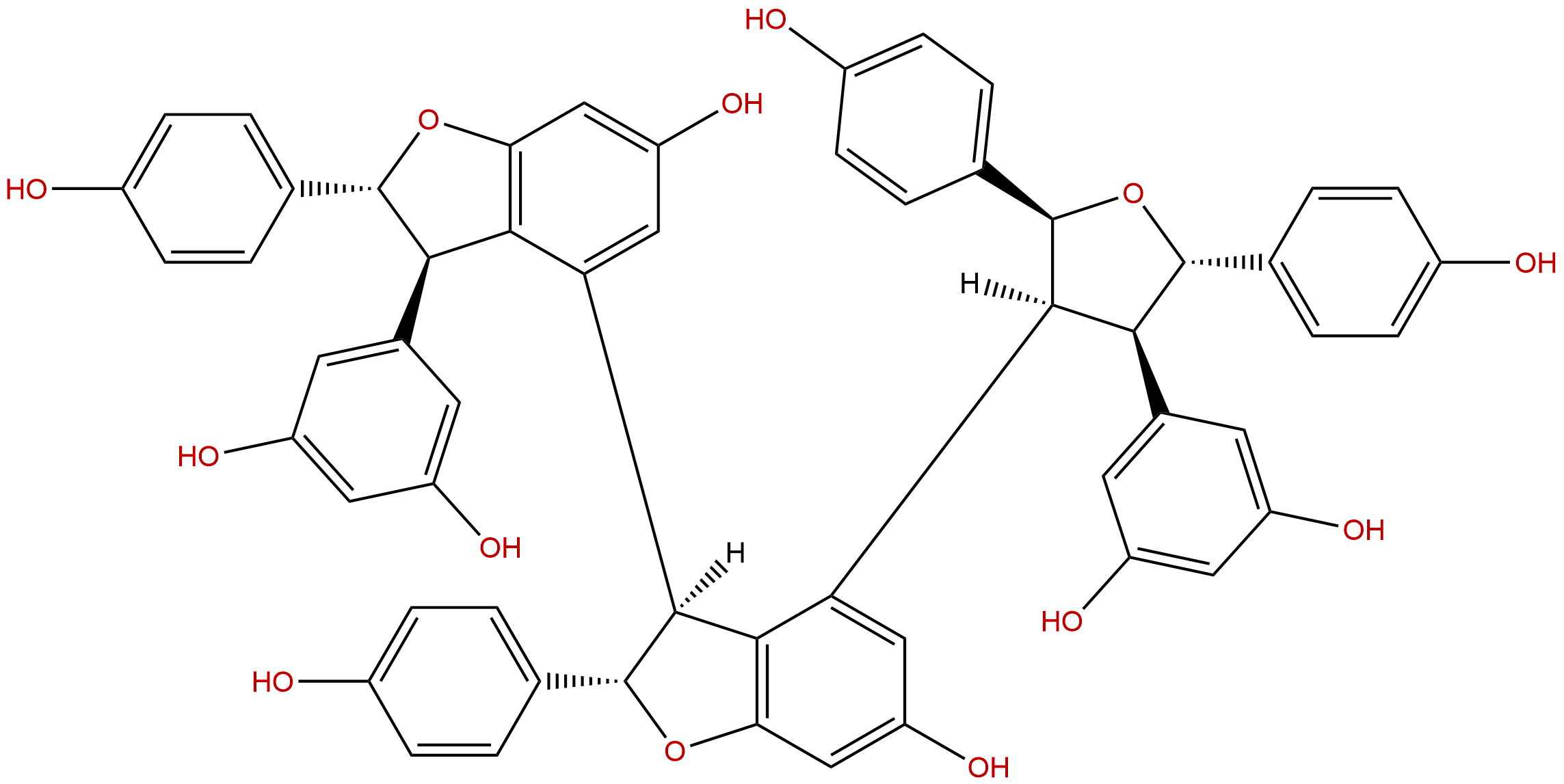
Kobophenol A belongs to the class of oligomeric stilbene compounds, and its chemical structure is composed of multiple stilbene monomers connected by complex carbon carbon or carbon oxygen bonds. Specifically, artemisinin A is a tetramer formed by the polymerization of four stilbene units (i.e., stilbene monomers). Its core skeleton contains a unique dihydrobenzofuran ring system, as well as multiple phenolic hydroxyl and methoxy substituents. This highly dense cyclic structure and abundant functional groups endow artemisinin A with unique chemical properties and biological activity. Its molecular formula is C ₅₆ H ₄₄ O ₁₄, and its molecular weight is 924.9550 g/mol. This molecule has multiple chiral centers and exists in various stereoisomers. Its absolute configuration has been determined by spectroscopic methods such as nuclear magnetic resonance and circular dichroism, as well as X-ray single crystal diffraction.
From the perspective of physical and chemical properties, artemisinin A exhibits typical characteristics of natural polyphenolic compounds. Its lipid water partition coefficient (LogP) is 5.8726, indicating strong lipophilicity, which is related to the presence of multiple aromatic rings and methoxy groups in its molecule. High lipophilicity is beneficial for its penetration through cell membranes, but it may also lead to poor solubility in aqueous environments. Its topological polar surface area (TPSA) is as high as 229.9900 Å ², much higher than the recommended upper limit of 140 Å ² for oral drugs, suggesting that it may have poor intestinal absorption and oral bioavailability. The water solubility data (0.0030 mg/mL) further confirms its extremely low water solubility, which will be one of the main challenges for its formulation development and clinical application. In addition, the predictive model shows that the blood-brain barrier penetration ability of artemisinin A is relatively low, which to some extent limits its application in central nervous system diseases, but may also mean that the toxic side effects related to its peripheral effects are relatively small. HERG inhibition prediction is negative, indicating a low risk of inducing QT interval prolongation and arrhythmia in the heart. The Ames test result is 0.0, indicating that it does not have significant mutagenicity and has a low risk of genetic toxicity.
Plant sources and extraction methods
Artemisia scoparia A mainly comes from plants in the Polygonaceae family, especially the genus Primulaceae under this family(Reynoutria)The Polygonum genus(Polygonum)Plants. Among them, gold is not exchanged(Reynoutria japonica Houtt., Also known as tiger cane, it is one of the most extensively researched and relatively abundant sources. In addition, in Polygonum multiflorum(Fallopia multiflora It has also been found in plants such as Thunb. and Harald. These plants have a long medicinal history in East Asia, such as China, Japan, and South Korea, and are commonly used to treat inflammation, infections, allergic diseases, etc. This provides a solid traditional medical foundation for the discovery of artemisinin A.
The content of artemisinin A in plants is usually low, and it often coexists with various structurally similar oligomeric stilbene compounds (such as puerarin, resveratrol, ε - glucoside, etc.), which poses challenges for its efficient extraction and purification. At present, the extraction methods mainly follow the classic process of "extraction separation purification".
-
Extract Organic solvent extraction method is usually used. Due to the moderate polarity of artemisinin A, methanol, ethanol, or their aqueous solutions are often used as extraction solvents. For example, dry plant roots or whole plants can be crushed and then subjected to multiple extractions or percolations using 70% -95% ethanol at room temperature or heating conditions. In order to improve extraction efficiency and selectivity, modern technologies such as ultrasound assisted extraction and microwave-assisted extraction have also been introduced in recent years, which can achieve higher extraction rates in a shorter period of time.
-
Separation and Purification After filtration and vacuum concentration of the crude extract, liquid-liquid extraction is usually used for preliminary separation. For example, different polar solvents such as petroleum ether, ethyl acetate, and n-butanol are sequentially extracted to enrich artemisinin A in the ethyl acetate or n-butanol extraction site. Subsequently, various chromatographic techniques were used for fine separation. Silica gel column chromatography is the most commonly used method, which can achieve preliminary separation through gradient elution (such as chloroform methanol system). Further purification relies on high-performance liquid chromatography (HPLC), especially preparative HPLC, using a reverse phase C18 column with acetonitrile water or methanol water (often with small amounts of formic acid or acetic acid added) as the mobile phase, and collecting the target peak based on retention time. In addition, gel column chromatography (such as Sephadex LH-20) is also commonly used for pigment removal and further separation. Finally, the purified compound was structurally identified using techniques such as nuclear magnetic resonance (NMR) and mass spectrometry (MS), confirming its identity as artemisinin A.
Pharmacological activity research
The pharmacological activity spectrum of artemisinin A is relatively broad, and in recent years, research has mainly focused on two fields: antiviral and anti allergic. At the same time, its activity in protein kinase inhibition is also worth paying attention to.
1. Anti SARS-CoV-2 virus activity
This is the most remarkable breakthrough in the study of artemisinin A. Since 2020, global scientists have been committed to finding effective anti COVID-19 drugs. Research has found that SARS-CoV-2 virus binds to ACE2 receptors on the surface of host cells through the receptor binding domain (S1-RBD) on its spike protein (S protein), which is a key step in virus invasion. Therefore, blocking the interaction between S1-RBD and ACE2 has become an important strategy for antiviral drug development.
A key study confirmed that artemisinin A can effectively block the interaction between ACE2 receptors and S1-RBD, with a half maximal inhibitory concentration (IC ₅₀) of 1.81 μ M. This activity is much higher than many other tested natural products. Further cell level experiments showed that artemisinin A can inhibit the infection of SARS-CoV-2 virus (including the original strain and some mutant strains) on host cells, with a half effective concentration (EC ₅₀) of 71.6 μ M. Although the EC ₅₀ value is higher than the IC ₅₀, indicating that its antiviral activity at the cellular level is weaker than its binding inhibition at the molecular level, this is still a meaningful activity level, suggesting that artemisinin A may exert antiviral effects by directly blocking the binding of the virus to the receptor. Its mechanism of action may involve binding to key amino acid residues on S1-RBD or ACE2, resulting in steric hindrance or conformational changes that prevent effective docking between the two.
2. Anti allergic activity
The anti allergic activity of artemisinin A is another important pharmacological effect. Allergic reactions, especially type I hypersensitivity reactions, involve the activation of mast cells and eosinophils, releasing allergens such as histamine, leukotrienes, and cytokines. Artemisia scoparia A has regulatory effects on multiple key targets associated with allergic reactions.
- Inhibition of ALOX5 (5-lipoxygenase)ALOX5 is a key enzyme in the leukotriene synthesis pathway, catalyzing the conversion of arachidonic acid to leukotriene A4, which in turn generates potent pro-inflammatory and sensitizing mediators (such as leukotrienes B4, C4, D4). Inhibiting ALOX5 activity is an important strategy for treating diseases such as asthma and allergic rhinitis. Artemisia scoparia A is predicted to be an inhibitor of ALOX5, which may exert anti allergic effects by reducing the production of leukotrienes.
- Antagonistic HRH1 (histamine H1 receptor)Histamine is the main mediator released in allergic reactions, causing symptoms such as vasodilation, smooth muscle contraction, and itching by binding to H1 receptors. Artemisia scoparia A may act as an antagonist of HRH1, directly blocking the action of histamine.
- Regulating cytokines (IL4, IL5, IL13)IL-4, IL-5, and IL-13 are Th2 cytokines that play a central role in allergic inflammation. IL-4 and IL-13 promote the production of IgE by B cells, while IL-5 promotes the activation and recruitment of eosinophils. Artemisia scoparia A may inhibit the cascade reaction of allergic inflammation by downregulating the expression or signal transduction of these cytokines.
- Inhibition of FCER1A (high affinity IgE receptor alpha chain)FCER1A is a component of IgE receptors, expressed on the surface of mast cells and eosinophils. The binding of IgE to FCER1A is a crucial step in triggering cell degranulation. Artemisia scoparia A may inhibit the release of allergic mediators by interfering with the interaction of IgE FCER1A or downregulating the expression of FCER1A.
- Antagonistic TBXA2R (thromboxane A2 receptor)Thromboxane A2 (TXA2) is a potent bronchoconstrictor and platelet aggregation inducer that plays a role in allergic diseases such as asthma. Antagonism against TBXA2R can help alleviate bronchospasm.
- Inhibit STAT6 and TSLP STAT6 is a key transcription factor in the IL-4 and IL-13 signaling pathways, while TSLP (thymic stromal lymphopoietin) is an epithelial cell-derived cytokine that can activate dendritic cells and initiate Th2 type immune responses. Artemisia scoparia A may inhibit the initiation of allergic immune responses upstream by suppressing STAT6 phosphorylation and TSLP production.
3. Protein kinase C (PKC) inhibitory activity
Protein kinase C (PKC) is a serine/threonine kinase family that is involved in various physiological and pathological processes such as cell proliferation, differentiation, apoptosis, and inflammation. Research has found that artemisinin A can inhibit the activity of partially purified rat brain PKC, with an IC50 of 52 μ M. The abnormal activation of PKC is related to tumorigenesis, complications of diabetes, cardiovascular diseases, etc. Therefore, the PKC inhibitory activity of artemisinin A may provide clues for its application in these disease fields, but its selectivity and in vivo effects still need further research.
Mechanism of action and molecular targets
Based on existing research, the pharmacological mechanism of artemisinin A mainly revolves around its direct interaction with specific proteins, rather than through a single, clear receptor ligand binding mode.
-
Directly blocking protein-protein interactions This is the core mechanism of its anti-SARS-CoV-2 activity. Artemisia scoparia A, as a polyphenolic macromolecule, has abundant phenolic hydroxyl groups and aromatic rings on its surface that can form hydrogen bonds, π - π stacking, hydrophobic interactions, etc. with amino acid residues (such as polar and hydrophobic residues) on the surface of S1-RBD or ACE2 proteins, thereby forming a stable complex that physically blocks the binding of S1-RBD to ACE2. Molecular docking and molecular dynamics simulation studies may reveal their specific binding sites, such as binding to receptor binding motifs (RBM) on S1-RBD or key contact residues on ACE2.
-
Multi target regulation of allergic reactions In terms of anti allergic effects, artemisinin A does not act on a single target, but works through a network regulation mode of "multi-target, multi pathway". It may simultaneously act on multiple targets such as ALOX5, HRH1, FCER1A, TBXA2R, as well as affect signaling pathways such as IL-4/STAT6 and TSLP. This multi-target mode of action is in line with the characteristics of traditional Chinese medicine's "multi-component, multi-target" approach, which may make it more comprehensive and balanced in anti allergic effects, while reducing the risk of common drug resistance and side effects of single target drugs.
-
Inhibition of kinase activity The inhibitory mechanism of artemisinin A on PKC may involve competitive binding with the ATP binding site or substrate binding site of PKC, or by affecting the conformational regulation of PKC. Due to the multiple subtypes of PKC family, the selectivity of artemisinin A for different subtypes is still unclear, which will be a direction for future research.
Evaluation of drug properties and pharmacokinetics
Although artemisinin A exhibits encouraging pharmacological activity, its medicinal properties face significant challenges, mainly due to its unfavorable physicochemical properties and potential pharmacokinetic defects.
-
Solubility and permeability As mentioned earlier, the water solubility of artemisinin A is extremely poor (0.0030 mg/mL), which severely limits its dissolution and absorption in the gastrointestinal tract, resulting in extremely low oral bioavailability. Although its high LogP value (5.87) is beneficial for membrane permeability, its excessive lipophilicity can also lead to its accumulation in the intestinal lymphatic system or adipose tissue, and increase metabolic instability. According to the Lipinski Five Rules, molecular weight>500 (artemisinin A is 924) LogP>5、 The high number of hydrogen bond donors/acceptors (TPSA) suggests poor oral drug development, making it a typical "beyond Rule of 5" (bRo5) compound.
-
Metabolic stability Polyphenolic compounds are usually prone to phase II metabolism (such as glucuronidation and sulfation), leading to their rapid clearance. Artemisia scoparia A contains multiple phenolic hydroxyl groups, which are highly likely to be widely metabolized in the intestine and liver, further reducing its systemic exposure.
-
Pharmacokinetic characteristics Currently, there is very limited publicly available data on the pharmacokinetics of artemisinin A in vivo. Based on its physicochemical properties, it is speculated that its oral absorption is poor, blood drug concentration is low, and half-life may be short. Intravenous injection may be a potential route of administration, but its water solubility issue needs to be addressed. Its high protein binding rate may also affect its free drug concentration and efficacy.
-
safety The preliminary toxicological evaluation (such as negative Ames test and low risk of hERG inhibition) provides positive signals for its safety. However, comprehensive toxicology research, including acute toxicity, long-term toxicity, reproductive toxicity, etc., is still blank.
Clinical application prospects and prospects
The clinical application prospects of artemisinin A are full of opportunities and challenges. Its unique antiviral and anti allergic activities make it potentially valuable in the following fields:
-
Anti COVID-19 drugs Given its direct mechanism of blocking viral invasion, artemisinin A or its derivatives have the potential to be developed as drugs for the prevention or treatment of COVID-19, particularly for early infection or as post exposure prophylaxis. However, its extremely low bioavailability is the biggest obstacle. Future research should focus on:
- Structural modification By means of medicinal chemistry, the phenolic hydroxyl group of artemisinin A is modified (such as prodrug strategy, introduction of phosphate esters, amino acid esters, etc.) to improve its water solubility and oral absorption. Alternatively, simplify its complex ring structure and search for simplified analogues with similar activity but smaller molecular weight and better physicochemical properties.
- Formulation development Using nanotechnology (such as liposomes, polymer nanoparticles, self microemulsifying drug delivery systems) to encapsulate artemisinin A, improve its solubility and bioavailability, and achieve targeted delivery. Inhalation preparations may be an effective way to treat respiratory viral infections.
- combination therapy: When used in combination with other antiviral drugs (such as remdesivir and Paciclovir), synergistic effects may occur to reduce dose and toxicity.
-
Antiallergic drugs The multi-target anti allergic mechanism of artemisinin A makes it a potential candidate drug for the treatment of chronic allergic diseases such as allergic rhinitis, asthma, and atopic dermatitis. Compared to existing antihistamines or leukotriene receptor antagonists, it may provide more comprehensive symptom control. Similarly, the issue of oral bioavailability is the main bottleneck in its development as an oral anti allergic drug. Local administration (such as nasal sprays, inhalants, topical ointments) may be a more feasible strategy.
-
Other potential applications Its PKC inhibitory activity provides clues for exploring its application in tumor, diabetes complications, cardiovascular disease and other fields. However, due to its weak activity and unclear selectivity, research in this direction is still in a very early stage.
Conclusion
Artemisia scoparia A, as a structurally unique natural product of low molecular weight styrene, has demonstrated its significant activity in blocking SARS-CoV-2 invasion and regulating multi-target anti allergic reactions, demonstrating the enormous potential of natural products in addressing complex diseases to the scientific community. Its discovery not only provides novel molecular frameworks and lead compounds for the development of antiviral and anti allergic drugs, but also once again confirms that traditional medicinal plants are an important treasure trove for modern drug discovery.
However, research on artemisinin A is still in its early stages, and the road from "seed compounds" to "clinical candidate drugs" is long and challenging. Its biggest Achilles heel lies in its extremely poor drug properties (low water solubility, high lipophilicity, high metabolic instability). Future research must focus on addressing this core issue by overcoming its pharmacokinetic deficiencies through drug chemical modification, advanced formulation technologies, and other means. At the same time, more in-depth pharmacological research is needed to clarify its in vivo efficacy, mechanism of action, metabolic pathways, and comprehensive toxicological characteristics. In addition, exploring its structure-activity relationship (SAR) and searching for derivatives with stronger activity and better properties are also key factors in promoting its clinical application.
In summary, artemisinin A is a natural product lead compound with great research value and development potential. Despite the thorny road ahead, through interdisciplinary collaboration and innovation, it is expected to be transformed into drugs that truly benefit humanity, contributing the power of nature to the fight against viruses and allergic diseases.