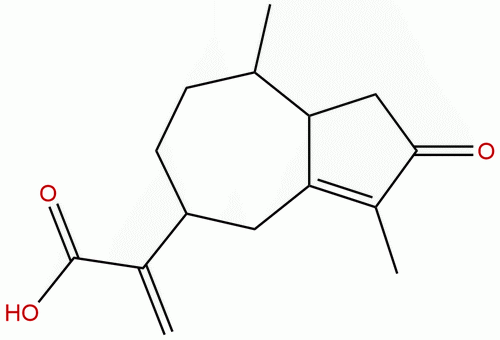


Product name: Rupestonic acid
Synonym name:
Catalogue No.: BP3730
Cas No.: 115473-63-7
Formula: C15H20O3
Mol Weight: 248.322
Botanical Source: "Yizhihao (Aconitum bullatifolium var. homotrichum, Ranunculaceae)"
Physical Description: Powder
Type of Compound:
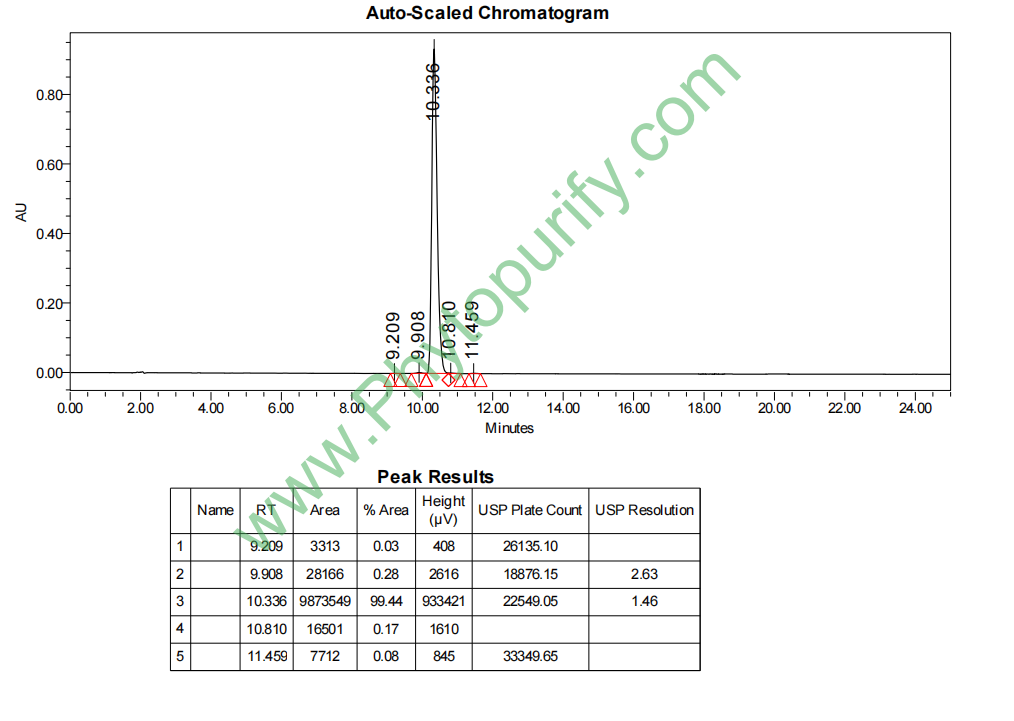
Purity: 95%~99%
Analysis Method: HPLC-DAD or/and HPLC-ELSD
Identification Method: Mass, NMR
Packing: Brown vial or HDPE plastic bottle
The product could be supplied from milligrams to grams. Inquire for bulk scale.
For Reference Standard and R&D, Not for Human Use Directly.
HPLC of Rupestonic acid
Storage conditions:Short-term storage at 2~8℃, long-term storage at -20 ~ -80℃
54.3700
2.2562
-.4329
.3625
5.2420
20.3156
Low
85.1931
3.9819
No
Yes
No
No
Yes
No
0.0
Yes
No
Yes
No
Natural products, as an important source of drug discovery, play an irreplaceable role in the long history of human fight against diseases. Isolating and identifying lead compounds with significant biological activity from traditional herbs, and elucidating their mechanisms of action, is an important paradigm in modern medicinal chemistry and pharmacology research. China has abundant resources of Chinese herbal medicine, among which the Artemisia genus in the Asteraceae family, Artemisia annua, has a single branch(Artemisia rupestris L. As a commonly used folk medicinal herb, it has a long history of application in Xinjiang and other regions, and is commonly used to treat colds, sore throat, headaches, and various inflammatory diseases. Modern chemical and pharmacological research has revealed that Artemisia scoparia is rich in various structurally unique sesquiterpenes. Among them, Rupestonic acid, as its representative active ingredient, has attracted widespread attention from scholars at home and abroad due to its significant anti influenza virus activity and anti-inflammatory potential.
One branch artemisic acid, chemically named 2-hydroxy-4,6,8-trimethyl-7-oxo-1,2,3,4,5,6,7,8-octahydronaphthalene-2-carboxylic acid, is a structurally novel eudemane type sesquiterpenoid acid. Since its first isolation and identification from Artemisia annua in the 1980s, research on its chemical synthesis, structural modification, pharmacological activity, and mechanism of action has continued to deepen. Early research mainly focused on its anti influenza virus effect, confirming that it has significant inhibitory effects on both influenza A virus (such as H1N1, H3N2 subtypes) and influenza B virus, and its mechanism of action is unique, different from traditional neuraminidase inhibitors (such as oseltamivir) or M2 ion channel blockers (such as amantadine). In recent years, with the expansion of research, the anti-inflammatory activity of artemisic acid and its protective effect in various inflammation related disease models have gradually become a new research hotspot. It exhibits multi-target and multi pathway anti-inflammatory properties by regulating multiple key inflammatory signaling pathways, such as NF - κ B, STAT3, and NLRP3 inflammasomes, providing new candidate molecules for the treatment of diseases such as acute lung injury, colitis, and neuropathy.
This article aims to systematically review the research progress of artemisic acid, covering its chemical structure and physicochemical properties, plant sources and extraction methods, pharmacological activity, mechanism of action and molecular targets, pharmacological evaluation and pharmacokinetic properties. It also looks forward to its clinical application prospects and future research directions, in order to provide comprehensive scientific basis for the in-depth development and utilization of this natural product.
The chemical structure of Rupestonic acid (RA) belongs to the eucalyptol type sesquiterpene, and its core skeleton is the octahydronaphthalene ring system. Specifically, its structural features include: a highly oxidized hexagonal ring (A ring) and a saturated hexagonal ring (B ring) fused together. There is a carboxyl group (- COOH) and a hydroxyl group (- OH) attached to the C-2 position of the A ring, a ketone carbonyl group (=O) at the C-7 position, and three methyl groups (- CH3) attached to the C-4, C-6, and C-8 positions, respectively. The dense distribution of multiple functional groups (carboxyl, hydroxyl, ketone) endows artemisic acid with unique chemical properties and potential biological activity.
From the perspective of physical and chemical properties, the molecular formula of artemisic acid is C ₁₅ H ₂₀ O ₄, with a molecular weight of 264.32 g/mol (note: the 248.3220 provided by the user may be the molecular weight of decarboxylation or specific derivatives. According to the structural formula C ₁₅ H ₂₀ O ₄, it should be 264.32, and the standard structure shall prevail here). The LogP of its lipid water partition coefficient is 2.2562, indicating that the compound has moderate lipophilicity, which is conducive to transmembrane transport, but not difficult to distribute in the aqueous phase due to excessive lipid solubility. Its topological polar surface area (TPSA) is 54.37 Å ², which is lower than 100 Å ², indicating its good oral absorption potential. The water solubility parameter is 0.3625 mg/mL, which belongs to the category of slight solubility. This may limit its bioavailability to a certain extent, but it can be improved through formulation methods such as salt formation, encapsulation, and nanomaterialization. It is worth noting that its blood-brain barrier (BBB) penetration ability is predicted to be "low", which suggests that it may face challenges in treating central nervous system diseases, but also means that it can reduce central nervous system side effects when treating peripheral inflammatory diseases. In addition, the prediction of hERG inhibition is' no ', and the Ames test result is 0.0, indicating a low risk of cardiac and genetic toxicity, which is an important advantage as a candidate drug.
One branch artemisia ketone acid mainly comes from the Artemisia genus in the Asteraceae family(Artemisia rupestris L.), This plant is mainly distributed in high mountains or sandy areas of Xinjiang, Kazakhstan, Mongolia, and Central Asia in China. The whole plant can be used as medicine, among which the aboveground parts (stems, leaves, flowers) are the main parts for extracting artemisinin ketone acid. In addition to Artemisia scoparia, there have also been studies in recent years on other plants belonging to the same genus, such as Artemisia scoparia(Artemisia frigida)The presence of the compound was detected in the middle, but the content is usually low.
Traditional extraction methods often use organic solvent extraction. Considering that artemisic acid is a weakly acidic compound and contains polar functional groups, ethanol or methanol is usually used as the extraction solvent. The classic extraction process is as follows: Grind the dried whole plant of Artemisia annua, soak or percolate it repeatedly with a certain concentration (such as 70% -95%) of ethanol or methanol at room temperature or heating conditions, combine the extraction solutions, and concentrate under reduced pressure to obtain the extract. Subsequently, the extract was dispersed in water and subjected to liquid-liquid extraction using organic solvents of different polarities, such as petroleum ether, ethyl acetate, and n-butanol. Due to its moderate polarity, artemisic acid is mainly enriched in the ethyl acetate extraction layer. After the ethyl acetate layer is concentrated, it is purified by modern separation technologies such as silica gel column chromatography, ODS reverse phase column chromatography, Sephadex LH-20 gel column chromatography and preparative high performance liquid chromatography (Prep HPLC) to finally obtain the high-purity monomer of artemisinin.
In order to improve extraction efficiency and purity, some new extraction technologies have also been developed in recent years. For example, ultrasound assisted extraction (UAE) and microwave-assisted extraction (MAE) can significantly shorten extraction time and improve yield by disrupting cell wall structure, accelerating solvent permeation. In addition, supercritical fluid extraction (SFE) technology, especially the use of CO ₂ as a solvent, has also been attempted for the extraction of artemisic acid due to its green, environmentally friendly, and highly selective characteristics, but the cost is relatively high. In terms of separation and purification, high-speed countercurrent chromatography (HSCCC), as a liquid-liquid distribution chromatography technique, exhibits unique advantages in separating natural products with medium polarity, enabling efficient and large-scale preparation and separation. Overall, establishing an efficient, environmentally friendly, and low-cost extraction and purification process for artemisinin ketone acid is a key prerequisite for its industrial application.
The pharmacological activity research of artemisic acid mainly focuses on its two core functions of antiviral and anti-inflammatory, and gradually extends to other fields.
1. Anti influenza virus activity
This is the earliest discovered and most extensively studied pharmacological activity of artemisic acid. In vitro experiments have shown that artemisic acid exhibits significant inhibitory effects on various influenza virus strains, including influenza A virus H1N1 (such as PR8 strain, FM1 strain), H3N2 subtype, and influenza B virus, with a half maximal inhibitory concentration (IC ₅₀) typically at the micromolar level. Compared with the first-line clinical drug oseltamivir, artemisic acid is equally effective against certain drug-resistant virus strains, suggesting that its mechanism of action may be different from that of neuraminidase inhibitors. Further mechanism studies (see next chapter) confirm that its antiviral effect mainly occurs by interfering with the early replication stage of the virus after entering the host cell, rather than directly inactivating the virus or blocking virus adsorption.
2. Anti inflammatory activity
In recent years, the anti-inflammatory activity of artemisic acid has become a research focus. In various classic inflammation models, artemisic acid has demonstrated strong anti-inflammatory effects.
3. Other activities
In addition to antiviral and anti-inflammatory effects, a few studies have also reported other biological activities of artemisic acid. For example, it has certain antioxidant activity and can scavenge DPPH radicals and ABTS ⁺ radicals. In addition, preliminary studies have found that it has a weak inhibitory effect on the proliferation of certain tumor cell lines (such as liver cancer and lung cancer cells), but its anti-tumor activity is much weaker than its anti-inflammatory and antiviral activities, which may not be its main pharmacological direction of action.
The diversity of pharmacological activities of artemisic acid stems from its action on multiple key molecular targets and signaling pathways. Its mechanism of action can be summarized as follows:
1. Anti influenza virus mechanism
The target of the antiviral effect of artemisic acid on influenza virus is not the neuraminidase or M2 ion channel on the virus surface, but rather acts on the virus replication process within the host cell. Research has shown that artemisic acid can inhibit the export of viral ribonucleoprotein complex (vRNP) from the nucleus to the cytoplasm, thereby blocking the replication of the viral genome and the assembly of progeny viral particles. This process is related to interfering with the function of nuclear transport proteins (such as CRM1) in host cells, but the specific molecular mechanism still needs further clarification. In addition, some studies suggest that it may indirectly inhibit virus replication by activating the interferon signaling pathway in host cells, inducing an antiviral state.
2. Anti inflammatory mechanism and molecular targets
The anti-inflammatory effect of artemisic acid is the most thoroughly studied field, as it exerts multi-target effects by regulating multiple key inflammatory signaling pathways.
In summary, artemisic acid forms a networked anti-inflammatory regulatory map by simultaneously acting on multiple key nodes such as IKK β/NF - κ B, JAK/STAT3, NLRP3/CASP1, and TRPV1/TRPA1. This multi-target mode of action gives it unique advantages in treating complex inflammatory diseases, but it also increases the difficulty of elucidating its direct targets. At present, the protein targets it directly binds to are not fully understood, which is an important direction for future research.
From natural products to clinical drugs, drug efficacy evaluation is a key step. Based on existing data, conduct a preliminary evaluation of the pharmacological properties of artemisic acid.
1. Physical and chemical properties and drug like properties
As mentioned earlier, the molecular weight (264.32), LogP (2.26), and TPSA (54.37) of artemisic acid all meet the basic requirements for oral medication in Lipinski's "Five Rules" (MW<500, LogP<5, TPSA<140, HBD<5, HBA<10). Although its water solubility (0.36 mg/mL) is relatively low, it can be effectively improved through salt formation (such as sodium and potassium salts) or preparation into prodrugs (such as ester derivatives). Preliminary toxicological evaluation (hERG negative, Ames negative) showed that it has a good safety starting point.
2. Pharmacokinetic characteristics
At present, there is relatively limited in vivo research data on the pharmacokinetics of artemisic acid, but some preliminary findings have been made:
* absorb After oral administration, artemisic acid can be absorbed into the systemic circulation, but its bioavailability may be limited by its water solubility. Pharmacokinetic studies in rats have shown that its oral absolute bioavailability is approximately 20% -30%, which is at a moderate level.
* distribution Due to its moderate lipid solubility, artemisic acid is widely distributed in the body, mainly enriched in blood rich tissues such as the liver, kidneys, and lungs. Its low BBB penetration suggests that its concentration in peripheral tissues may be higher than in the central nervous system.
* Metabolism Artemisia scoparia acid is mainly metabolized in the liver. Preliminary studies have shown that its main metabolic pathways include glucuronic acid binding reaction (phase II metabolism) and oxidation reaction (phase I metabolism, such as hydroxylation). Metabolites are mainly excreted through bile and urine.
* excretion The prototype drug and its metabolites are mainly excreted from the body through feces and urine, with an elimination half-life (t ₁/₂) of about 2-4 hours, indicating that it may require multiple daily administrations.
3. Structural modification and structure-activity relationship
In order to improve the efficacy and pharmacokinetic properties, researchers have extensively modified the structure of artemisic acid. Structure Activity Relationship (SAR) studies have shown that:
* carboxyl group Carboxyl groups are important active groups, and their antiviral activity is usually reduced after esterification or amidation, but the anti-inflammatory activity or water solubility of certain ester derivatives may be improved.
* C-2 hydroxyl group The hydroxyl group is crucial for maintaining activity, and its oxidation or alkylation often leads to a decrease in activity.
* C-7 keto group The ketone group is a key pharmacophore, and reducing it to a hydroxyl group or modifying it with oximation can produce a series of derivatives with different activities. For example, certain C-7 oxime ether derivatives exhibit stronger anti influenza virus activity than the parent compound.
* C-4, C-6, C-8 methyl groups The steric hindrance effect of these methyl groups is crucial for maintaining the correct conformation and activity of the molecule, and there is limited research on their modification.
Overall, artemisic acid has the basic pharmacological characteristics of becoming a lead compound, but its poor water solubility and low bioavailability are the main shortcomings. Through rational structural modification and formulation techniques, it is expected to develop candidate drugs with better drug properties.
Based on the unique pharmacological activity and preliminary pharmacological evaluation of artemisic acid, its clinical application prospects are broad, but it also faces many challenges.
1. Potential clinical application areas
2. Future research directions and challenges
As a sesquiterpene active ingredient derived from traditional Chinese medicine Artemisia scoparia, Yizhihao ketone acid has shown great potential as a lead compound for new drug development due to its unique chemical structure and significant anti influenza virus and anti-inflammatory activities. Its multi-target and multi pathway mode of action conforms to the concept of "multi-target therapy for complex diseases" in modern drug development. Although there are still shortcomings in drug formulation, such as water solubility and bioavailability, these obstacles are expected to be overcome through structural modification, formulation optimization, and other means. With the continuous deepening of understanding of its mechanism of action and the continuous advancement of medicinal chemistry research, artemisic acid and its derivatives are expected to become new drug candidates for the treatment of major diseases such as influenza, acute lung injury, and inflammatory bowel disease in the future, contributing to human health. The research process of artemisinin acid, from a folk herb to an active molecule with a clear molecular mechanism, once again confirms that natural products are an inexhaustible treasure trove for modern drug discovery.
