Introduction/Overview
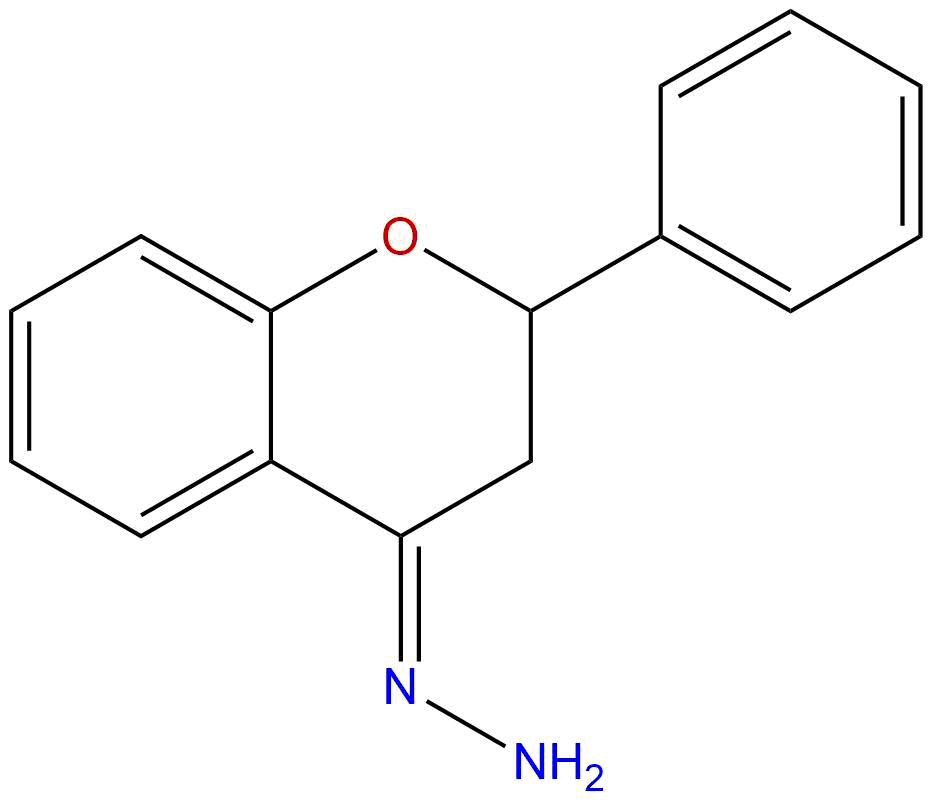
Natural products have long been an important source of innovative drug discovery, and their structural diversity and wide range of biological activities provide valuable lead compounds for the treatment of various diseases. Flavonoids, as an important secondary metabolite of flavonoids, are widely distributed in the plant kingdom and have attracted much attention for their various pharmacological activities such as antioxidant, anti-inflammatory, and anti-tumor. Flavanone hydrazone (CAS: 1692-46-2) is a type of compound derived from the chemical modification of the flavanone structure. Its core feature is the introduction of a hydrazone group (- NHN=CRR ') on the carbonyl group of the flavanone skeleton. This structural modification not only changes its physicochemical properties, but also significantly expands its biological activity spectrum.
The initial research revealed that flavanone hydrazone is an effective nonsteroidal anti-inflammatory compound that can specifically inhibit the ocular inflammatory response induced by lens proteins, suggesting its potential application value in ophthalmic inflammatory diseases. In recent years, with the deepening of research, the range of its pharmacological activities has been continuously expanded, especially in the field of anti diabetes, showing remarkable potential of multi target action. Research has shown that flavanone hydrazone can exert multiple effects such as improving insulin resistance, promoting glucose uptake, and regulating energy metabolism by regulating multiple key signaling pathways and targets closely related to glucose and lipid metabolism, including AMPK, PPAR γ, PI3K/Akt, SGLT2, etc. This characteristic of multi target synergy makes it possible to overcome the limitations of existing single target hypoglycemic drugs, and provides a new idea for the development of new anti diabetes drugs.
The purpose of this paper is to systematically review the chemical structure, plant origin, pharmacological activity of flavanone hydrazone, especially its anti diabetes effect and its complex mechanism network, and to make a preliminary evaluation of its pharmaceutical properties, and finally look forward to its future research direction and clinical application prospects.
Chemical structure and physicochemical properties
Yellowing ketone hydrazones are not a single compound, but a class of derivatives with flavanones as the parent nucleus. Its basic structure is composed of a dihydroflavonoid (flavanone) skeleton combined with a hydrazone group. The typical structural formula of a flavanone hydrazone can be expressed as: the 4-carbonyl group (C=O) of the flavanone C ring undergoes a condensation reaction with a hydrazine compound (R-NHNHNH2) to form a hydrazone bond (- C=N-NH-R). Among them, the R group can be an aromatic ring, heterocyclic ring, or fatty chain, and its structural changes directly affect the physicochemical properties and biological activity of the compound. The compound with CAS number 1692-46-2 is a specific representative of this type of derivative.
From the perspective of pharmacological parameters, the molecular weight of this representative flavanone hydrazone is 238.2900, belonging to the category of small molecule compounds. Its lipid water partition coefficient (LogP) is 2.7893, indicating that the compound has moderate lipophilicity, which facilitates its penetration of the cell membrane and binding to intracellular targets. The topological polar surface area (TPSA) is 47.6100 Å ², which is relatively low and usually indicates good membrane permeability. The water solubility data is 0.0501, which belongs to slightly soluble or poorly soluble, which may be one of the challenges that need to be overcome in the development of its oral dosage form. It is worth noting that its blood brain barrier permeability is predicted to be "high", suggesting that this compound may have central nervous system activity, which provides a chemical basis for exploring its application in central complications of diabetes (such as diabetes encephalopathy) or other central nervous system diseases. In addition, the key early safety screening results showed that its hERG inhibition was "no", and the Ames test result was 0.0 (negative), preliminarily ruling out its significant risk of causing cardiac QT interval prolongation and gene mutations, laying a good safety foundation for its further development.
Plant sources and extraction methods
Yellow ketone hydrazones are not widely present in direct form in nature. It is mainly prepared by a semi synthetic method using natural flavanones as precursors. Common natural precursors of flavanones include naringin, hesperetin, and resveratrol, which are abundant in the peel, juice, and various medicinal plants of citrus fruits such as oranges, pomelos, and lemons, as well as in ginkgo and licorice.
Its preparation usually adopts the classic condensation reaction route: first, high-purity flavanone monomers are extracted and purified from plant materials. The commonly used extraction methods include organic solvent extraction (such as methanol, ethanol, ethyl acetate), ultrasound assisted extraction or microwave-assisted extraction, followed by separation and purification by column chromatography (such as silica gel column, polyamide column), preparative high-performance liquid chromatography and other techniques. After obtaining the flavanone monomer, under mild acidic or neutral conditions, it is refluxed with corresponding hydrazine compounds (such as phenylhydrazine, substituted phenylhydrazine, acylhydrazine, etc.) in solvents such as ethanol and methanol to generate the corresponding flavanone hydrazone derivatives. After the reaction is complete, the target compound can be purified by recrystallization or chromatographic methods. By changing the structure of hydrazine based reactants, a library of flavanone hydrazone compounds with different substituents can be constructed for structure-activity relationship studies to optimize their activity and drug properties.
Pharmacological activity research
The pharmacological activity research of flavanone hydrazone has expanded from the initial anti-inflammatory field to various aspects such as metabolic diseases, demonstrating multiple biological activities.
-
anti-inflammatory activity Huangtanone hydrazone was first reported as an effective nonsteroidal anti-inflammatory agent. In experimental eye inflammation models, it can significantly inhibit inflammatory responses induced by endogenous substances such as lens proteins, alleviate pathological changes such as eye tissue edema and leukocyte infiltration. Its anti-inflammatory strength is comparable to some classic NSAIDs, but its mechanism of action may be different, providing potential candidate drugs for the treatment of eye inflammatory diseases such as uveitis and postoperative inflammation of cataracts.
-
Antidiabetic activity This is currently the most promising direction in the research of flavanone hydrazones. Numerous in vitro and animal experiments have confirmed that flavanone hydrazone and its derivatives have significant hypoglycemic and insulin resistance improving effects.
- In vitro research In insulin resistant liver cells (such as HepG2), adipocytes (such as 3T3-L1), and myotube cell models, treatment with flavanone hydrazone can significantly enhance the uptake and utilization of glucose by cells, reduce intracellular lipid accumulation, and improve the sensitivity of the insulin signaling pathway.
- In vivo research: In the model of type 1 diabetes induced by streptozotocin (STZ) and the model of type 2 diabetes induced by high-fat diet combined with low-dose STZ, administration of flavanone hydrazone can effectively reduce fasting blood glucose and postprandial blood glucose levels, improve oral glucose tolerance, and regulate dyslipidemia (reduce triglycerides, total cholesterol, and increase high-density lipoprotein cholesterol). In addition, it can also reduce oxidative stress and low-grade inflammation caused by diabetes.
-
Other potential activities Based on the antioxidant properties of the parent nucleus of flavanone and the potential metal chelating ability of the hydrazone group, flavanone hydrazones have also been studied for applications in antioxidant and neuroprotective fields. Its high blood-brain barrier permeability makes it of exploratory value in the prevention and treatment of neurodegenerative diseases such as Alzheimer's disease and Parkinson's disease.
Mechanism of action and molecular targets
The anti diabetes effect of flavanone hydrazone is not achieved through a single way, but through a multi-target, multi-channel collaborative network, which constitutes its core advantages different from traditional hypoglycemic drugs. Current research suggests that its effects involve the following key targets and pathways:
-
Activate AMPK pathway Adenosine activated protein kinase (AMPK) is a core regulator of cellular energy metabolism. Yellow ketone hydrazone has been proven to be an effective activator of AMPK (encoded by subunits such as PRKAA1). Activated AMPK reduces hepatic glucose output by inhibiting the expression of key hepatic gluconeogenesis enzymes such as PEPCK and G6Pase; On the other hand, it promotes the translocation of glucose transporter 4 (GLUT4, encoded by the SLC2A4 gene) from skeletal muscle and adipose tissue to the cell membrane, increasing the uptake of glucose by peripheral tissues. Meanwhile, AMPK activation can promote fatty acid oxidation, inhibit fat synthesis, and improve lipid metabolism.
-
Regulating the PI3K/Akt signaling pathway This pathway is the core of insulin signaling. Huangtanone hydrazone can enhance tyrosine phosphorylation of insulin receptor substrate 1 (IRS1), activate phosphatidylinositol 3-kinase (PI3K, whose regulatory subunit is PIK3R1) and its downstream key kinase Akt (AKT1). Activated Akt further promotes membrane translocation of GLUT4 and regulates metabolic processes such as glycogen synthesis and protein synthesis, thereby simulating and enhancing the action of insulin.
-
Regulating nuclear receptor PPAR γPeroxisome proliferator activated receptor gamma (PPAR gamma) is a key nuclear transcription factor that regulates adipocyte differentiation, lipid metabolism, and insulin sensitivity. Huangrane ketone hydrazone may act as a partial agonist or regulator of PPAR γ, promoting normal differentiation of adipocytes, increasing the secretion of insulin sensitizing factors such as adiponectin, and thus systematically improving insulin sensitivity.
-
Inhibit SGLT2 and DPP4 Sodium glucose cotransporter 2 (SGLT2) is the main protein for renal reabsorption of glucose, and its inhibitors have become a new type of hypoglycemic drug. Research has shown that some flavanone derivatives have inhibitory activity against SGLT2, possibly by promoting urinary glucose excretion to lower blood sugar levels. In addition, it may also have a certain inhibitory effect on dipeptidyl peptidase-4 (DPP4), and DPP4 inhibitors can promote insulin secretion by prolonging the activity of endogenous glucagon like peptide-1 (GLP-1).
-
Affects glucokinase (GCK) and other enzymes Glucokinase is a glucose sensor in beta cells of the liver and pancreas. Huangtanone hydrazone may affect liver glucose metabolism and insulin secretion by regulating the activity or expression of GCK.
To sum up, flavanone hydrazone exerts its anti diabetes effect from multiple links such as increasing insulin sensitivity, promoting glucose utilization, reducing glucose production and reabsorption by simultaneously acting on multiple upstream regulatory points such as AMPK, PI3K/Akt, PPAR γ, and downstream effect targets such as SGLT2 and DPP4, showing the potential of "one stone, many birds" treatment strategy.
Evaluation of drug properties and pharmacokinetics
Based on its physicochemical parameters and preliminary biological data, the pharmacological properties of flavanone hydrazone can be preliminarily evaluated as follows:
Advantage:
1. Good molecular properties Low molecular weight, moderate LogP, low TPSA, meeting the basic requirements of Lipinski's Rule of Five, and possessing good cell membrane permeability potential.
2. Preliminary safety is good: No hERG inhibition and mutagenicity (Ames negative), reducing the risk of cardiac toxicity and genetic toxicity in early development.
3. Multi-target effect Its multi target characteristics may lead to better efficacy and lower drug resistance, and it is suitable for the treatment of complex metabolic diseases such as diabetes.
4. Potential central role The high permeability of blood brain barrier provides the possibility for the treatment of central complications of diabetes or the exploration of neurological indications.
Challenges and unknowns:
1. Poor water solubility Low water solubility may affect its oral bioavailability, and solid dispersion, cyclodextrin inclusion, nanocrystals, and other technologies may need to be used in formulation development to improve its solubility.
2. Lack of pharmacokinetic data At present, there are few reports on systematic pharmacokinetic studies of flavanone hydrazone, such as absorption, distribution, metabolism, excretion, i.e. ADME properties. The key parameters such as oral absorption degree, plasma protein binding rate, major metabolic organs, metabolites and activity, elimination half-life, etc. are still unclear, which is a gap that must be filled to promote its preclinical development. Especially the chemical stability and metabolic fate of the hydrazone bond in vivo (whether it is easily hydrolyzed or enzymatically hydrolyzed) need to be further studied.
3. Metabolism and toxicity in the body Long term studies on in vivo toxicity, reproductive toxicity, carcinogenicity, etc. have not yet been conducted. Its multi-target nature may also lead to off target effects and unforeseen side effects, which require systematic evaluation.
Clinical application prospects and prospects
Flavanone hydrazone, especially its anti diabetes activity, shows broad clinical application prospects, but also faces a series of topics that need in-depth research.
prospect:
1. Candidates for new multi target anti diabetes drugs For the multiple pathophysiological mechanisms of type 2 diabetes, it is the current trend to develop single molecule multi target drugs. The unique mechanism of action of flavanone hydrazone makes it possible to become a lead compound of such drugs, especially suitable for diabetes patients with insulin resistance, dyslipidemia and chronic inflammation.
2. Components of combination therapy Due to its different mechanism of action from existing mainstream hypoglycemic drugs such as metformin, sulfonylureas, SGLT2i, GLP-1RA, etc., flavanone hydrazone may be used as part of a combination therapy in the future to achieve synergistic effects, reduce monotherapy doses, and minimize side effects.
3. Expand other indications: Its anti-inflammatory and potential neuroprotective activities can be used to explore the treatment of diabetes complications (such as diabetes nephropathy, retinopathy, neuropathy), and even expand to non diabetes inflammatory diseases and neurodegenerative diseases.
Outlook and Future Research Directions:
1. Research on System Structure Activity Relationship (SAR)Synthesize a series of flavanone hydrazone derivatives with different substituents, systematically study the relationship between their chemical structures and different activities such as AMPK activation, PPAR γ regulation, SGLT2 inhibition, etc., in order to optimize candidate molecules with stronger activity, higher selectivity, and lower toxicity.
2. In depth pharmacokinetic and toxicological research On the basis of optimizing lead compounds, comprehensive preclinical ADME and safety evaluations must be conducted to clarify their in vivo processes, therapeutic window, and potential risks.
3. Refined research on the mechanism of action Using chemical biology methods such as affinity fishing and molecular probes to accurately identify their direct target proteins, and using techniques such as gene knockout/knockdown to verify the contribution weights of each target in overall drug efficacy in cell and animal models, elucidating the hierarchical and logical functions of their multi-target network.
4. Formulation development Develop advanced formulations suitable for oral or injection administration to address its poor water solubility and improve its bioavailability and clinical applicability.
Conclusion
Flavanone hydrazone is a kind of structural modification compounds derived from natural flavanone. With its unique hydrazone structure, it has successfully extended the anti-inflammatory and antioxidant activities of mother nucleus to the major disease field of anti diabetes. Its most significant feature is its ability to synergistically regulate multiple key signaling pathways and targets such as AMPK, PI3K/Akt, PPAR γ, etc., intervening in glucose and lipid metabolism disorders from multiple dimensions, reflecting the modern concept of multi-target drug therapy for complex diseases. Although it has shown good initial potential in drug development, such as ideal molecular properties and no early warning toxicity, poor water solubility and lack of systematic pharmacokinetic data are the main obstacles to its clinical application. Future research should focus on optimizing its structure through rational drug chemistry design, improving its pharmacological properties while enhancing its activity, and conducting systematic preclinical efficacy, pharmacokinetics, and safety evaluations. The research on flavanone hydrazone, as a representative of multi-target natural product derivatives, not only provides a valuable leading structure for the development of new anti diabetes drugs, but also provides a successful example for the discovery and creation of innovative drugs with independent intellectual property rights from traditional medicinal plant resources. With the continuous deepening of research, flavanone hydrazone is expected to realize its transformative value in the treatment of metabolic diseases and even a wider range of diseases.