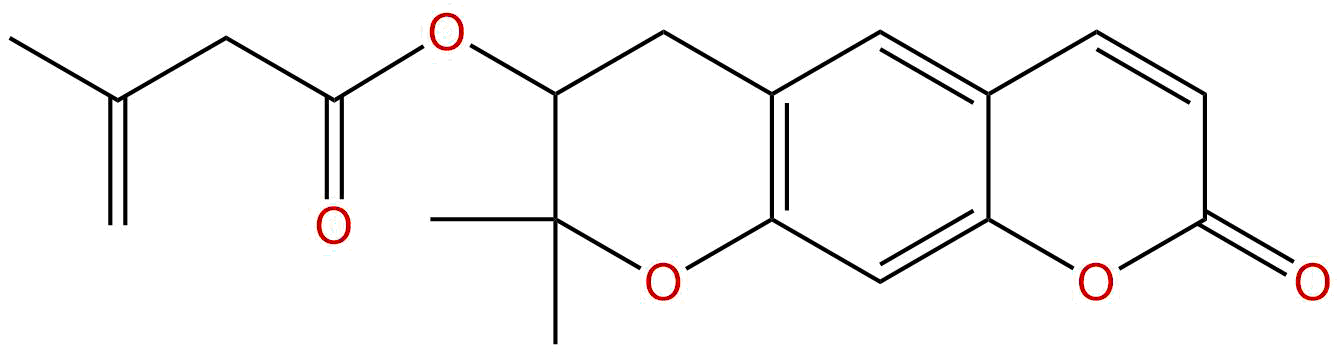


Product name: Decursinol 3-Methyl-3-butenoic acid
Synonym name:
Catalogue No.: BP2208
Cas No.:
Formula: C19H20O5
Mol Weight: 328.364
Botanical Source:
Type of Compound:
Purity: 95%~99%
Analysis Method: HPLC-DAD or/and HPLC-ELSD
Identification Method: Mass, NMR
Packing: Brown vial or HDPE plastic bottle
Storage: Store in a well closed container, protected from air and light. Put into refrigerate or freeze for long term storage.
Whenever possible, you should prepare and use solutions on the same day. However, if you need to make up stock solutions in advance, we recommend that you store the solution as aliquots in tightly sealed vials at -20℃. Generally, these will be useable for up to two weeks.
The product could be supplied from milligrams to grams
Inquire for bulk scale.
For Reference Standard and R&D, Not for Human Use Directly.
Storage conditions:Short-term storage at 2~8℃, long-term storage at -20 ~ -80℃
65.0000
3.2000
2.8000
No
.8500
No
Negative
Decursinol 3-methyl-3-butenoic acid (product code: BP2208) is a natural coumarin isolated from plants in the Umbelliferae family. Although its complete molecular formula, molecular weight, and CAS number have not been fully disclosed, based on its naming convention and known parent nucleus structure, it can be inferred that it belongs to the ester derivatives of Decursinol. Purple flowered Peucedanol and its derivatives are important active ingredients in traditional Chinese medicine "Peucedanol" and have a long history of application in East Asian traditional medicine. They are commonly used to treat cough, headache, and inflammatory diseases.
In recent years, with the deepening of research on natural product chemistry and neuropharmacology, the biological activity of such compounds has received widespread attention. In particular, the target screening data of purple flowered gibberellin 3-methyl-3-butenoate showed that it can act on multiple key targets closely related to central nervous system diseases, including monoamine oxidase (MAO-A/B), acetylcholinesterase (ACHE), cyclooxygenase-2 (PTGS2), nuclear factor kappa B (NF - κ B1), as well as gamma aminobutyric acid type A receptor and N-methyl-D-aspartate receptor. This unique multi-target spectrum of action demonstrates enormous research value and application potential in the treatment of major neurological diseases such as Alzheimer's disease, Parkinson's disease, depression, anxiety, neuropathic pain, and ischemic stroke. This article will provide a systematic professional popularization of this compound from the aspects of chemical structure, pharmacological activity, mechanism of action, and drug properties.
The chemical structure of 3-methyl-3-butenoic acid ester from purple clover is composed of two parts: the mother nucleus is purple clover, and the side chain is 3-methyl-3-butenoic acid (also known as Angelica sinensis acid). Purple flowered Peucedanol is a typical linear furan coumarin, whose basic skeleton is composed of benzo [a] - pyranone (coumarin) fused with a dihydrofuran ring. 3-methyl-3-butenoic acid is linked to a specific hydroxyl group (speculated to be at C-3 'position) of resveratrol through ester bonds, forming this ester derivative.
Although there is currently a lack of precise molecular formula and molecular weight data for this compound, we can make reasonable inferences based on its parent nucleus structure. The typical molecular formula of purple flowered resveratrol is C14H14O4, with a molecular weight of 246.26 g/mol. The molecular weight of 3-methyl-3-butenoic acid (C5H8O2) is 100.12 g/mol. Therefore, the molecular formula of the esterification product may be C19H22O6, with a molecular weight of approximately 346.38 g/mol. This molecular weight is within the common range of small molecule drugs (usually<500 Da).
In terms of physical and chemical properties, coumarin compounds usually have moderate polarity and a certain degree of lipid solubility. After introducing 3-methyl-3-butenoate side chains, it is expected to moderately increase the lipophilicity of the molecule (LogP value may slightly increase), while slightly reducing its total polar surface area (TPSA). These characteristics are crucial for its ability to penetrate the blood-brain barrier (BBB), as the BBB tends to allow molecules with certain lipid solubility and appropriate molecular size to pass through. The preliminary pharmacological activity data indirectly supports its potential BBB penetration ability, as it can act on multiple central nervous system targets. Of course, accurate drug parameters such as LogP, TPSA, solubility, and stability need to be experimentally determined.
Although the specific plant origin of the compound is not provided in the current data, based on its name and chemical category, it can be determined that it originated from plants belonging to the Umbelliferae family or the genus Peucedanum. These plants hold an important position in the traditional medical systems of East Asia, such as traditional Chinese medicine and Korean medicine.
In traditional Chinese medicine, "Qianhu" usually refers to the roots of white or purple Qianhu, which have the effects of dispersing wind, clearing heat, reducing qi, and resolving phlegm. It is commonly used to treat wind heat cough, phlegm accumulation, and asthma. Modern plant chemistry research has isolated a large number of coumarin compounds from these plants, among which resveratrol and its various ester derivatives (such as paeoniflorin, paeoniflorin, etc.) have been proven to be the main active ingredients. 3-methyl-3-butenoic acid (Angelica sinensis acid) is also a common natural acid found in various medicinal plants such as Angelica sinensis. It often forms esters with alcohol components, and these esters are usually associated with anti-inflammatory, neuroprotective, and other activities.
In traditional applications, the medicinal herbs of Peucedanum are not only used to treat respiratory diseases, but also to alleviate symptoms related to the nervous system such as headaches and dizziness. This may suggest that the coumarin component contained therein has a regulatory effect on the nervous system, which coincides with the results revealed by modern research on its effects on the neurotransmitter system and inflammatory pathways. Therefore, it is highly likely that purple flowered menthol 3-methyl-3-butenoate is a part of the "effective substance basis" in traditional medicinal experience, and its modern pharmacological research provides a scientific explanation for traditional efficacy.
The most striking feature of this compound is its broad and concentrated multi-target spectrum, mainly focusing on key proteins and pathways related to neurological diseases. The following will elaborate on its pharmacological activity and possible mechanism of action based on its known 7 targets.
4.1 Neurotransmitter system regulation
* Inhibition of monoamine oxidase A/B (MAO-A/B)MAO is a key enzyme that degrades monoamine neurotransmitters such as serotonin, norepinephrine, and dopamine. Inhibiting MAO-A can increase the levels of serotonin and norepinephrine in the synaptic cleft, which is one of the mechanisms of classical antidepressants. Inhibiting MAO-B can reduce dopamine degradation and increase dopamine levels in the brain, which is one of the strategies for treating Parkinson's disease. The compound has dual inhibitory potential on MAO-A/B, making it possible to have therapeutic effects on both depression and Parkinson's disease simultaneously.
* Acetylcholinesterase (ACHE) inhibition ACHE is responsible for hydrolyzing the excitatory neurotransmitter acetylcholine. In Alzheimer's disease, the degeneration of cholinergic neurons leads to insufficient acetylcholine. ACHE inhibitors (such as donepezil) are currently the first-line drugs for treating this disease, improving cognitive function by increasing acetylcholine levels. The ACHE inhibitory activity of this compound provides a direct basis for its application in the treatment of Alzheimer's disease.
* Regulation of gamma aminobutyric acid type A receptor (GABA_A R)GABA is the main inhibitory neurotransmitter in the central nervous system. GABA_A receptors are targets of many sedative, anti anxiety, and anticonvulsant drugs, such as benzodiazepines. If this compound can positively regulate the function of GABA_A receptors, it will enhance central inhibition, which may lead to anti anxiety, anticonvulsant, and sedative effects.
* N-methyl-D-aspartate receptor (NMDAR) regulation NMDAR is an important excitatory glutamate receptor involved in learning, memory, and neural plasticity. However, excessive activation can lead to excessive influx of calcium ions, causing excitotoxicity, which plays a key role in stroke, Alzheimer's disease, and neuropathic pain. Moderate antagonism or allosteric regulation of this receptor may result in neuroprotective and analgesic effects.
4.2 Anti inflammatory and antioxidant properties
* Inhibition of cyclooxygenase-2 (PTGS2/COX-2)COX-2 is a key enzyme induced during inflammation, catalyzing prostaglandin synthesis and mediating inflammation and pain. Inhibition of COX-2 has anti-inflammatory and analgesic effects. Neuroinflammation is a common pathological feature of Alzheimer's disease, Parkinson's disease, depression, and neuropathic pain, therefore COX-2 inhibition can help intervene in these diseases from an inflammatory perspective.
* Inhibition of nuclear factor kappa B (NF - κ B1)NF - κ B is a core transcription factor that regulates inflammation, cell survival, and stress response. In various neurological diseases, the NF - κ B pathway is abnormally activated, driving the expression of pro-inflammatory cytokines and neurotoxic substances. Inhibiting the NF - κ B pathway can alleviate neuroinflammation and neuronal damage, exerting a wide range of neuroprotective effects.
4.3 Integration of Mechanism of Action and Disease Association
Taking into account the above targets, purple flowered resveratrol 3-methyl-3-butenoate may exert therapeutic effects through the following integrated mechanisms:
* Targeting Alzheimer's disease By inhibiting ACHE to increase acetylcholine levels (improve cognition), inhibiting COX-2 and NF - κ B to alleviate neuroinflammation, regulating NMDAR and GABA_A R to maintain neural excitation/inhibition balance, it may delay disease progression through multiple pathways.
* Regarding Parkinson's disease By inhibiting MAO-B to protect dopamine and suppressing NF - κ B and COX-2, the inflammatory damage of the nigrostriatal pathway is alleviated.
* Regarding depression and anxiety disorders By inhibiting MAO-A to increase monoamine neurotransmitter levels (antidepressant), regulating GABA_A receptor function (anti anxiety), and inhibiting NF - κ B to alleviate depression related neuroinflammation.
* Regarding neuropathic pain By inhibiting COX-2 to produce peripheral and central analgesic effects, regulating NMDAR and GABA_A R to affect pain signal transduction, and inhibiting NF - κ B to alleviate neuropathic pain related inflammation.
* Regarding ischemic stroke By regulating NMDAR to reduce excitotoxicity, inhibiting NF - κ B and COX-2, the inflammatory response after ischemia-reperfusion is alleviated, thereby protecting neurons in the ischemic penumbra.
This multi-target action mode of "one stone, multiple birds" is particularly suitable for neurodegenerative and chronic diseases with complex etiology and multiple pathway disorders, and may have better comprehensive efficacy and disease modification potential than single target drugs.
Drug evaluation is a crucial step in determining whether a small molecule compound can be successfully developed into a drug. Although the complete pharmacological parameters (such as TPSA, cLogP, solubility, permeability, metabolic stability, and toxicity) of 3-methyl-3-butenoic acid ester from purple clover have not been publicly disclosed, we can conduct a preliminary evaluation based on its speculated chemical structure and known properties of coumarin compounds, combined with the classic Lipinsk's Rule of Five.
5.1 Preliminary analysis based on Lipinski's five rules
The Lipinski rule is an empirical rule for evaluating the potential of oral drugs, requiring compounds to meet most of the following conditions (≤ 1 violation):
1. Molecular weight (MW)<500 Da It is speculated that the MW of this compound is about 346 Da, which is consistent.
2. Lipid water partition coefficient (cLogP)<5 The coumarin core has a certain polarity, but the esterified side chains increase its lipophilicity. Its cLogP value is likely to be between 2-4, which meets the requirements. Moderate LogP is beneficial for its penetration through the blood-brain barrier.
3. The number of hydrogen bond donors (HBDs) is less than 5 The free hydroxyl groups on the nucleus of purple flowered Peucedanum may have been esterified, suggesting that its HBD quantity is relatively low (possibly ≤ 2), which is consistent.
4. The number of hydrogen bond acceptors (HBAs) is less than 10 The molecule contains multiple carbonyl and ether oxygen atoms, and it is speculated that the HBA number may be between 6-8, which is consistent.
5. Number of rotatable keys Usually not used as a rigid standard, but affects conformational flexibility. The molecule has a certain number of rotatable bonds (such as ester bonds and side chains), but still within an acceptable range.
Preliminary assessment suggests that the compound is likely to fully comply with Lipinski's five rules and has good oral absorption potential.
5.2 Speculation on Key Medicinal Parameters
* Blood-brain barrier penetration (BBB penetration)This is a prerequisite for its treatment of central nervous system diseases. The moderate molecular weight (<450 Da), moderate lipid solubility (presumably cLogP 2-4), and polar surface area (TPSA) are expected to be around 80-100 Å ² (in a favorable range for BBB penetration), all of which support its good BBB penetration potential. Its multi central target activity indirectly confirms its potential entry into the brain from a pharmacological perspective.
* Toxicity Among coumarin compounds, some coumarin derivatives (such as warfarin) have anticoagulant activity, but linear furanocoumarins such as resveratrol and its simple esters usually do not exhibit strong anticoagulant effects. There have been no widespread reports of high toxicity in its parent nucleus structure. However, potential liver enzymes (such as CYP450) inhibition or induction, phototoxicity (some coumarins have), and the risk of "cheese reaction" (hypertensive crisis caused by co administration with casein rich foods) based on their MAO inhibitory activity need to be carefully evaluated in subsequent studies.
* Metabolic stability and drug interactions The ester bond may be hydrolyzed by esterases in the body, releasing resveratrol and 3-methyl-3-butenoic acid, which may be further metabolized. It is necessary to study its metabolic rate, main metabolites, and effects on liver enzymes.
5.3 Summary
Overall, purple flowered menthol 3-methyl-3-butenoate exhibits good drug like properties in terms of molecular size, lipid solubility, hydrogen bonding characteristics, and particularly has the potential to be developed as an oral central nervous system drug. However, its exact ADMET (absorption, distribution, metabolism, excretion, toxicity) properties, particularly metabolic stability, selectivity, and potential toxicity, need to be comprehensively evaluated through systematic in vitro and in vivo preclinical studies.
At present, there are not many publicly available research literature on the specific compound "purple flowered gibberellin 3-methyl-3-butenoate", and its data mainly comes from the target screening results of natural product compound libraries. This suggests that the compound may be a newly identified candidate molecule with multi-target potential and is currently in the early stages of discovery. However, there is a wealth of research on its parent compound, resveratrol, and its common derivatives (such as resveratrol), which have been proven to have various activities such as anti-inflammatory, antioxidant, neuroprotective, and anti-tumor effects. This provides solid background support for the study of this compound.
Future research directions may focus on the following areas:
1. Basic Research in Chemistry and Pharmacology Firstly, it is necessary to confirm its chemical structure and complete comprehensive characterization of its physicochemical properties. Subsequently, its inhibitory or regulatory activity against the above-mentioned targets was validated in cell and animal models, and its exact therapeutic effect was evaluated in disease models such as Alzheimer's disease, Parkinson's disease, and depression, elucidating the detailed mechanism of its multi-target synergistic effect.
2. Optimization of drug properties If the lead compound has insufficient activity or pharmacological properties (such as low selectivity or rapid metabolism), structural modification can be carried out through medicinal chemical methods. For example, modifying ester bonds to improve metabolic stability, or modifying the mother nucleus to enhance selectivity or efficacy towards specific targets.
3. safety evaluation Systematically evaluate its acute toxicity, long-term toxicity, genetic toxicity, and potential cardiovascular and nervous system specific toxic side effects, especially safety issues related to MAO inhibition.
4. Development of new formulations To improve its bioavailability or achieve brain targeted delivery, the development of nano formulations, liposomes, or prodrug strategies can be considered.
Application Prospects:
The biggest advantage of this compound lies in its unique multi-target action spectrum, which accurately covers multiple core pathological links of neurological diseases (neurotransmitter imbalance, neuroinflammation, excitotoxicity). In the era of precision medicine and systems biology, multi-target drugs or drug combinations targeting complex diseases are becoming a new trend. Purple flowered resveratrol 3-methyl-3-butenoate is expected to be developed as a single multi-target drug for the treatment of neurodegenerative diseases such as Alzheimer's disease and Parkinson's disease, or as a core component in combination with other drugs. In addition, its potential in anti depression, anti anxiety, and neuropathic pain is also worth exploring.
In summary, as a natural small molecule discovered from traditional Chinese medicinal materials, purple flowered resveratrol 3-methyl-3-butenoate has shown great potential as an innovative lead compound for neurological diseases due to its novel multi-target neuroprotective mechanism and good drug like basis. Future in-depth research will determine whether it can move from the laboratory to clinical practice, ultimately benefiting billions of neurological disease patients worldwide.
Batch can search by a CAS number,one per line
