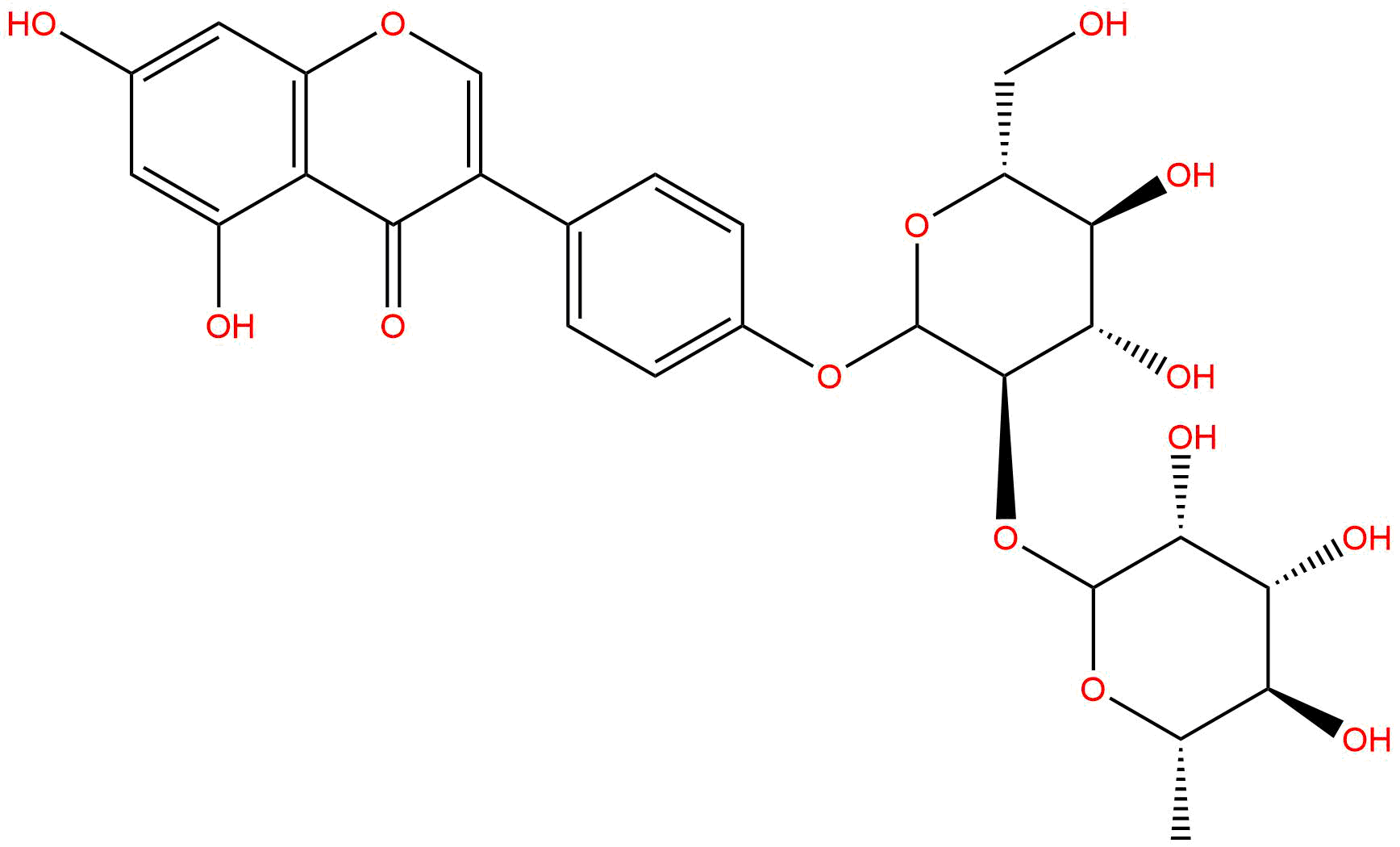


Product name: Sophorabioside
Synonym name:
Catalogue No.: BP4477
Cas No.: 2945-88-2
Formula: C27H30O14
Mol Weight: 578.523
Botanical Source:
Type of Compound:
Purity: 95%~99%
Analysis Method: HPLC-DAD or/and HPLC-ELSD
Identification Method: Mass, NMR
Packing: Brown vial or HDPE plastic bottle
Storage: Store in a well closed container, protected from air and light. Put into refrigerate or freeze for long term storage.
Whenever possible, you should prepare and use solutions on the same day. However, if you need to make up stock solutions in advance, we recommend that you store the solution as aliquots in tightly sealed vials at -20℃. Generally, these will be useable for up to two weeks.
The product could be supplied from milligrams to grams
Inquire for bulk scale.
For Reference Standard and R&D, Not for Human Use Directly.
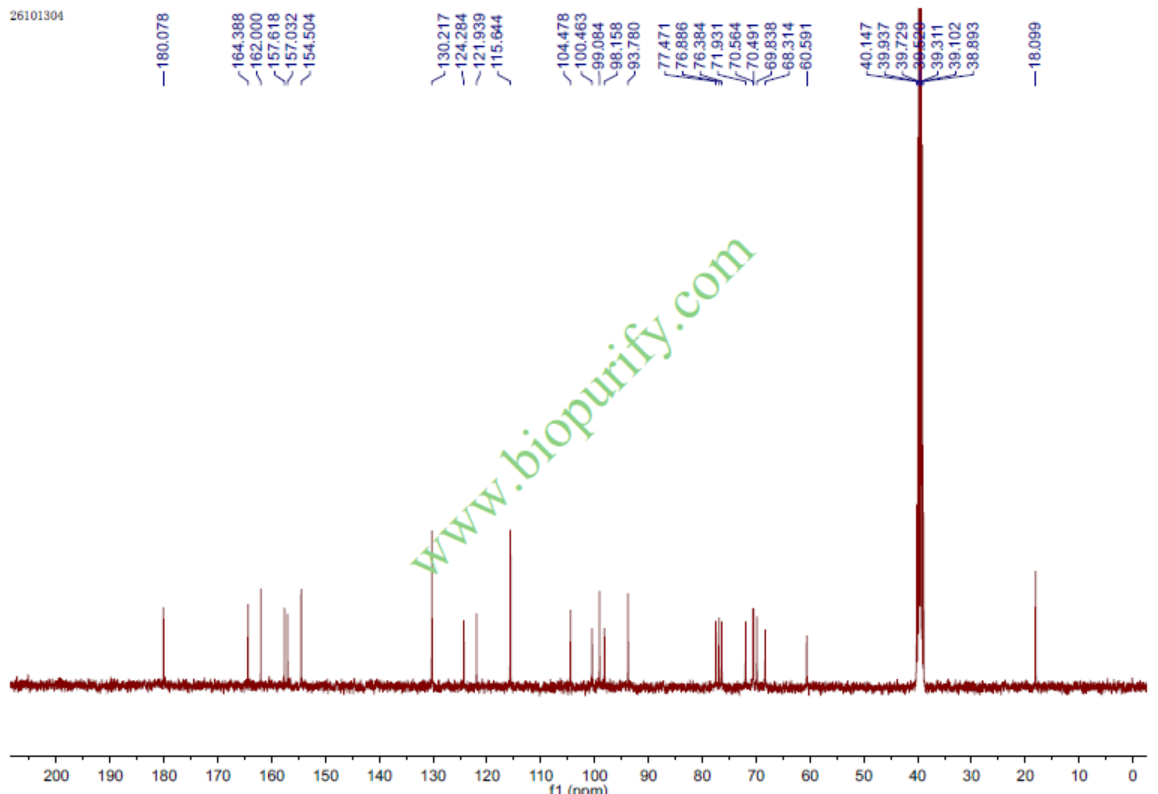
HPLC of Sophorabioside
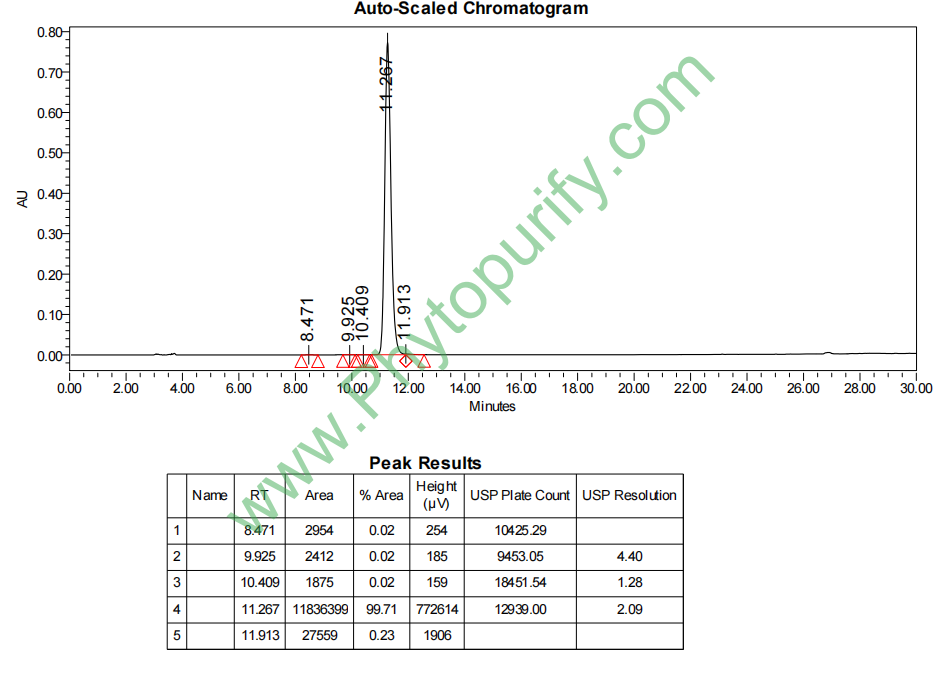
HNMR of Sophorabioside
Storage conditions:Short-term storage at 2~8℃, long-term storage at -20 ~ -80℃
228.9700
-.1106
-.1908
2.3425
.4896
.2397
Low
79.8549
4.6105
Yes
No
Yes
No
Yes
No
1.2
Yes
Yes
Yes
Yes
Allergic diseases, such as allergic rhinitis, asthma and atopic dermatitis, have become a global public health problem. Their incidence rate is increasing year by year, which seriously affects the quality of life of patients. Traditional anti allergic drugs such as antihistamines and leukotriene receptor antagonists can alleviate symptoms, but they have limitations such as drowsiness, drug resistance, or inability to intervene in disease progression. Therefore, searching for efficient, multi-target, and low toxicity new anti allergic lead compounds from natural products has always been an important direction in drug development. Sophorabioside, a flavonoid glycoside isolated from the traditional medicinal plant Sophora japonica L., has attracted much attention due to its significant anti allergic activity in various experimental models. This article aims to systematically review the chemical structure, plant origin, pharmacological activity, mechanism of action, pharmacological evaluation, and clinical application prospects of sophoroid glycosides, in order to provide comprehensive scientific references for the in-depth research and development of this compound.
Sophora flavanone glycoside (CAS number: 2945-88-2) is a typical disaccharide chain flavonoid glycoside. Its parent nucleus is a flavonoid structure, specifically a derivative of apigenin. Its chemical structural feature is that the C-7 position of apigenin is connected to a disaccharide chain composed of glucose and rhamnose through an oxygen glycosidic bond - rutinose (α - L-rhamnose - (1 → 6) - β - D-glucose). Therefore, the chemical system name for sophoroid glycosides in the Sophora genus can be called apigenin 7-O-rutinoside.
Its molecular formula is C27H30O14, with a molecular weight of 578.5230 g/mol. As a flavonoid glycoside, its physicochemical properties exhibit significant hydrophilicity. The calculated lipid water partition coefficient (LogP) is -0.1106, indicating that the compound has strong hydrophilicity and weak hydrophobicity. Its topological polar surface area (TPSA) is as high as 228.9700 Å ², which is mainly attributed to the abundant hydroxyl and oxygen atoms on the sugar groups in the molecule, further confirming its strong polarity characteristics. The theoretically predicted water solubility value is 2.3425, which belongs to the solubility range and is consistent with its glycoside structure, which is beneficial for its dissolution and biological utilization in aqueous media. These basic physicochemical parameters lay the foundation for its subsequent extraction, separation, analysis, and in vitro and in vivo pharmacological research.
The double glycosides of Sophora genus are mainly derived from Sophora japonica L., a plant in the legume family. Its dried flower buds (Sophora japonica L.) and open flowers (Sophora japonica L.) are the main medicinal parts. Huaimi and Huaihua have the effects of cooling blood, stopping bleeding, clearing liver and purging fire in traditional Chinese medicine theory. Modern research has shown that they are rich in various flavonoids such as rutin, quercetin, and sophoroid glycosides, which are the material basis for their pharmacological activity.
The extraction of sophoroid glycosides from plant materials usually follows the general extraction process of flavonoid glycosides. The conventional methods include:
1. Solvent extraction method The most commonly used methods are hot reflux extraction or ultrasound assisted extraction using methanol, ethanol, or their aqueous solutions (such as 70% ethanol). Ethanol is widely used due to its high safety, low cost, and good selectivity for flavonoid glycosides.
2. Purification and Separation After vacuum concentration, the crude extract is sequentially subjected to liquid-liquid distribution using organic solvents such as petroleum ether and ethyl acetate to remove lipophilic impurities. The aqueous layer or polar fraction rich in flavonoid glycosides is further separated and purified by column chromatography technology. Macroporous adsorption resins (such as D101, AB-8), silica gel, polyamide or sephadex gel (Sephadex LH-20) and other fillers are often used for gradient elution with chloroform methanol, methanol water and other solvent systems in different proportions. The separation of sophoroid glycosides in Sophora usually requires monitoring by thin layer chromatography (TLC) or high performance liquid chromatography (HPLC).
3. appraisal The isolated monomer compounds need to be structurally confirmed by spectroscopic techniques such as ultraviolet spectroscopy (UV), mass spectrometry (MS), and nuclear magnetic resonance spectroscopy (NMR, including 1H-NMR and 13C-NMR), and compared with literature data or standard samples.
In recent years, some green extraction techniques such as microwave-assisted extraction and supercritical fluid extraction have also been applied to improve extraction efficiency and reduce solvent consumption.
Numerous preclinical studies have confirmed that the core pharmacological activity of sophora glycosides is concentrated in Anti-allergy The field has demonstrated significant effects at multiple experimental levels.
In vitro cell model research:
In vivo animal model research:
The in vitro and in vivo studies of these systems collectively indicate that sophoroid glycosides can not only rapidly inhibit the release of allergic mediators to alleviate acute symptoms, but also intervene in the chronic process of allergic reactions from the perspective of immune regulation.
The anti allergic effect of sophora glycosides is not achieved through a single pathway, but presents a multi-target and multi link network regulatory feature. Its mechanism of action involves a wide range of effects on allergic effector cells, key inflammatory mediators, and signaling pathways.
Inhibit the synthesis and release of allergic mediators:
Regulating Th2 type immune response:
Stable cell membrane and antioxidant properties As a flavonoid compound, sophora glycosides have certain membrane stabilization and antioxidant activity, which may indirectly protect the stability of effector cells such as mast cells by clearing free radicals and inhibiting lipid peroxidation, and alleviate the amplification effect of oxidative stress on allergic reactions.
In summary, the mechanism of action of sophora glycosides covers the complete allergic reaction chain from allergen recognition (FCER1A), early mediator release (HRH1, ALOX5, TBXA2R), to late immune inflammatory response (IL4/5/13, STAT6, TSLP), reflecting the advantages of multi-target synergistic effects of natural products.
Based on computational predictions and preliminary experimental data, the preliminary evaluation of the pharmacological properties of sophora glycosides is as follows:
At present, there are insufficient public reports on the pharmacokinetic studies of the sophoroid glycoside system in the Sophora genus. Future research needs to clarify key parameters such as absolute bioavailability, plasma protein binding rate, tissue distribution characteristics, major metabolites, and elimination half-life under different administration routes, in order to provide a basis for dosage form design and clinical dosing regimens.
As a natural lead compound with clear multi-target anti allergic activity, sophoroid glycosides have broad clinical application prospects, but also face challenges.
Potential application directions:
1. Development of novel multi-target anti allergic drugs In response to the problem of insufficient efficacy or susceptibility to drug resistance of existing single target drugs, the multi-target characteristics of sophora glycosides make them promising for the development of innovative drugs for the treatment of moderate to severe allergic asthma, refractory allergic rhinitis, or chronic atopic dermatitis, especially suitable for patient populations with poor response to existing treatments.
2. Components of combination therapy Given its complementary mechanism of action to existing drugs, sophoroid glycosides or structurally optimized derivatives of sophoroid can be used in combination with low-dose glucocorticoids, antihistamines, or leukotriene receptor antagonists to enhance efficacy, reduce the dosage and side effects of various drugs.
3. Raw materials for functional foods or health products Huai Hua and Huai Mi are medicinal and edible substances with high safety. Sophora glycosides can be used as functional ingredients in the development of health foods or dietary supplements to alleviate mild allergic symptoms.
4. Development of topical preparations: For skin allergic diseases such as atopic dermatitis, develop topical creams, gel or sprays containing sophora glycosides, use their local anti-inflammatory and antipruritic effects, and avoid the bottleneck of poor oral absorption.
Challenges faced and future research directions:
1. Optimization of bioavailability This is the biggest obstacle to its clinical application. Future research should focus on: a) Structural modification On the premise of retaining the pharmacophore, modify the sugar or glycoside groups to improve lipid solubility and membrane permeability; b) New drug delivery system Develop delivery systems such as nanoparticles, liposomes, microemulsions, and cyclodextrin inclusion complexes to improve their solubility, stability, and intestinal absorption; c) Prodrug strategy Design enzymes to interpret prodrug molecules in specific parts of the body.
2. In depth study on the mechanism of action Using techniques such as gene knockout animals, proteomics, transcriptomics, etc., to more accurately elucidate their interaction patterns with various targets (such as STAT6, TSLP) and their hub nodes in complex immune networks.
3. Preclinical and clinical evaluation of the system Complete a complete set of preclinical studies that meet the requirements for new drug registration, including standardized pharmacological (more disease models), pharmacokinetic, toxicological (acute, subchronic, reproductive toxicity, etc.) studies. Ultimately, its safety, efficacy, and optimal dosing regimen in the human body were validated through clinical trials.
4. Industrial preparation process Develop efficient, environmentally friendly, and low-cost large-scale extraction, purification, or synthesis processes to ensure stable supply and controllable quality of raw materials.
Sophora double glycosides are a flavonoid glycoside compound with important research value discovered from traditional Chinese medicine Sophora flowers. Numerous pharmacological studies have shown that it exerts a powerful and multifaceted anti allergic effect by inhibiting degranulation of mast cells, regulating lipid mediators, and critically inhibiting Th2 cytokines (IL-4, IL-5, IL-13) and their signaling pathways (STAT6, TSLP). This multi-target characteristic gives it unique advantages in dealing with complex and heterogeneous allergic diseases. Although its strong polarity and potential oral absorption challenges are the main challenges facing drug development, structural optimization and dosage form innovation through modern medicinal chemistry and pharmacology methods are expected to overcome this bottleneck. Based on its clear pharmacological activity, multi-target mechanism of action, and preliminarily predicted good safety (especially low hERG inhibition and low BBB penetration), sophoroid glycosides are undoubtedly an anti allergic lead compound worthy of further exploration and development. With the advancement of future system research, it is expected to bring new and more effective treatment options for patients with allergic diseases, and also provide valuable examples for the development of multi-target drugs based on natural products.
