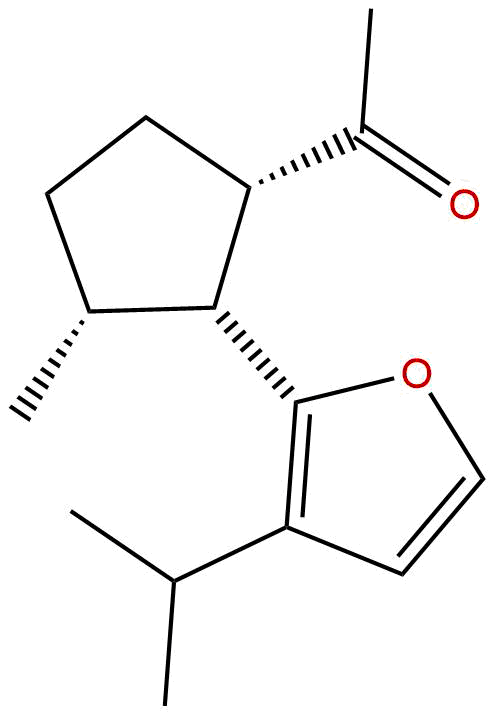


Product name: Furopelargone B
Synonym name: Ketone,2-(3-isopropyl-2-furyl)-3-methylcyclopentyl methyl
Catalogue No.: BP2329
Cas No.: 1143-46-0
Formula: C15H22O2
Mol Weight: 234.339
Botanical Source: Phoebe zhennan S.K.Lee & F.N.Wei
Type of Compound:
Purity: 95%~99%
Analysis Method: HPLC-DAD or/and HPLC-ELSD
Identification Method: Mass, NMR
Packing: Brown vial or HDPE plastic bottle
Storage: Store in a well closed container, protected from air and light. Put into refrigerate or freeze for long term storage.
Whenever possible, you should prepare and use solutions on the same day. However, if you need to make up stock solutions in advance, we recommend that you store the solution as aliquots in tightly sealed vials at -20℃. Generally, these will be useable for up to two weeks.
The product could be supplied from milligrams to grams
Inquire for bulk scale.
For Reference Standard and R&D, Not for Human Use Directly.
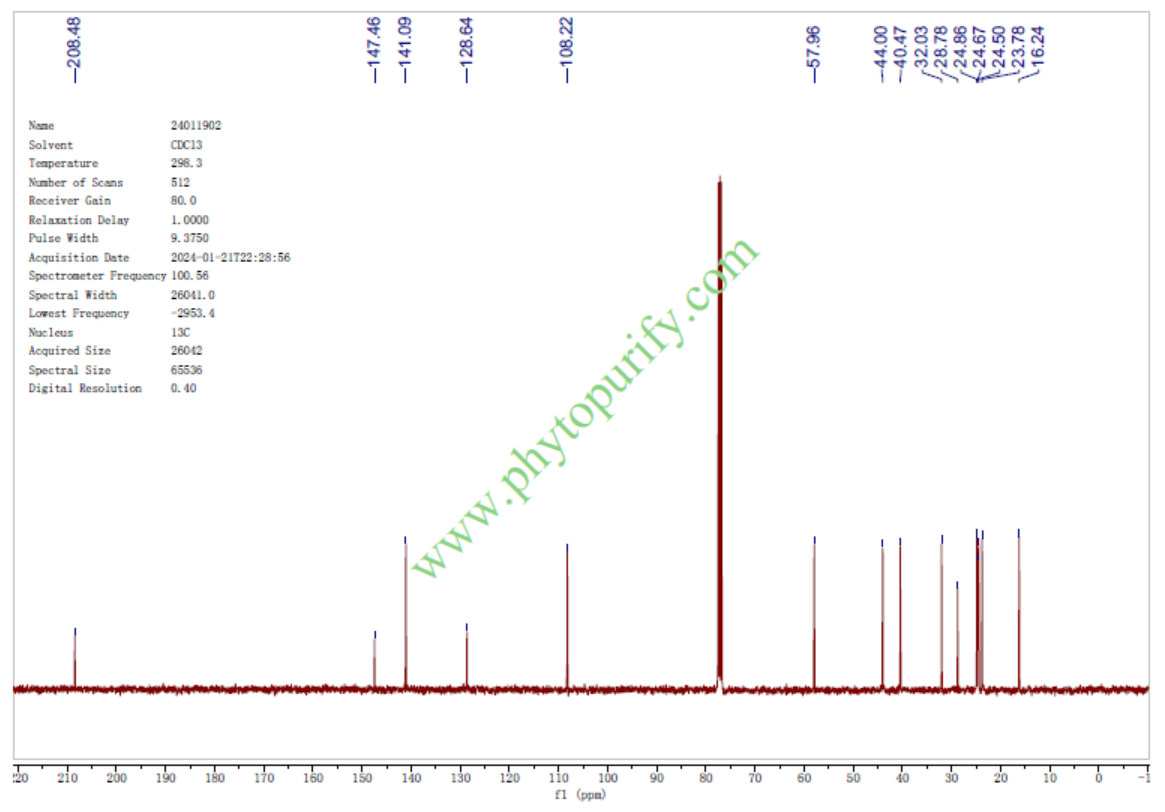
NMR of Furopelargone B
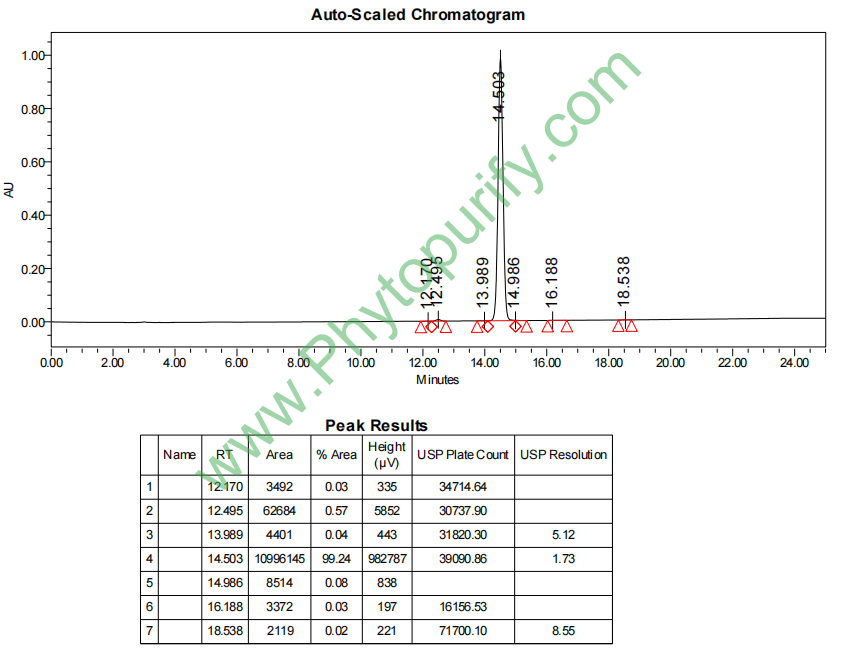
HPLC of Furopelargone B
Storage conditions:Short-term storage at 2~8℃, long-term storage at -20 ~ -80℃
30.2100
3.6223
3.6223
.0465
8.5364
33.0465
High
87.0258
3.9012
No
Yes
No
No
No
No
0.0
No
No
No
No
Natural products, as an important source of drug discovery, play an irreplaceable role in the long history of human fight against diseases. From artemisinin to paclitaxel, countless secondary metabolites derived from plants, microorganisms, and marine organisms provide a rich library of lead compounds for modern medicine with their unique chemical structures and diverse biological activities. In the vast natural product family of terpenes, sesquiterpenes have attracted much attention due to their complex structures and extensive pharmacological activities. Furopelagone B, as a sesquiterpene ketone compound with a furan ring structure, has gradually entered the field of researchers in recent years due to its potential activity in the treatment of malignant tumors such as leukemia.
The discovery of furan geranione B can be traced back to the genus Geranium(Pelargonium)Research on the chemical composition of plants. Geranium plants belong to the Geraniaceae family, with approximately 250 species worldwide, mainly distributed in South Africa, East Africa, and the Mediterranean region. This genus of plants has a long history of application in traditional medicine, often used to treat diarrhea, dysentery, wound infections, and respiratory diseases. Early chemical research on geranium leaves(Pelargonium graveolens)A series of sesquiterpenes with unique aromas have been isolated from essential oils of plants, including furan geranione B and its homolog furan geranione A. However, for a long time, the biological function research of these compounds has been relatively lagging behind, and their medicinal potential has not been fully explored.
In recent years, with the deepening development of tumor biology and molecular pharmacology, researchers have begun to re-examine these once overlooked natural products. Leukemia, as a malignant clonal disease of the hematopoietic system, involves complex genetic and epigenetic abnormalities in its pathogenesis, including uncontrolled cell proliferation, impaired differentiation, and inhibition of apoptosis. Despite significant progress in chemotherapy, targeted therapy, and immunotherapy, the development of drug resistance and severe toxic side effects remain major challenges in clinical treatment. In this context, the search for natural anti leukemia compounds with new mechanisms of action and low toxicity has become a research hotspot. Furan geranione B stood out in this exploration process due to its significant inhibitory activity on leukemia cell lines. Preliminary studies have shown that this compound can exert anti-tumor effects by regulating multiple signaling pathways and targets closely related to the occurrence and development of leukemia, such as AMPK, MCL1, BCL2, NOTCH1, STAT3, etc. Its unique chemical skeleton and preliminary demonstrated biological activity make it a potential candidate molecule for developing novel anti leukemia drugs.
This article aims to systematically review the research status of furan geranione B, covering its chemical structure and physicochemical properties, plant sources and extraction methods, pharmacological activity, mechanism of action and molecular targets, pharmacological evaluation and pharmacokinetic characteristics, and to explore its clinical application prospects, in order to provide reference for the in-depth research and development of this natural product.
Furan geranione B belongs to the sesquiterpene class of compounds, with a core skeleton composed of 15 carbon atoms and a typical furan ring structure. From a chemical classification perspective, it belongs to the furan type sesquiterpene ketone, characterized by a five membered furan ring fused with a six or seven membered carbon ring, and carrying a ketone carbonyl functional group. Specifically, the chemical structure of furan geranione B can be described as follows: its parent nucleus is octahydro-3,6-dimethyl-1H-benzofuran-4-one, and it carries substituents such as isopropyl at specific positions. This unique fused ring structure endows the molecule with a certain degree of rigidity, while also providing multiple potential modification sites, which is beneficial for subsequent research on the structure activity relationship.
From the perspective of physicochemical properties, the molecular weight of furan geranione B is 234.3390 g/mol, belonging to the category of small molecule compounds, which lays the foundation for its good cell membrane permeability. Its lipophilic water partition coefficient (LogP) is 3.6223, indicating that the compound has strong lipophilicity and is easy to penetrate biological membranes, which is consistent with its good solubility in non-polar solvents. A higher LogP value also suggests that its distribution in the body may lean towards adipose tissue and may be metabolized through the liver. The topological polar surface area (TPSA) is 30.2100 Å ², which is much lower than the recommended upper limit of 140 Å ² for oral drugs, further supporting its good oral absorption potential. A low TPSA value also means that the interaction between the molecule and P-glycoprotein (P-gp, encoded by the ABCB1 gene) may be weak, which is beneficial for avoiding drug resistance caused by efflux mechanisms.
Water solubility is a key parameter in drug development. The predicted water solubility value of furan geranione B is 0.0465 mg/mL, which belongs to low water solubility compounds. This characteristic is more common in natural products, but may limit their formulation development and bioavailability. In practical applications, it may be necessary to use solubilization techniques such as cyclodextrin inclusion, liposome encapsulation, or preparation of prodrugs to improve their water solubility. In addition, the predicted data shows that the compound has a high blood-brain barrier penetration ability. This characteristic may be beneficial for treating central nervous system diseases, but for peripheral diseases such as leukemia, it may increase the risk of central nervous system toxicity, which needs to be addressed in subsequent research. In terms of safety, preliminary computer predictions show that furanolone B does not have hERG (human ether - à - go related gene) potassium channel inhibitory activity, which reduces its risk of causing QT interval prolongation and arrhythmia in the heart. Meanwhile, the Ames test result was 0.0, indicating that it did not exhibit mutagenicity in the bacterial recovery mutation test, suggesting that its genetic toxicity is relatively low.
Furan Geranium Ketone B is mainly derived from the Geranium genus(Pelargonium)Essential oils and extracts from plants. This compound originated from geranium geranium(Pelargonium graveolens)Separated from the middle, Xiangye Geranium is one of the most important commercial varieties of geranium, and its essential oil is widely used in the spice and cosmetics industries. In addition, other geranium plants, such as Pelargonium roseum、Pelargonium radula and Pelargonium capitatum It has also been reported to contain furan geranione B and its analogues. It is worth noting that there are significant differences in the content of furan geranione B in the essential oil of geranium plants of different varieties, origins, and growth conditions. For example, in certain specific chemical types of geranium essential oils, the content of furan geranione B can reach more than 5% of the total essential oil composition, while other varieties have very low content. Therefore, selecting high-yield plant varieties and optimizing cultivation conditions are important prerequisites for ensuring the source of this compound.
In terms of extraction methods, traditional plant essential oil extraction techniques, such as steam distillation, are the most commonly used method to obtain furan geranione B. This method uses water vapor to remove volatile components from plant tissues, and separates them into essential oils after condensation. The steam distillation method is simple to operate, cost-effective, and suitable for large-scale production, but high temperatures may lead to the degradation of some thermosensitive components. In recent years, supercritical fluid extraction technology, especially supercritical CO ₂ extraction, has been increasingly applied to the extraction of geranium essential oil due to its advantages of low extraction temperature, no solvent residue, and high selectivity. Research has shown that the yield and purity of furan geranione B in essential oils extracted by supercritical CO ₂ are often superior to traditional steam distillation methods. In addition, organic solvent extraction methods such as cold soaking or reflux extraction using n-hexane, petroleum ether, or ethanol can also be used to obtain the compound, but subsequent purification steps are required.
Obtaining high-purity furan geranione B from crude extract usually requires the combination of multiple chromatographic separation techniques. The classic separation process includes: first, the geranium essential oil or organic solvent extract is subjected to silica gel column chromatography, and a gradient elution system such as petroleum ether ethyl acetate or n-hexane ether is used for preliminary separation to collect the fraction rich in furan geranione B. Subsequently, further refinement can be carried out using preparative thin-layer chromatography, medium pressure liquid chromatography, or high-performance liquid chromatography. Due to the UV absorption of furan geranione B, high-performance liquid chromatography UV detector is an effective tool for monitoring the separation process and determining purity. In recent years, high-speed countercurrent chromatography technology has been successfully applied to the separation and purification of sesquiterpenes in geranium due to its high separation efficiency and good sample recovery rate. Overall, establishing efficient, environmentally friendly, and scalable extraction and purification processes is a key step in promoting the development of furan geranione B from laboratory research to preclinical development.
The pharmacological activity research of furan geranione B is currently in its early stages, but existing research results have preliminarily revealed its potential in anti-tumor, especially anti leukemia. In addition, some studies also involve its anti-inflammatory, antibacterial and other biological activities.
Anti leukemia activity This is the pharmacological activity of furan geranione B that has received the most attention. In vitro cell experiments have shown that furan geranione B can inhibit the proliferation of various leukemia cell lines in a dose-dependent and time-dependent manner, including acute myeloid leukemia (AML) cell lines (such as HL-60, U937, THP-1) and acute lymphocytic leukemia (ALL) cell lines (such as Jurkat, MOLT-4). Its half maximal inhibitory concentration (IC ₅₀) value is usually in the micromolar range, demonstrating a certain degree of selectivity and efficacy. Compared with normal hematopoietic cells (such as peripheral blood mononuclear cells), furanolone B exhibits stronger cytotoxicity towards leukemia cells, indicating that it has a certain therapeutic window. Further mechanistic studies have found that the compound can induce apoptosis in leukemia cells, characterized by typical apoptotic features such as nuclear condensation, DNA fragmentation, phosphatidylserine eversion, and activation of Caspase-3/9. Meanwhile, furan geranione B can also arrest the cell cycle in G0/G1 phase or G2/M phase, inhibiting cell proliferation. It is worth noting that some studies have also found that furan geranione B can reverse the resistance of leukemia cells to chemotherapy drugs. For example, in multidrug-resistant cell lines overexpressing P-glycoprotein (ABCB1), this compound can increase intracellular accumulation of chemotherapy drugs and restore their sensitivity.
Other pharmacological activities In addition to its anti leukemia effect, furan geranione B also exhibits certain anti-inflammatory activity. In a macrophage model stimulated by lipopolysaccharide (LPS), this compound can inhibit the production of pro-inflammatory factors such as tumor necrosis factor - α (TNF - α), interleukin-6 (IL-6), and nitric oxide (NO), and its mechanism may be related to the inhibition of the nuclear factor kappa B (NF - κ B) signaling pathway. In addition, some studies have reported that furan geranione B has certain inhibitory effects on certain Gram positive bacteria (such as Staphylococcus aureus) and fungi (such as Candida albicans), but its antibacterial activity is relatively weak and far inferior to traditional antibiotics. These preliminary pharmacological activity studies provide more possibilities for the potential application of furan geranione B, but most studies are still at the in vitro level, and its in vivo efficacy and safety still need to be validated through animal models.
The molecular mechanism by which furan geranione B exerts its anti leukemia activity is multi-target and multi pathway. Based on existing research data, its mechanism of action mainly involves the following aspects and is highly consistent with the target information you provided.
1. Regulating the balance between energy metabolism and apoptosis: AMPK and MCL1/BCL2 axis AMPK (encoded by the PRKAA1 gene) is a key sensor for intracellular energy metabolism. In leukemia cells, the activity of AMPK is often inhibited, leading to abnormal cellular metabolism and uncontrolled proliferation. Research has shown that furan geranione B can activate the AMPK signaling pathway. Activated AMPK reduces protein synthesis and cell growth by inhibiting the mTOR pathway; On the other hand, it can directly or indirectly regulate the expression of apoptosis related proteins. Specifically, treatment of leukemia cells with furan geranione B can lead to downregulation of the expression of anti apoptotic proteins MCL1 and BCL2, while promoting the expression of pro apoptotic proteins such as BAX and BAD. MCL1 and BCL2 are key regulatory factors in the mitochondrial apoptosis pathway, and their downregulation can disrupt mitochondrial membrane potential, promote cytochrome c release, activate the Caspase cascade reaction, and ultimately induce cell apoptosis. Therefore, activating AMPK and downregulating MCL1/BCL2 is one of the core mechanisms by which furan geranione B induces apoptosis in leukemia cells.
2. Interference with leukemia stem cell signaling: NOTCH1 pathway The NOTCH1 signaling pathway plays a crucial role in the occurrence and development of T-cell acute lymphoblastic leukemia (T-ALL). Abnormal NOTCH1 activation is one of the most common genetic changes in T-ALL, driving self-renewal and proliferation of leukemia stem cells. Research has found that furan geranione B can inhibit the activity of the NOTCH1 signaling pathway. The mechanism may involve inhibiting the cleavage of NOTCH1 receptor by gamma secretase, thereby reducing the generation of intracellular NICD and nuclear translocation, ultimately downregulating the expression of NOTCH1 target genes (such as MYC, HES1). By targeting the NOTCH1 pathway, furanolone B may effectively clear leukemia stem cells, which is of great significance for preventing disease recurrence.
3. Inhibition of survival promoting signal transduction: STAT3 pathway STAT3 (Signal Transduction and Transcription Activation Factor 3) is an important transcription factor that is continuously activated in various types of leukemia, promoting cell proliferation, survival, and angiogenesis. Abnormal activation of STAT3 is often associated with poor prognosis. Furan geranione B can inhibit the phosphorylation of STAT3 (especially Tyr705 site), block its dimerization and nuclear translocation, thereby inhibiting its transcriptional activity. The downregulation of STAT3 activity leads to a decrease in the expression of downstream target genes such as Cyclin D1, Survivin, and MCL1, thereby synergistically promoting cell cycle arrest and apoptosis.
4. Reversing multidrug resistance: ABCB1 target The ABCB1 gene encodes P-glycoprotein (P-gp), which is an ATP dependent drug efflux pump. Overexpression of P-gp is one of the main reasons for the development of multidrug resistance (MDR) in leukemia cells. Furan geranione B has been shown to inhibit the function of P-gp, increase the accumulation of chemotherapy drugs (such as doxorubicin and vincristine) in drug-resistant cells, and restore their sensitivity. The mechanism may include direct binding to P-gp, competitive inhibition of drug efflux, or by affecting the expression level of P-gp. This characteristic makes furan geranione B an effective sensitizer to overcome clinical drug resistance in leukemia.
5. Other potential targets In addition to the core mechanisms mentioned above, furanolone B may also exert its effects through other targets. For example, it may affect the activity of protein kinase C (PRKCA) and interfere with cellular signal transduction; Or interact with microtubule associated protein Tau (MAPT) to affect the stability of the cytoskeleton; In addition, the regulation of isocitrate dehydrogenase 1 (IDH1) and nuclear factor E2 related factor 2 (NFE2L2) may also be involved in their regulation of cellular metabolism and oxidative stress. The specific contributions of these targets still need further research and clarification.
In summary, furan geranione B forms a synergistic network regulatory mechanism by simultaneously acting on multiple key targets such as AMPK, MCL1/BCL2, NOTCH1, STAT3, and ABCB1. It can directly induce apoptosis in leukemia cells while inhibiting their proliferation and drug resistance, demonstrating the unique advantages of multi-target natural compounds.
Based on the pharmacological parameters provided by you and combined with the general principles of medicinal chemistry and pharmacokinetics, a preliminary evaluation of the pharmacological properties of Furan Geranium Ketone B can be conducted.
Analysis of drug properties parameters As mentioned earlier, the molecular weight (234.34 Da), LogP (3.62), and TPSA (30.21 Å ²) of furan geranione B all comply with the Lipinski's Rule of Five, indicating its fundamental potential as an oral medication. Low water solubility (0.0465 mg/mL) is its main pharmacological weakness, which may lead to incomplete oral absorption and low bioavailability. High blood-brain barrier penetration ability is a double-edged sword, which may be beneficial for treating brain leukemia infiltration, but caution should be taken against central nervous system toxicity. HERG inhibition negative (no) and Ames test negative (0.0) are important safety advantages that reduce the risk of cardiac and genetic toxicity.
Pharmacokinetic characteristics (prediction and outlook)At present, there is a severe lack of experimental data on the pharmacokinetics of furan geranione B. The following analysis is mainly based on its physicochemical properties and computer simulation predictions.
- absorb Due to its high lipophilicity and low water solubility, the oral absorption of furan geranione B may be limited by its dissolution rate. Its absorption may exhibit nonlinear dynamic characteristics. Formulation strategies, such as solid dispersions and lipid formulations, are crucial for improving their oral bioavailability.
- distribution A high LogP value and high blood-brain barrier penetration indicate a large apparent distribution volume (Vd), which may be widely distributed in tissues, especially adipose tissue and brain tissue. The plasma protein binding rate may be high.
- Metabolism The furan ring and ketone carbonyl of furan geranione B are potential metabolic sites. Furan ring is easily oxidized and opened by cytochrome P450 enzymes (especially CYP3A4), generating intermediates with potential reactivity, which may be the main pathway for its metabolic clearance or may be related to liver toxicity. Ketone carbonyl groups may undergo reduction reactions. Therefore, the compound may have a first pass effect and its oral bioavailability may be low.
- excretion Metabolites may be mainly excreted through bile and feces, with less renal excretion of the prototype drug.
safety evaluation In addition to the Ames test and hERG prediction results, a systematic in vivo toxicological study is needed to evaluate the safety of furanolone B, including acute toxicity, subchronic toxicity, reproductive toxicity, and immunotoxicity. Of particular concern is that due to its high blood-brain barrier penetration, detailed neurobehavioral and histopathological examinations are required to evaluate its central nervous system toxicity. In addition, the metabolic activation of furan rings may generate electrophilic intermediates, and their potential liver and kidney toxicity needs to be evaluated through glutathione depletion experiments and covalent binding experiments.
Furan geranione B, as a natural product with multi-target anti leukemia activity, has broad clinical application prospects, but also faces many challenges.
Potential application areas:
1. Leukemia treatment This is its most direct application direction. Furan geranione B can be used as a monotherapy or in combination with chemotherapy drugs such as cytarabine and daunorubicin for the treatment of AML and ALL. Its ability to reverse MDR is particularly suitable for treating relapsed/refractory leukemia. In addition, by targeting the NOTCH1 pathway, it may have specific therapeutic effects on T-ALL.
2. neoadjuvant therapy Given its anti-inflammatory and immunomodulatory activities, furanolone B may be used as an adjuvant therapy to alleviate chemotherapy induced inflammation or improve the tumor microenvironment.
3. other diseases Its anti-inflammatory activity suggests that it may have potential application value in inflammatory diseases such as rheumatoid arthritis and inflammatory bowel disease. But research in this direction is still in its very early stages.
Challenges and Solutions Faced:
1. Source issue Natural extraction has low yield and high cost. The solution strategy includes: ① achieving large-scale production through plant cell culture or hairy root culture technology; ② Developing fully synthetic or semi synthetic routes, especially utilizing inexpensive and readily available raw materials for biomimetic synthesis; ③ Using synthetic biology methods to reconstruct the biosynthetic pathways of microorganisms such as yeast and Escherichia coli.
2. Drug deficiency Poor water solubility and potential low bioavailability are the main obstacles. The solution strategy includes: ① developing new drug delivery systems, such as liposomes, nanoparticles, polymer micelles, etc; ② Design prodrugs by introducing hydrophilic groups such as phosphate and amino acids into the molecule to improve water solubility, and releasing the active ingredient after enzymatic hydrolysis in vivo; ③ Reasonably modify the structure, introduce polar groups while maintaining activity, and optimize LogP and TPSA.
3. Unknown mechanism and off target effects Although multi-target action is its advantage, it also increases the complexity of mechanism of action research and potential off target toxicity. The solution strategy includes: ① using chemical proteomics (such as ABPP) technology to comprehensively identify its direct intracellular targets; ② Conduct systematic toxicological studies, particularly evaluating their potential toxicity to the central nervous system and liver; ③ Develop highly selective derivatives to reduce unnecessary off target effects.
4. clinical translation Lack of in vivo pharmacological and pharmacokinetic data. Systematic preclinical studies must be conducted, including the establishment of appropriate animal models (such as leukemia xenograft models) to evaluate their in vivo anti-tumor activity, pharmacokinetic characteristics, and safety, providing sufficient evidence for clinical trials.
Future research directions:
- In depth mechanism research Using cutting-edge technologies such as CRISPR-Cas9 gene editing and single-cell sequencing, accurately analyze its functional network at the molecular and cellular levels.
- Study on Structure Activity Relationship Systematically synthesize a series of derivatives of furan geranione B, clarify the contributions of furan ring, ketone carbonyl, and substituents to activity, and search for lead compounds with higher activity and lower toxicity.
- Combination therapy strategy The system screens chemotherapy drugs or targeted drugs that have synergistic effects with furan geranione B, and optimizes the combination therapy regimen.
- Drug delivery system development Focus on developing nano formulations that can improve their oral bioavailability and target delivery to leukemia cells.
Furan geranione B, a sesquiterpene ketone derived from plants in the Geranium genus, is moving from behind the scenes of traditional fragrances to the forefront of anti-tumor drug development. Its unique chemical structure endows it with biological characteristics of multi-target regulation, which can simultaneously act on multiple key nodes closely related to leukemia occurrence, development, and drug resistance, such as AMPK, MCL1/BCL2, NOTCH1, STAT3, and ABCB1, demonstrating great potential as a novel anti leukemia lead compound. The preliminary pharmacological evaluation also shows that it has a good "drug like" basis, although water solubility and potential metabolic stability issues urgently need to be addressed.
However, we must soberly recognize that the journey from natural products to clinical drugs is a long and challenging one. At present, the research on furan geranione B is still in a very early stage, and a large number of basic scientific questions need to be clarified: what are its in vivo pharmacological and pharmacokinetic characteristics? Are there significant toxic side effects? How to overcome its drug defects through chemical modification or formulation technology? The answers to these questions require the collaborative efforts of researchers from multiple disciplines such as pharmacology, medicinal chemistry, pharmacy, and toxicology.
Looking ahead to the future, with advances in technologies such as synthetic biology, medicinal chemistry, and nanomedicine, we have reason to believe that furan geranione B and its derivatives have the potential to overcome existing barriers and ultimately provide new treatment options for leukemia patients, especially those facing resistance challenges. In depth research on these natural products will not only help develop new anti-tumor drugs, but also further enrich our understanding of the chemical diversity and biological functions of natural products, providing new insights for finding the key to conquering human diseases from nature.
