
Hydroxypropyl tetrahydropyran triol, nicknamed Bose in the market,It is a synthetic xylose derivative, English inci: hydroxypropyl tetrahydropyrantriol. L'Oreal applied for the registered trademark "Bose" for hydroxypropyl tetrahydropyrantriol in the China Trademark Office in 2020, which has not yet been approved.As early as 2006, cosmetics containing hydroxypropyl tetrahydropyranol have been on the market in Europe. According to the papers and patents published by L'Oreal, hydroxypropyl tetrahydropyranol can promote the synthesis of glycosaminoglycans and proteoglycans, help the epidermis and dermis closely connect, and maintain the elasticity of dermis; At the same time, it can promote the synthesis of collagen and other effects.
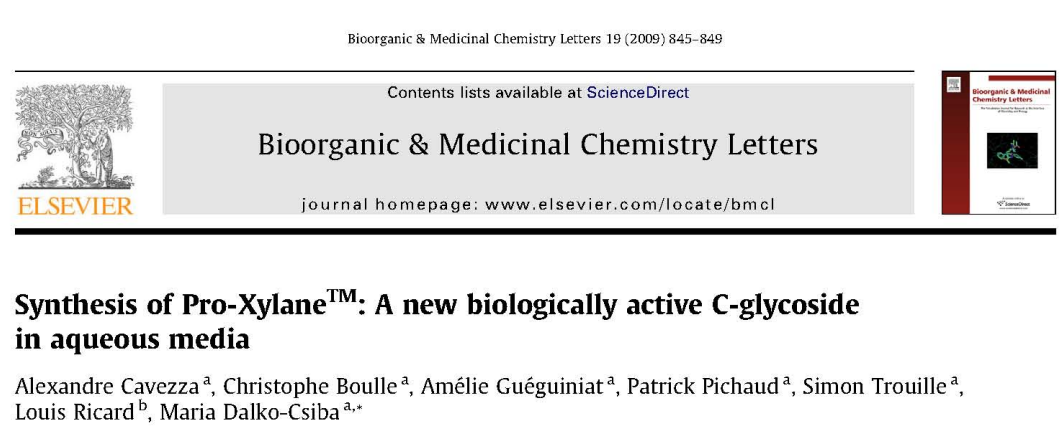
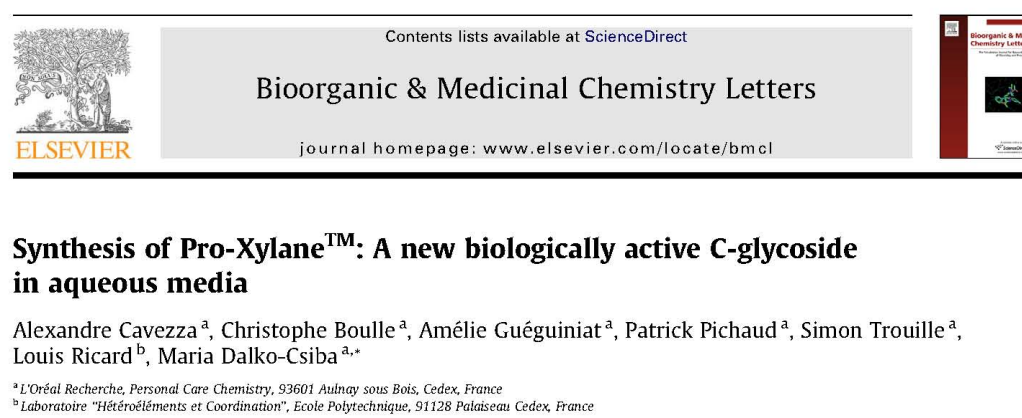
In 2009, L'Oreal published a paper "synthesis of Pro xylanetm: a new biologically active C-glycoside in aqueous media" in the Journal of Bioorganic and medical chemistry letters, which gave a green chemical synthesis process of hydroxypropyl tetrahydropyrantriol with water as solvent. Hydroxypropyl tetrahydropyrantriol itself is odorless. Generally, the commercially available products have a little sour taste of vinegar because the synthesis process is a two-step reaction. The first step is the synthesis of intermediates from xylose and acetylacetone under alkaline conditions, in which acetic acid is a by-product. . It is difficult to completely remove the acetate produced by the reaction, but the better the product is to remove impurities, the lighter the odor is.
Sour taste will affect the taste of cosmetics, so the lowest possible sour taste, that is, the lowest possible acetate residue, is an index to evaluate the quality of hydroxypropyl tetrahydropyranol.
L'OrealHydroxypropyl tetrahydropyrantriol (Bose)The patent protection of synthetic process will expire at the end of 2020. This is a simple compound. For experts in the field of fine chemical synthesis, the synthesis is very easy. Without much effort, each family has synthesized hydroxypropyl tetrahydropyran triol.
In addition to synthetic process patents, L'Oreal has many use patents around the substance internationally. For example, the most important is the US patent us7049300b2, whose appeal is to protect the core efficacy of hydroxypropyl tetrahydropyranol and its similar structure to promote glycosaminoglycan synthesis. The patent expires in 2022.
https://www.zhihu.com/question/371422522/answer/1466967607.In addition, cn1699390a "new C-glycoside derivatives and their cosmetic uses" also has content related to this substance, which synthetic experts should pay attention to.
The relevant application patent of this raw material that can be found in China is cn 101522162b, "cosmetic use of C-glycoside derivatives combined with ascorbic acid", which was applied by L'Oreal in 2007 and authorized in 2015. In view of the geographical nature of patent protection, the use of hydroxypropyl tetrahydropyranol in the Chinese market is theoretically non infringing as long as it does not involve the content of the Chinese patent protection.
The report is divided into the following parts:
1.1 ;
1.2 Nuclear magnetic resonance spectroscopy was used to identify the authenticity of hydroxypropyl tetrahydropyrantriol in the market;
1.3 The proportion of diastereomers in hydroxypropyl tetrahydropyrantriol;
1.4 Content determination of hydroxypropyl tetrahydropyrantriol and comparison with domestic products;
1.5 The quality concerns of hydroxypropyl tetrahydropyrantriol suitable for cosmetic applications;
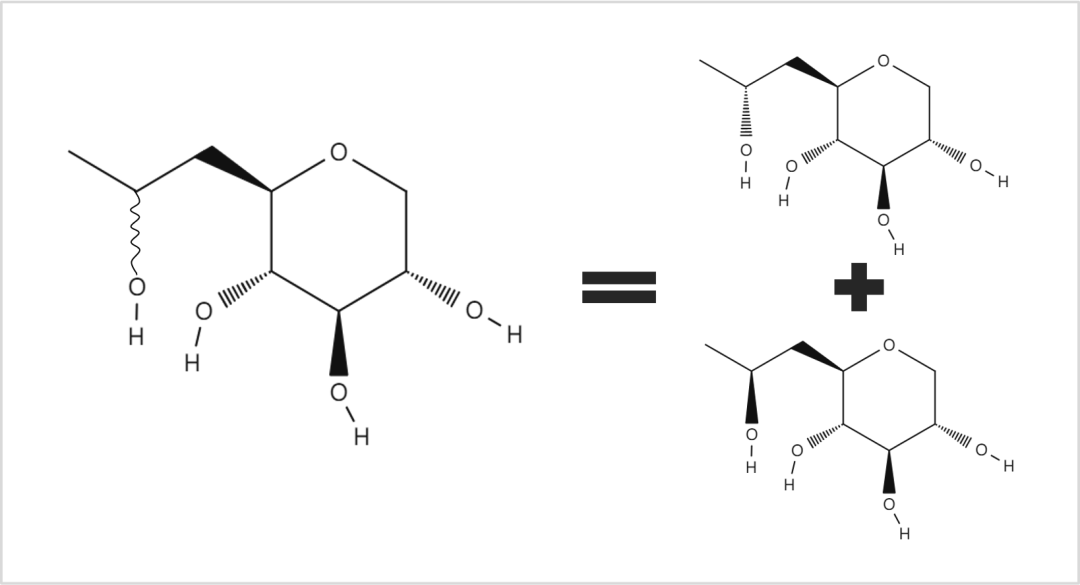
1.1 structure of hydroxypropyl tetrahydropyrantriol
Hydroxypropyl tetrahydropyrantriol is a compound composed of two non corresponding isomers.
1.2 how to identify the structure of hydroxypropyl tetrahydropyrantriol
It is a more suitable method to identify the structure of hydroxypropyl tetrahydropyrantriol by NMR carbon spectroscopy.
Because the signals of hydrogen in the NMR hydrogen spectrum are split from each other, sometimes there are diluted solvents, resulting in the complexity of the hydrogen spectrum, while the NMR carbon spectrum can simply display each carbon, and can preliminarily judge the proportion of diastereomers according to the strength of the carbon signal. Therefore, it is suggested to identify the structure of hydroxypropyl tetrahydropyrantriol by carbon spectroscopy.
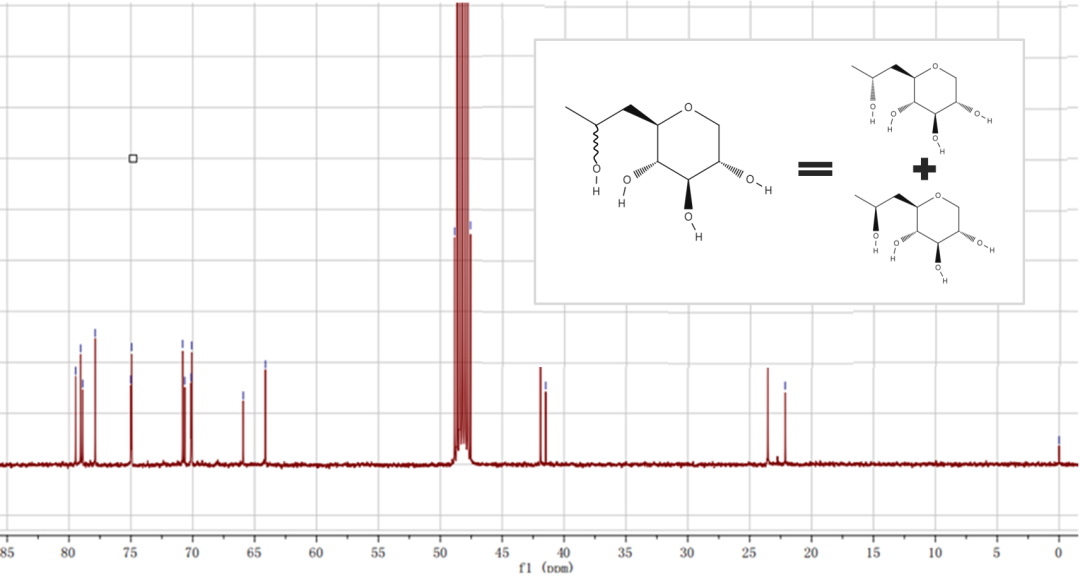
NMR carbon spectrum of hydroxypropyl tetrahydropyrantriol
The molecular formula of hydroxypropyl tetrahydropyrantriol is c8h16o5. Because it is a pair of diastereomers, 16 carbon signals can be displayed on the carbon spectrum, and the chemical shifts of each carbon signal are different. (around chemical shift 49, many peaks in the middle are piled up with the carbon signal of solvent methanol.). At the same time, the proportion of diastereomers can be preliminarily determined according to the height of the two peaks around chemical shift 22 or chemical shift 41.
From the carbon spectrum, 16 carbon signals can be seen from the carbon spectrum of hydroxypropyl tetrahydropyrantriol, and the signal of one group of 8 carbons is a little lower, and the signal of the other group of 8 carbons is a little higher, showing that in a pair of diastereomers of hydroxypropyl tetrahydropyrantriol, the proportion of one structure is higher, and the proportion of the other structure is lower.
1.3 composition ratio of isomers in hydroxypropyl tetrahydropyrantriol
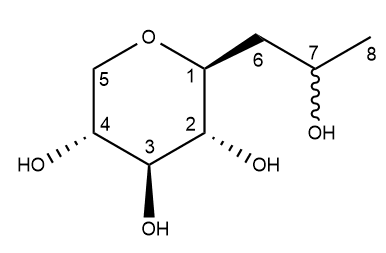
Hydroxypropyl tetrahydropyrantriol is a group of diastereomers, which are two compounds. The source of its isomers is mainly the chirality of the hydroxyl carbon (i.e. the carbon at position 7) in the structure, rather than the terminal carbon of sugar (i.e. the carbon at position 1). That is, the terminal carbon of hydroxypropyl tetrahydropyrantriol will have only one configuration, namely, β configuration.
Literature evidence (1) evidence of literature 1:
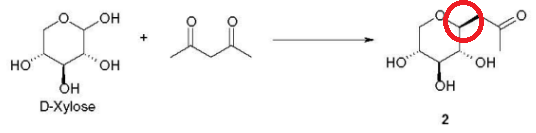
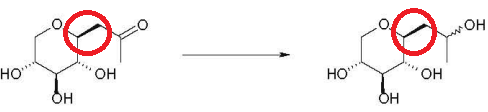
.
(2) Evidence from literature 2:
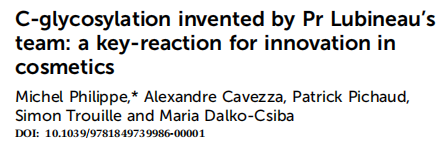
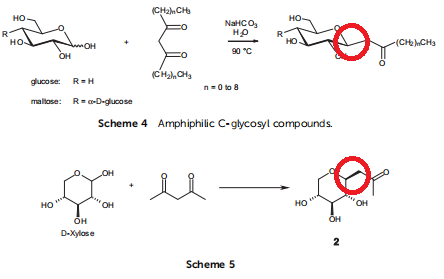
The first step reaction product given in this paper has only one configuration of the sugar end group carbon (i.e. 1-position carbon), namely the β configuration.
In fact, it is easy to confirm this idea. In the first step, mixed xylose (the mixture of α - d-xylose and β - D-xylose as raw material) is reacted with acetylacetone to obtain the product. The product is purified and used for nuclear magnetic carbon spectroscopy. If only one configuration of the product is obtained, there should be only one set of carbon spectra, which proves that the end base carbon (i.e. 1-carbon) of the sugar after the reaction has only one β configuration. We don't do chemical synthesis by ourselves, which will be tested after we have the opportunity to have samples in the future.
? Structure of hydroxypropyl tetrahydropyrantriol
According to the literature, the better proportion of diastereomers of hydroxypropyl tetrahydropyrantriol is about 50/50-70/30.
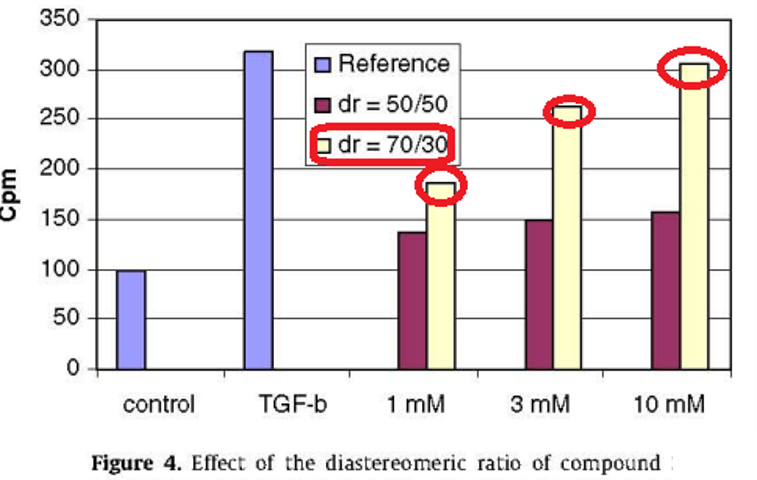
From the efficacy test data of this paper, we can clearly see that the activity of hydroxypropyl tetrahydropyranol with diastereomer ratio of 70/30 is slightly higher than that of the sample with diastereomer ratio of 50/50 (Note: 1. the red box in the figure is the activity histogram of hydroxypropyl tetrahydropyranol with diastereomer ratio of 70/30).
The stereochemistry of the hydroxyl group at position 7 in the structure of hydroxypropyl tetrahydropyrantriol has an important influence on the activity. See French scientists' articles on the activity of hydroxypropyl tetrahydropyrantriol. As follows:
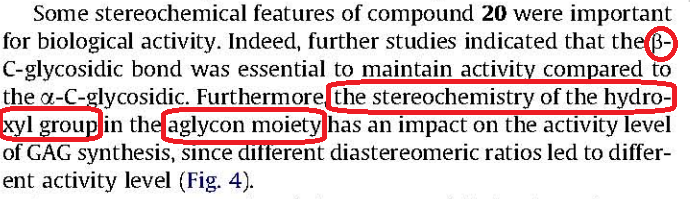
Since different configuration ratios have different effects, whether one of them is more efficient is not mentioned in the literature. According to the classical route described in this paper, two configurations exist at the same time, so it is difficult to completely resolve the chiral components. In the future, we will consider using preparative chromatography to separate and enrich to form single crystals, and then further study them separately. This is our future work.
According to the analysis of Oujia's cosmetics added with commercially available hydroxypropyl tetrahydropyrantriol, it can be found that the basic distribution of the two isomers is between 50/50-70/30. It is estimated that considering the economy and volatility of synthesis and purification, 50/50-70/30 is generally considered to be the appropriate range.
1.4 content determination of hydroxypropyl tetrahydropyrantriol and comparison with domestic products
It is convenient to determine hydroxypropyl tetrahydropyrantriol with hplc+elsd detector. The specific liquid phase analysis method is not disclosed here in consideration of possible abuse.
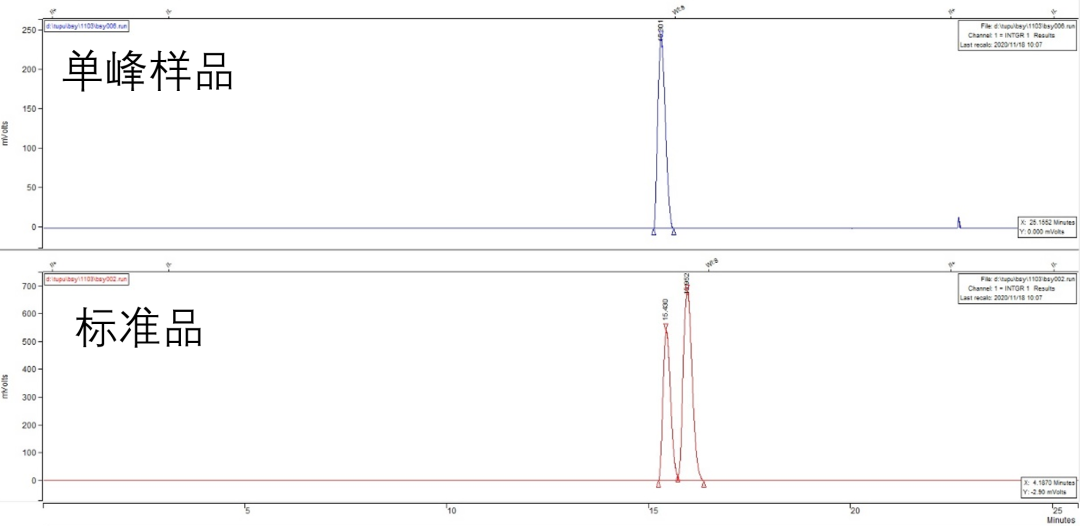
; The standard of Chengdu preyfa pharmaceutical research and Development Co., Ltd. is consistent with the standard sample of target molecule Corp and can be used.
Liquid phase analysis
1. spectrum of standard
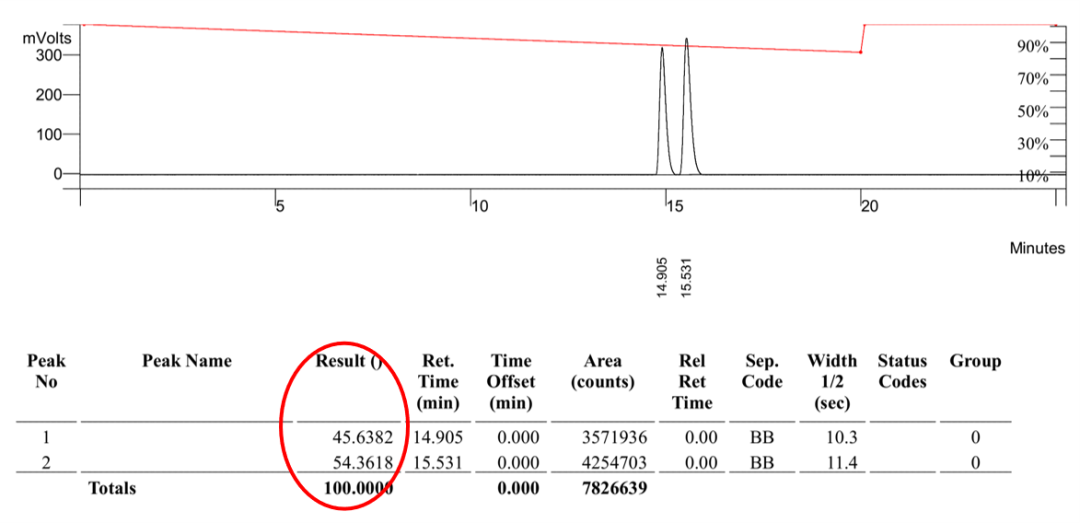
The two isomers in the standard are basically 46 / 54.
;
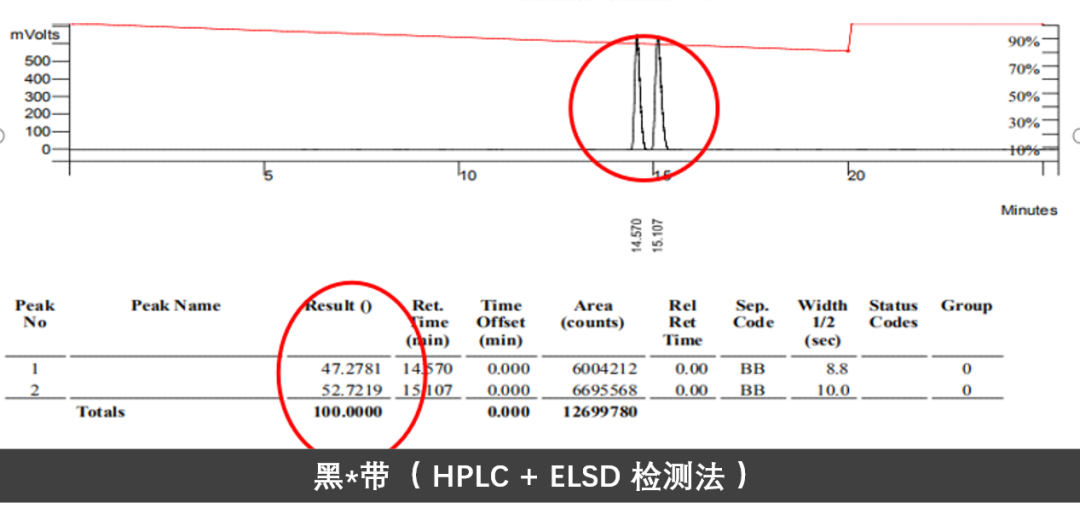
The proportion of hydroxypropyl tetrahydropyrantriol isomers in the black * band is 53 / 47.
Through quantification, it can also be measured that the content of hydroxypropyl tetrahydropyranol in the product is consistent with the advertised addition amount.
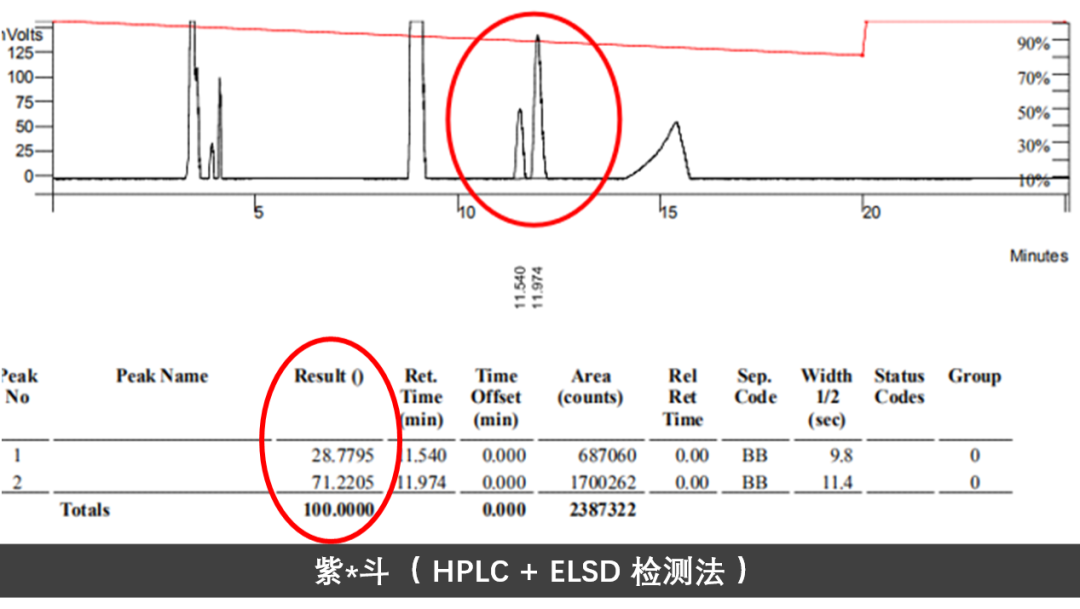
The proportion of hydroxypropyl tetrahydropyrantriol isomers in the purple bucket was 71 / 29.
Combined with the paper, it is judged that the proportion of hydroxypropyl tetrahydropyrantriol isomers in the original raw materials should be between 50/50 – 70/30.
;
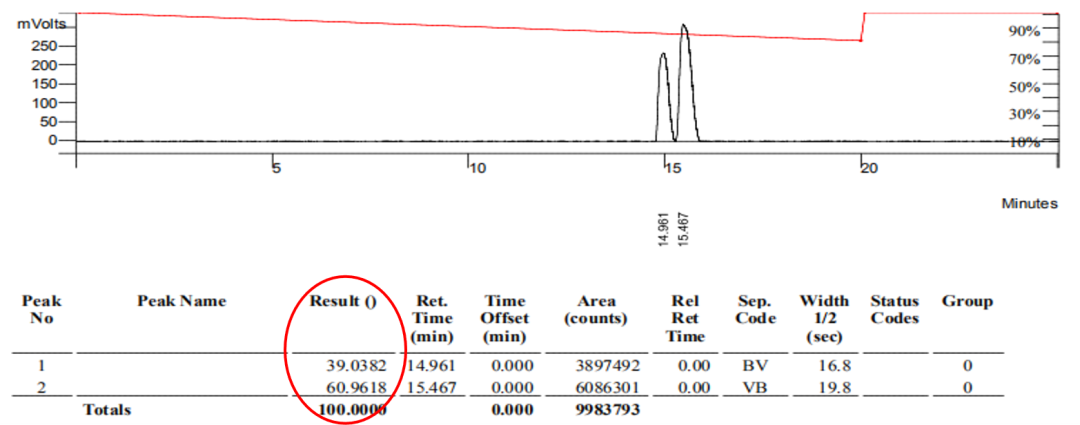
4. The liquid chromatogram of the sample injected after mixing the domestic hydroxypropyl tetrahydropyrantriol sample that we found to be the closest to the black belt sample;
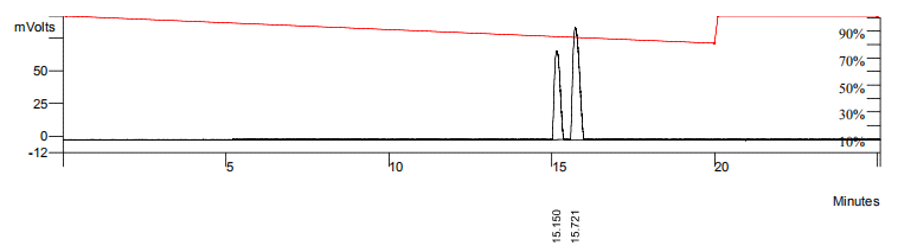
. After such chromatographic comparison, the better domestic hydroxypropyl tetrahydropyran triol has almost no difference with the original version in structure and distribution.
4. Hydroxypropyl tetrahydropyran triol on the market;
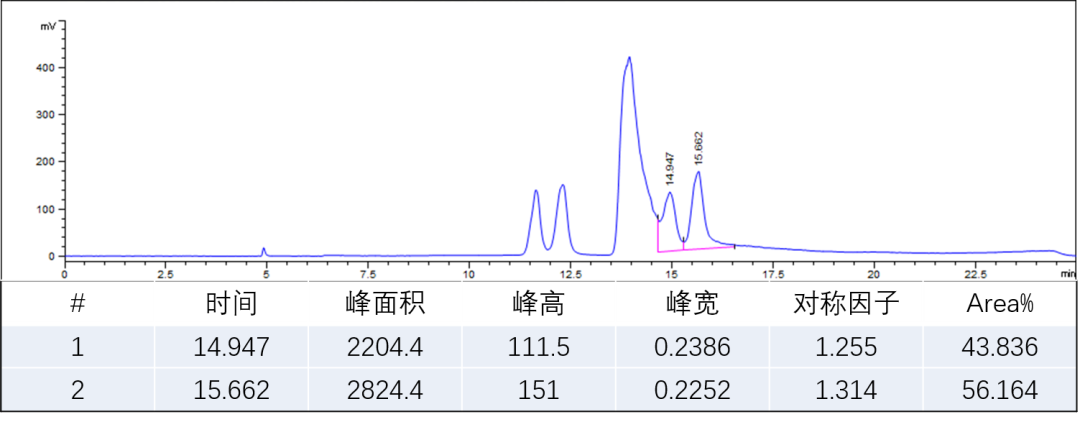
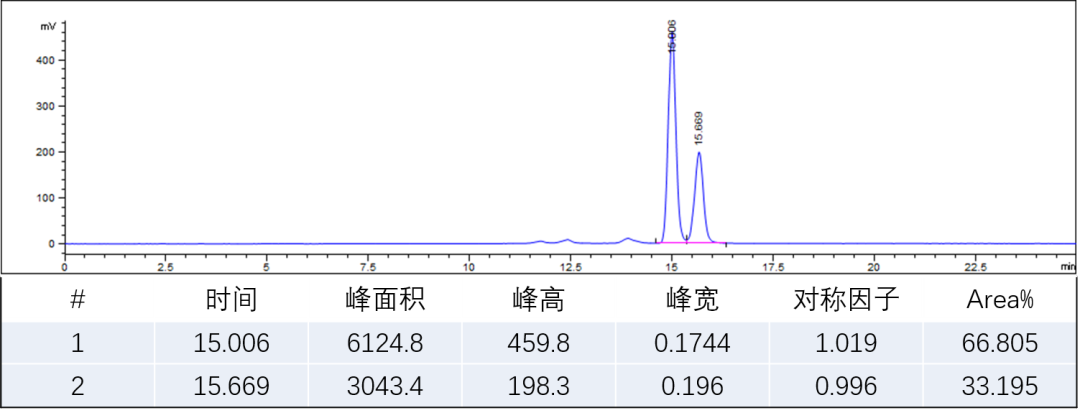
In our test, we also found that some hydroxypropyl tetrahydropyran triols on the market have more heteropeaks (more impurities) on the spectral line, or the proportion of diastereomers is inconsistent, and there are samples containing only a single isomer (unfortunately, the peak position is the previous peak position), as shown in the following figure.
1.5 quality concerns of hydroxypropyl tetrahydropyrantriol used in cosmetics
1.5.1 considering that it is difficult to identify with NMR after using water or other solvents, the high-purity version with content of 95% or above will be easier to identify. Use 50 mg of sample, 0.6 ml of deuterated methanol as solvent, and test the carbon spectrum with nuclear magnetic resonance equipment.
1.5.2 quality concerns as cosmetic raw materials
Color: light yellow, close to transparent, the closer the color is to colorless, the better;
Smell: slightly sour, the lighter the smell, the better;
Appearance: extremely viscous liquid
PH value (1%): 5-7;
Moisture (Karl Fischer method): ≤ 5%. Theoretically, the lower the moisture, the better (but the lower the moisture, the more viscous, which may be difficult to weigh);
;
Content: ≥ 95%, the higher the content, the better;
Conductivity (dilute the sample with deionized water for about 10 times, that is, dilute it to the mass content of 9-10% hydroxypropyl tetrahydropyranol): ≤ 1000 us/cm, high-quality products should be lower than 500 us/cm as far as possible, the lower the conductivity, the better, indicating that the lower the content of ionic components;
The proportion relationship of diastereomers: 50/50-70/30 (from the analysis of currently marketed cosmetic products), but more research is expected in the future;
Heavy metals: meet the safety technical specifications of cosmetics, the lower the better;
Solvent: the less the solvent content except water, the better. It does not contain toxic solvents;
Microorganism: if the total number of colonies is ≤ 100cfu/g, pathogenic bacteria shall not be detected. Of course, in fact, no colonies should be detected;
Write at the end:
1. With the increasing attention of China's scientific and industrial circles to the cosmetics industry, as well as the loosening of the new regulations on new raw materials, countless R & D personnel are working hard, and domestic raw material enterprises are moving forward steadily. It is expected that within 3-5 years, a number of leading international core raw material manufacturers will emerge in China's cosmetics raw material industry. .
2. . In addition, we also encourage the cosmetics industry in our country to change from imitating excellence to pursuing originality.
3. The efficacy of hydroxypropyl tetrahydropyrantriol is not commented because it has not been evaluated in human body.
*About efficacy:https://zhuanlan.zhihu.com/p/55217800(Zhihu) the opinions expressed in huxiaobo's article should be objective.)
The reason for publishing this article is that a few days ago, at the meeting organized by the Zhejiang Provincial Food and Drug Administration and the Zhejiang health products and cosmetics association, I was elected as the group leader of the new technology development and application group of the Zhejiang Cosmetics Association. I want to do something to popularize the public.
Therefore, the compilation of this article is encouraged by the increasing production of cosmetic raw materials in China.
In this experiment and data interpretation of hydroxypropyl tetrahydropyrantriol, Professor Chen Fengzheng gave a lot of guidance and provided some detection data and spectrograms. Thank you here. Before sending this wechat, he also communicated with Dr. Wujiang.
Limited to the level of knowledge, this article may inevitably have deficiencies. I hope that your peers can make criticism and correction, and you can contribute your wisdom and strength to the development of China's cosmetics industry.
Jiangligang November 18, 2020
Note: The copyright of the network of the article group belongs to the author.
The company provides Standard---Hydroxypropyl tetrahydropyrantriol (Bose)