
Tripterygium wilfordiiTripterygiiWilpordii Radix Folium seu FlosIt is the genus Tripterygium of CelastraceaeTripterygium Hook. F. woody Liana Tripterygium wilfordiiTripterygium wilfordiiThe dried roots of hook. F. are mainly produced in Fujian, Zhejiang, Anhui, Hunan and other places in China. Its chemical constituents are mainly diterpenes, triterpenes, alkaloids, etc., of which the diterpenoid Triptolide and the triterpenoid celastrol are the most active active ingredients in Tripterygium wilfordii, with anti-inflammatory, immunosuppressive, anti fertility and anti-tumor activities[1, 2, 3]At present, Tripterygium wilfordii preparations commonly used in clinic are Tripterygium glycoside tablets, Tripterygium wilfordii total terpene tablets, etc., which are mixtures extracted from the root wood of Tripterygium wilfordii bilayer bark, and are clinically used for the treatment of rheumatoid arthritis, systemic lupus erythematosus, chronic kidney disease and other autoimmune diseases[4]The curative effect is remarkable. In addition, in order to explore its beneficial effects in antagonizing organ transplant rejection, inhibiting tumor growth, and antagonizing reproduction, relevant scholars have successively completed some basic research on Clinical Pharmacodynamics and pharmacology[5, 6, 7]。
At present, hundreds of chemical components have been isolated from Tripterygium wilfordii, of which Triptolide and celastrol are the most studied and most promising effective components. Scholars have conducted in-depth research on their pharmacological activity, safety, clinical application and pharmacokinetics. This article reviews the research progress on the pharmacokinetics and metabolic characteristics of triptolide and celastrol in recent years, in order to provide references for subsequent clinical development and application.
1 TriptolideTriptolide, also known as triptolide, is an epoxy diterpenoid isolated from the extract of Tripterygium Wilfordii Hook. It is one of the main active and toxic components of Tripterygium Wilfordii Hook. It is also an indicator component of the current quality control standard of Tripterygium Wilfordii Hook.
1.1 pharmacokinetic parametersAnimal studies showed that the kinetic process of triptolide in rats conformed to the linear kinetic characteristics, and the area under the drug time curve (AUC) was positively correlated with the dose. After intravenous administration of triptolide at three doses (100, 200, 300 μ g/kg) in rat tail vein, the corresponding distribution half-life of each dose group(t1/2α)0.033, 0.021, 0.026 h, respectively[8]Triptolide is rapidly distributed, widely metabolized and rapidly eliminated in male SD rats. The pharmacokinetic characteristics of triptolide in rats conformed to the one compartment model. When SD rats were iv0.6 mg / kg triptolide, the apparent volume of distribution (VD) was (1.27 ± 0.25) l / kg, the elimination rate (CL) was (0.36 ± 0.05) l / (min ∙ kg), and the elimination half-life(t1/2β)It was (15.10 ± 4.44) min. ,t1/2β70 min, V / F was 0. 32 L / kg, Cl / F was 0. 06 L / (min ∙ kg). With the increase of Ig dose, the peak concentration at 0.6, 1.2, and 2.4 H(Cmax)And (254.00 ± 47.34), (446.65 ± 112.86) and (537.33 ± 143.34) μ g / L, respectively. The absolute bioavailability of SD rats after ig 0.6 mg/kg triptolide was 72.08%, indicating that the absolute bioavailability of SD rats to oral administration of triptolide was higher[9]。
After beagle dogs were Ig with Tripterygium wilfordii tablets (1 tablet /kg), the main pharmacokinetic parameters of triptolide in plasma wereCmax(2.780±0.387)g/L;tmax(1.75±0.76)h;t1/2(2.59±0.60)h;CL(2.768±0.606)L/(kg∙h);AUC0-9(11.539±1.491)μg∙h/L;AUC0-∞(13.185±1.686)g∙h/L[10]After intravenous administration of 0.05 mg/kg triptolide to beagle dogs,t1/2βIt was (2.5 ± 0.8) h, indicating that triptolide was eliminated rapidly in beagle dogs; In addition, VD was (1.3 ± 0.4) l / kg and CL was (0.36 ± 0.05) l / (min ∙ kg). . In the three dose groups of Ig,tmaxAbout 0.5 ht1/2αAbout 1.5ht1/2βAbout 2.5h, without statistical difference; And as the dose increases,Cmax(35 ± 8), (64 ± 16) and (74 ± 7) μ g/l, respectively, in a dose-dependent manner. [11]。
Li Ying et al[12]The pharmacokinetic parameters of triptolide in human body were studied in patients with rheumatoid arthritispoAfter taking tripterygium glycosides tablets, the pharmacokinetic parameters of triptolide in human body were measured asCmax(159.97±42.43)ng/mL、tmax(1.33±0.58)h、t1/2β(7.51±2.26)h、AUC0-12(1131.12 ± 89.20) mg ∙ H / L. it was found that the pharmacokinetics of triptolide in human body conformed to the two compartment model, with rapid absorption and individual differences.
1.2 absorption and distribution characteristicsAnimal studies revealed thatTriptolideIt is mainly absorbed in each intestinal segment, and the absorption effect decreases in the order of duodenum, colon, jejunum and ileum, but there is no significant difference in absorption between each intestinal segment, which conforms to the zero order absorption rate, and may be passive diffusion[13]。 Triptolide was rapidly distributed in various organs after absorption. After the effective dose of triptolide (200 μ g/kg) was given to rats by tail IV, the tissue distribution was rapid and extensive. The drug dose was the highest in lung tissue after 5 min of administration, which was (207.489 ± 34.043) ng/kg. The mass concentration of liver [(193.693 ± 31.962) ng/kg] and kidney [(189.813 ± 21.565) ng/kg] was also higher, followed by heart [(122.206 ± 12.076) ng/kg], brain [(122.351 ± 18.199) ng/kg], and spleen [(112.868 ± 10.066) ng / kg], small intestine [(90.873 ± 4.590) ng / kg], skeletal muscle [(62.605 ± 5.891) ng / kg], stomach [(61.007 ± 14.013) ng/kg]. After 15min of administration, the drug concentration in all tissues decreased, and the mass concentration in lung [(101.025 ± 24.089) ng / kg], kidney [(70.009 ± 11.568) ng / kg], heart [(64.912 ± 6.346) ng / kg], liver [(61.703 ± 25.298) ng / kg] was higher. The drug concentration in all tissues decreased significantly 1 h after administration, and remained high in liver [(37.503 ± 11.582) ng / kg] and small intestine [(26.626 ± 6.990) ng / kg][8]Studies have shown that triptolide is best absorbed in the duodenum and highly distributed in the liver and kidney.
1.3 metabolic characteristicsTriptolide is metabolized rapidly in vivo. By comparingpoIt was found that metabolites could be detected in plasma within 5 min in the two administration modes of triptolide and IV, indicating that the metabolic transformation speed of triptolide was fast in both administration modes. After ig administration of the mixture of triptolide and celastrol, the prototype drug was only found in rat serum, but three metabolites of triptolide were detected in urine samples, which were presumed to be its monohydroxylated metabolite, epoxidation hydrolysis ring opening metabolite and glutathione conjugate; One metabolite was detected in feces, presumed to be another monohydroxylated metabolite of triptolide, but no hydroxylated metabolite was detected in bile. Three hydroxylated metabolites of triptolide could also be detected in rat liver microparticle body temperature incubation system[14, 15]. Li et al[16]The metabolism of triptolide by cytochrome P450 (CYP450) enzymes in human and rat liver microsomes was studied. The results showed that triptolide was converted into four metabolites in rat liver microsomes and three metabolites in human liver microsomes, and all of them were monohydroxylated metabolites of triptolide. In addition, the metabolism of triptolide in human liver is mainly mediated by CYP3A4 and CYP2C19, of which CYP3A4 is the main metabolic enzyme for triptolide hydroxylation[17]In addition, the metabolic behavior of triptolide is also affected by other drugs. Studies have found that the metabolic behavior of triptolide is significantly changed after the combination of triptolide and dexamethasone. Dexamethasone can induce the activity of CYP3A, thus accelerating the metabolism of triptolide in vivo, and can significantly increase the production of a monohydroxylated metabolite of Triptolide[18]。
Gender may also be one of the reasons for the differences in the metabolism of triptolide. Studies have found that male SD rats have a significantly higher metabolic rate of triptolide than female rats, suggesting that a specific P450 enzyme in males may be involved in the metabolism of triptolide. According to the results of further enzyme inhibition experiments, it is presumed that the specific expression of cyp3a2 in the liver of male rats may be responsible for the rapid metabolism and low toxicity of triptolide in male rats[19]The results showed that MSG had no significant effect on cyp3a2 expression and enzyme activity in female rats; However, the high expression of cyp3a2 in the liver of male rats was reduced to trace levels, and CYP3A related erythromycin demethylation activity was also significantly reduced, close to the level of female rats. Similar to the changes in CYP3A expression and activity, there was almost no gender difference in the metabolism of triptolide in MSG treated rats[20]。
At the same concentration, the binding rate of triptolide to dog plasma was the highest, which was statistically different from that of rat and human plasma, but there was no statistical difference between rat and human plasma. The plasma protein binding rate of various genera was not significantly dependent on drug concentration[21]。
1.4 treatment of drug containing plasma samplesThe commonly used treatment methods of drug containing plasma include solid-phase extraction (SPE), protein precipitation, and liquid-liquid extraction. Wujianyuan[22]By comparing the above three methods for the treatment of triptolide containing plasma, it was found that the impurities in plasma samples treated by solid-phase extraction method were removed more cleanly, and the impurities and triptolide could be well separated, with high recovery and small RSD value; However, when using precipitated protein and liquid-liquid extraction, there are more impurities remaining in the sample, and the recovery rate is low.
2 celastrolCelastrolCelastrol, also known as celastrol, is a quinone methyl triterpene, which mainly exists in celastrol and celastrol in Celastraceae. It is one of the main effective and toxic components of Tripterygium preparations for the treatment of rheumatoid disease.
2.1 pharmacokinetic parametersThe main pharmacokinetic parameters of triptolide (1 mg/kg) in rat tail after IV wereCmax(0.48±0.11)μg/mL,tmax(5.0±0.0)min,AUC0-t(23.45±1.01)μg∙min/mL[23]The pharmacokinetic parameters of triptolide (110, 73, 48 mg/kg) in rats after ig with different doses are shown inTable 1~3[24]。
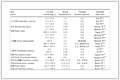 |
Table 1 Pharmacokinetic parameters of triptolide (110 mg/kg) in ratsTable 1 Pharmacokinetic parameters in rats after ig administration ofcelastrol (110 mg/kg) |
|
Table 2 Pharmacokinetic parameters of triptolide (73 mg/kg) in ratsTable 2 Pharmacokinetic parameters in rats after ig administration ofcelastrol (73 mg/kg) |
|
Table 3 Pharmacokinetic parameters of triptolide (48 mg/kg) in ratsTable 3 Pharmacokinetic parameters in rats after ig administration ofcelastrol (48 mg/kg) |
Animal studies showed that obvious double peaks could be seen in the blood concentration time curve of triptolide in rats, suggesting that there may be hepatointestinal circulation, gastrointestinal circulation, multi site absorption, etc. [24]。
Caco-2 cell model is a human clonal colon adenocarcinoma cell, which is similar to differentiated small intestinal epithelial cells in structure and function. It has microvilli and other structures, and contains enzymes related to small intestinal brush border epithelium. It can be used to simulate intestinal transport in vivo. After celastrol HbSS solution at 5, 10, 25 and 50 μ g / ml was given to Caco-2 monolayer cell model, the experimental results showed that celastrol was poorly absorbed in vivo, almost less than 1%. At the same time, it can be seen from the experimental results that after celastrol was given to Caco-2 monolayer cell model at various concentrations at different time points, allRThe values were all less than 1.5, suggesting that the intercellular transport mechanism of celastrol is simple diffusion[24]。
SD rats were given triptolide 100 μ g/kg, Ig triptolide 1000 μ g/kg and Ig triptolide tablets (equivalent to 534 μ g/kg triptolide) respectively, and the plasma drug concentration of triptolide was measured at different time periods. It was found that the bioavailability of triptolide was poor after oral administration, but when it was made into triptolide tablets, the absolute bioavailability was significantly increased from 17.06% to 94.19%. In addition, in terms of gender differences, the absorption of celastrol in female rats is better than that in male rats[25]。
2.3 metabolic characteristicsWhen rats were given Ig triptolide (0.6mg/kg) and celastrol (6mg/kg) mixture at the same time, the metabolites in serum, urine and feces of rats were detected by liquid chromatography tandem mass spectrometry. The prototype drug was only found in rat serum, a metabolite of celastrol was detected in urine sample, presumed to be a glucuronic acid conjugate, and a sulfate conjugate was detected in feces[14]。
Animal studies showed that after rats were Ig with celastrol, 10 phase I and phase II metabolites (m1-m10) were found in urine, and a small amount of phase I metabolites M1, M2 and phase II metabolites M6, M7, M9 were found in plasma. The presence of two phase I metabolites and two phase II metabolites was further verified by establishing a liver microsome system for in vitro incubation[24]。
In addition, male and female rats were Ig high (110 mg/kg), medium (73 mg/kg), and low (48 mg/kg) doses of celastrol. Statistical tests showed that the AUCCmax、CL、t1/2、 There was no significant difference in MRT and VD(P> 0.05); AUC between male and female rats after ig medium dose of celastrolCmax、CL、t1/2、 There were significant differences in MRT and VD(P< 0.05): AUC of male and female rats after ig low-dose celastrolCmax、t1/2And VD were not significantly different(P> 0.05), and there were significant differences in Cl and MRT(P< 0.05). ,CmaxAnd AUC will increase, and the degree of drug absorption will increase, basically showing a dose-dependent manner: while VD has no obvious dose-dependent manner. It shows that there are certain gender differences in the pharmacokinetics of celastrol[24]。
2.4 treatment of drug containing plasma samplesWu Dan[24]The plasma, bile, urine and liver samples of rats after ig triptolide were collected. The samples were treated by various methods, including methanol, acetonitrile precipitated protein, SPE column solid-phase extraction, ethyl acetate liquid-liquid extraction and so on. It was found that ethyl acetate liquid-liquid extraction method can obtain a large number of metabolites.
3 conclusionSince the 1970s, people have carried out in-depth research on the chemical composition, pharmacological activity, toxicity mechanism and clinical application of Tripterygium wilfordii. Pharmacological studies have shown that Tripterygium wilfordii has significant immune suppression, anti-inflammatory, anti-tumor and other activities. In clinical practice, Tripterygium wilfordii is widely used in the treatment of rheumatoid arthritis, systemic lupus erythematosus, glomerulonephritis and other diseases, with exact curative effect and broad application and development prospects. But at the same time, Tripterygium wilfordii showed high incidence of toxic and side effects in clinic, which greatly hindered its further application and promotion in clinic.
Tripterygium wilfordii shows strong toxicity while exerting strong effects, which is related to the material basis of its efficacy, that is, the main effective component in Tripterygium wilfordii is also a toxic component[26]Among them, Triptolide and celastrol are the main representative components, so it is particularly important to study their pharmacokinetics. At present, many scholars have studied the pharmacokinetics of triptolide, but it is not deep enough, and the study on its pharmacokinetics in human body has not been reported so far. However, there are many studies on the anticancer and other pharmacological effects of celastrol, mostly at the cellular and genetic levels, and the pharmacokinetic studies of celastrol are still few. Tripterygium wilfordii is a drug that has been reported with many poisoning events in recent years, so it is more necessary to conduct in-depth research on the pharmacokinetics of triptolide and celastrol, and explore the reasonable method of Tripterygium wilfordii safe application in clinic.