
What are the "three flowers and three Grasses" contained in Wang Laoji's new herbal tea? What are the effects? Today, Xiaobian will introduce you to "three flowers and three Grasses"
"Three flowers and three Grasses" mainly include:Chrysanthemum, honeysuckle, frangipani, liquorice, Xiancao, Prunella vulgaris”
1、 Chrysanthemum
chrysanthemumIn plant taxonomy, it is a perennial perennial herb of Compositae and chrysanthemum. According to the cultivation form, it can be divided into several cultivation types, such as multi headed chrysanthemum, single headed chrysanthemum, Dali chrysanthemum, cliff chrysanthemum, art chrysanthemum, desk chrysanthemum, etc; According to the appearance of petals, it can be divided into garden holding, retreat holding, reverse holding, random holding, open heart holding, flying afternoon holding and other cultivation types. Chrysanthemums in different types are named after various varieties.
Chrysanthemums are produced in cities, towns and villages in China, especially Beijing, Nanjing, Shanghai, Hangzhou, Qingdao, Tianjin, Kaifeng, Wuhan, Chengdu, Changsha, Xiangtan, Xi'an, Shenyang, Guangzhou, Xiaolan Town of Zhongshan City, Chuzhou, etc.
Application of chrysanthemum:
1. Cold due to wind heat
2. Liver Yang vertigo, liver wind syndrome
3. Dazed eyes
4. Carbuncle and swelling poison
2、 Honeysuckle
honeysuckle , also known as Lonicera japonica. The name "honeysuckle" comes from the compendium of Materia Medica. Because honeysuckle turns white at first and then yellow, it is named honeysuckle. Lonicera japonica Thunb. Is a dried flower bud or flower with initial opening of Lonicera japonica Thunb. And the same genus of Lonicera japonica Thunb.
Honeysuckle, which blooms in March and has five blossoms, has a slight fragrance. Its stem is red. The flower is white at the beginning and yellow after one or two days, so it is called honeysuckle. It is also known as "Yuanyang vine" because two flowers with one stalk and two stamens are in pairs. They are inseparable, like male and female, and like mandarin ducks dancing together.
Honeysuckle has been known as a good medicine for clearing away heat and toxin since ancient times. It is sweet, cold and fragrant. It is sweet, cold and heat clearing without hurting the stomach. It is fragrant and can dispel evil. Honeysuckle can not only disperse wind heat, but also be good at clearing blood poison. It can be used for all kinds of hot diseases, such as body heat, rash, hair spots, heat toxin sores and carbuncle, sore throat and so on.
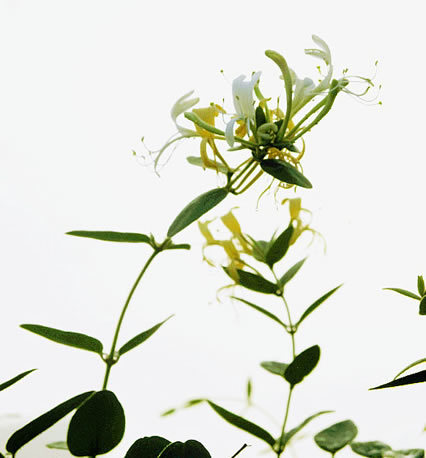
Main producing areas of honeysuckle: Fengqiu County, Henan, Shandong, Hebei
Honeysuckle effect:
1. Role of antiviral microorganisms. What are the effects and functions of honeysuckle? It can inhibit a variety of pathogenic bacteria such as Staphylococcus aureus, hemolytic streptococcus, Escherichia coli, Shigella, Vibrio cholerae, typhoid bacilli, paratyphoid bacilli, etc.
2. It has bacteriostatic and bactericidal effects on pneumococcus, meningococcus, Pseudomonas aeruginosa, Mycobacterium tuberculosis, Shigella dysenteriae, Streptococcus mutans, and has inhibitory effects on influenza virus, orphan virus, herpes virus and Leptospira.
3. It has anti-inflammatory and detoxicating effects, and has strong anti carbuncle and detumescence, heat clearing, detoxification and anti-inflammatory effects on carbuncle, sore, intestinal carbuncle and pulmonary carbuncle.
4. It has the function of dispersing heat and evil. It has a certain effect on exogenous wind heat or febrile disease at the beginning, headache due to body heat, restlessness and lack of sleep, dizzy tongue, dry throat and dry mouth.
5. It has the effect of cooling blood and stopping dysentery. It has the effect of detoxifying, stopping dysentery, cooling blood and promoting swallowing for heat toxic dysentery, dysentery and purulent blood, dampness and temperature blocking throat, sore throat, etc.
6. Honeysuckle tea is sweet in taste and cold in nature. It has the function of clearing away heat, detoxifying and dispersing wind heat. Honeysuckle has the functions of clearing away heat and toxin, relieving throat, relieving summer heat and annoying. It can be used to treat summer fever, diarrhea, influenza, boils and swelling, acute and chronic tonsillitis, periodontitis and other diseases.
7. In addition to its medicinal functions, honeysuckle plays a more magical role in beauty, weight loss and health care. It plays a significant role in protecting and repairing the body. Honeysuckle has the effects of relieving summer heat, sobering up, clearing the brain, quenching thirst, removing toxic substances in the body, reducing fat, losing weight, beautifying and cleansing the skin, preventing aging and prolonging life.
3、 Frangipani
Plumeria rubra L. cv. acutifolia, also known as Burmese gardenia, egg yolk flower, Indian jasmine, big season flower, oleander family, egg drop genus deciduous shrub or small tree. Branchlets plump and fleshy. The leaves are large, thick and papery, mostly gathered at the top of branches, and the leaf veins are connected to form one vein near the leaf margin.

Medicinal value of Frangipani flower:
After being dried in the air, frangipani can be used as a traditional Chinese medicine, which can clear away heat, moisten the lungs and throat, and cure sore throat and other diseases. In Guangdong, the white eggplant is often dried to make a herbal tea drink, which is very popular. Eggplant is a traditional Chinese medicine with a slightly sweet and bitter taste. It can be used in combination with other traditional Chinese medicines to treat heatstroke, dysentery, abdominal pain and other diseases that often occur in summer. It can also treat cough after turning cool in autumn, and has the effect of resolving phlegm and clearing lung.
4、 Licorice
licorice , (scientific name: glycorrhiza uralensis Fisch) alias: Guolao, sweet grass, Urals licorice, sweet root. Leguminosae and Glycyrrhiza are perennial herbs with strong roots and rhizomes. They are a kind of tonic Chinese herbal medicine. It is a kind of medicine good for human body. The medicinal parts are roots and rhizomes. The root of the medicinal material is cylindrical, 25 ~ 100 cm long and 0.6 ~ 3.5 cm in diameter. The outer skin is not uniform in tightness, and the surface is reddish brown or grayish brown. The rhizome is cylindrical with bud marks on the surface and pith in the middle of the section. It tastes sweet and special. Its main functions include clearing away heat and toxin, eliminating phlegm and relieving cough, abdominal cavity, etc. It enjoys a dry climate with dark damp, long sunshine and low temperature. Licorice grows in arid and semi-arid desert grassland, desert edge and loess hilly area. Roots and rhizomes are used medicinally.
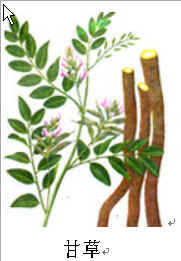
Efficacy of licorice
1. it is used for heart qi deficiency, palpitation, pulse knot generation, and spleen stomach qi deficiency,
Fatigue, etc. The former is often compatible with cinnamon twigs, such as Cinnamon Twig licorice soup and roasted licorice soup. The latter is often used with Dangshen and Baizhu, such as Sijunzi Decoction and Lizhong pill.
2. for carbuncle, sore, sore throat, etc. It can be used alone, orally or externally, or in combination. Carbuncle, gangrene and sore are often used together with honeysuckle and Forsythia suspensa. They play the skill of clearing away heat and toxic substances, such as immortal's prescription. Sore throat, often used with Platycodon grandiflorum, such as Platycodon grandiflorum soup. In case of pesticide or food poisoning, it is often fried with mung bean or Fangfeng water.
3. for asthma and cough. It can be used alone or in combination with other drugs. Such as Er Chen Tang for damp phlegm and cough; Linggan Wuwei Jiangxin Decoction for cold phlegm, cough and asthma; Mulberry apricot Decoction for treating dry phlegm and cough; Radix Platycodon Decoction for treating lung carbuncle, cough, spitting, stinking and purulent phlegm caused by heat toxin; Licorice and ginger soup for cough and saliva. In addition, wind heat cough, wind cold cough and hot phlegm cough are often used in combination.
4. it is used for stomach pain, abdominal pain and acute pain of gastrocnemius muscle contracture. It is often used with peony, which can significantly enhance the curative effect of treating acute pain of contracture, such as peony and licorice decoction.
5. it is used to adjust the intensity of some drugs. For example, seasoning Chengqi Decoction can alleviate the purgative effect of rhubarb and mirabilite and its stimulation to gastrointestinal tract. In addition, this product is also commonly used in many prescriptions.
Licorice has adrenocortical hormone like effects. It can inhibit the excessive gastric acid secretion caused by histamine; It also has the effects of anti acid and relieving gastrointestinal smooth muscle spasm.
8. licorice flavone, licorice extract and glycyrrhetinic acid have obvious antitussive effect; The expectorant effect was also significant, and its effect intensity was glycyrrhizic acid > glycyrrhizin > Glycyrrhiza extract.
9. licorice also has anti-inflammatory and anti allergic effects, and can protect the inflamed throat and tracheal mucosa. Liquorice extract and glycyrrhizic acid have the detoxification effect similar to glucuronic acid on some poisons.
10. licorice is often used to treat symptoms that come with menopause Because licorice contains glycyrrhizin, a hormone like compound, which helps balance the hormone content in women.
11. the hypo acid contained in Glycyrrhiza uralensis can block the carcinogen induced tumor growth.
5、 Xiancao
Xiancao, also known as Xiancao and Liangfen grass, is an annual perennial herb. It can benefit from planting for many years, with a height of up to 100 cm; The leaves are opposite and blossom in late autumn.
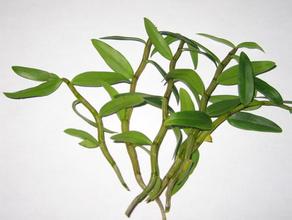
Efficacy of fairy grass:
6、 Prunella vulgaris
Prunella vulgaris(scientific name: Prunella vulgaris L), Alias: Prunella vulgaris, Prunella vulgaris (Yunnan Series), Prunella vulgaris, Prunella vulgaris (Southern Yunnan materia medica), xiju, Naidong (this classic), etc; It is a perennial herb with stoloniferous rhizomes and fibrous roots on nodes. Stems up to 30 cm high, base much branched, light purple. Calyx campanulate, filaments slightly flattened, style slender, apex lobes subulate, recurved. Disk nearly flat. Nutlets are yellowish brown, with flowering period from April to June and fruiting period from July to October.
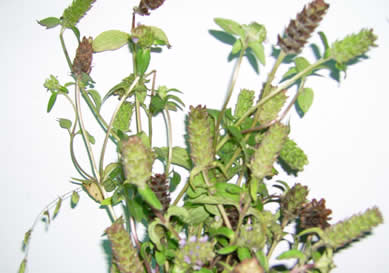
Efficacy of Prunella vulgaris
1. red eye swelling and pain, headache and dizziness, and nocturnal eye pain. The bitter cold of this product mainly enters the liver meridian and is good at purging liver fire to brighten the eyes. It can be used to treat inflammation of liver fire, swelling and pain of eyes. It can be used with mulberry leaves, chrysanthemums, cassia seeds and other medicinal products. This product can clear the liver and brighten the eyes. It can also nourish the liver. With Angelica sinensis and wolfberry fruit, it can be used for patients with liver yin deficiency and eye pain, especially at night; It can also be used with Cyperus root and licorice root, such as Prunella vulgaris powder (Zhang Yitong).
2. scrofula and gall. This product tastes pungent and can release heat from bitter cold. It is often used in combination with Fritillaria, Cyperus, and other medicinal products to treat liver depression and fire, and phlegm and fire condensation, such as Prunella vulgaris Decoction (surgical authentic); To cure galls, it is often used with kelp and Radix Scrophulariae, such as Prunella vulgaris ointment (Medical School Golden Mirror).
3. breast carbuncle swelling and pain. This product can not only clear away heat and liver fire, but also dissipate swelling. It can cure the swelling and pain of breast carbuncle. It is often used with dandelion. If it is matched with honeysuckle, it can cure the heat toxin sores, such as Huadu pill (secret of green capsule).