Comparative study on the management status of acne removing cosmetics at home and abroad
Yuan Huan Gao Jiamin Zhangfenglan, wanggangli
National Institutes for Food and Drug Control (NIFDC)
Abstract:This paper analyzes the management status of acne removing cosmetics at home and abroad, and puts forward some suggestions on the supervision of acne removing cosmetics in China. On the basis of summarizing the efficacy, raw materials and action principle of acne removing cosmetics, the management status of acne removing cosmetics in the United States, the European Union, Japan, South Korea, Canada and China in terms of product filing, efficacy raw materials and efficacy claims was comparatively studied, and suggestions were put forward for the follow-up supervision of acne removing cosmetics in China.
The actual declared efficacy of cosmetics is an important factor for consumers to choose to buy cosmetics. The regulation on the supervision and administration of cosmetics (hereinafter referred to as the regulation) specifies that the purpose of cosmetics is to clean, protect, beautify and decorate[1]On the basis of implementing the spirit of the regulation, the classification rules and catalogue of cosmetics subdivide the use purpose of cosmetics into 26 efficacy categories, such as hair dyeing, perm, freckle whitening, sun protection, hair loss prevention, acne removal, nourishment, repair, etc[2]Among them, cosmetics with acne removing effect are easy to be confused with drugs, medical devices and other products with medical effects in terms of efficacy principle and efficacy claim, which has attracted widespread attention from regulatory authorities and the industry. This paper studies and analyzes the function principle of the efficacy raw materials of acne removing cosmetics and the management status of products at home and abroad, and on this basis, puts forward suggestions for the supervision of acne removing cosmetics in China.
1 overview of acne removing cosmetics
. Its production is caused by endocrine disorders, abnormal increase of hair follicle keratinization, large-scale propagation of Propionibacterium acnes and inflammatory reaction[3,4]Materials with acne removing effects, such as salicylic acid, fructic acid, azelaic acid and their derivatives, promote skin renewal and help improve the skin environment by softening and peeling off the stratum corneum; Hydroxyaluminum chloride, calcium chloride, zinc sulfate, ethanol and other astringent pores help inhibit sebum secretion or improve abnormal sebum gland keratosis; Hamamelis extract, aloe extract, Centella asiatica extract and other raw materials with mild moisturizing effect can help the skin recover after acne[5]。
Acne removing cosmetics can evaluate the efficacy of human body on the basis of clarifying the action principle of acne removing ingredients. The acne removing effect of the product was evaluated by measuring the changes in the content of moisture, oil, etc. of the subject's skin during the use of the product, or observing the height, volume, and quantity of the subject's acne[6,7]。
2 international regulation of acne removing cosmetics
In the United States, some cosmetics with high risk and containing specific efficacy ingredients are classified as "over the counter drug" (hereinafter referred to as "OTC" drugs, i.e. over-the-counter drugs). Acne removing cosmetics, which can reduce the number of skin acne and improve acne marks, are managed as "OTC" drugs. When they meet the general requirements of "OTC" drugs and the special requirements of the corresponding monograph, they can be marketed without the approval of the regulatory department. However, if it exceeds the requirements of the "OTC" drug monograph, such as the use of new anti acne efficacy raw materials, a new drug registration is required. When acne removing products have cleaning effect at the same time, they should also meet the requirements of cosmetic regulations.
Monograph on "OTC" drugs[8]. It also specifically stipulates that the functional ingredients can be used in combination, for example, in acne removing cosmetics, resorcinol or resorcinol monoacetate should be used with 3% - 8% sulfur. The monograph also lists the fixed combinations of product efficacy claims, as shown in Table 2. The product label can use descriptive words and symptoms to declare the efficacy. For example, acne removing cosmetics can claim to "remove acne and heal the skin", "reduce the severity of blackheads", "help prevent the formation of new acne", etc. In addition to the efficacy claims given in the monograph, other claims based on real efficacy are also allowed.
Table 1 anti acne ingredients approved by the American "OTC" drug monograph
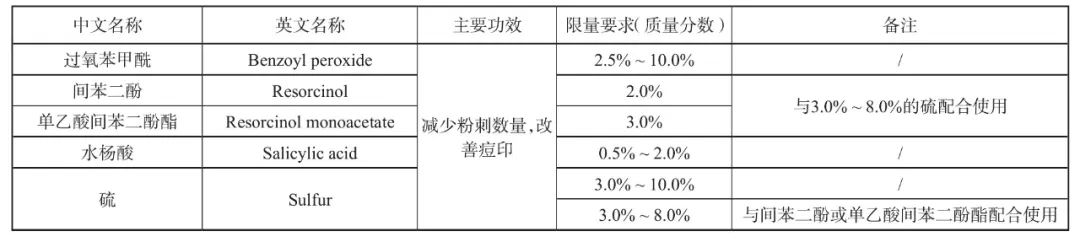
Table 2 matching words for efficacy claims of acne removing cosmetics approved by American "OTC" drug monograph

2.2 EU
In the European Union, acne removing products need to be combined with efficacy claims to determine whether they belong to cosmetics. EU cosmetics do not need pre marketing approval, only need to record the basic product information on the designated website. However, the cosmetic regulation ec1223/2009[8]It is emphasized that the person in charge of cosmetics is responsible for the safety of cosmetics, and the product safety needs to be fully evaluated before the product is launched into the market, and the product formula, efficacy evaluation, and safety evaluation data should be sorted into an information file (PIF) for inspection by the regulatory department at any time. The EU has not established a list of ingredients for acne removing cosmetics, but the use of cosmetic ingredients needs to meet the requirements of the list of prohibited ingredients, the list of restricted ingredients and the list of approved preservatives in the cosmetics regulation ec1223/2009. The declaration of cosmetics should be based on the general guidelines of compliance, authenticity, integrity, fairness and justice, consumer knowledge, and efficacy test data support. It is not allowed to over declare the medical effect, otherwise it will be classified as drugs for management.
.
2.3 Japan
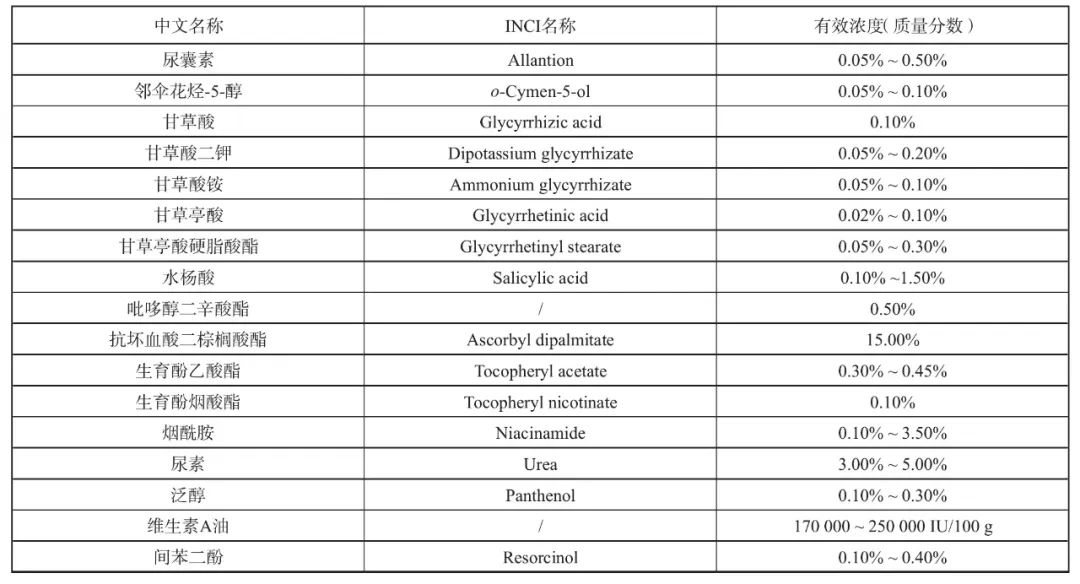
In Japan, cosmetics can be divided into general cosmetics and foreign products of the Ministry of medicine. Acne removing masks / creams / creams / emulsions / oils that claim to have "acne prevention" belong to the medicinal cosmetics in the foreign products of the Ministry of medicine. Such products need to submit the product formula, preparation process, inspection report and other information to the regulatory authority for declaration, and can only be marketed after approval. The raw materials used in the products need to meet the requirements of the specification of raw materials for foreign products of the Ministry of medicine, additives for foreign products of the Ministry of medicine and the list of effective raw materials for medicinal cosmetics. The list of effective ingredients for medicinal cosmetics stipulates the functional ingredients and limit requirements available in different product types such as shampoo, makeup water, cream, emulsion, etc. the functional ingredients often used in cream and emulsion acne removing cosmetics are shown in Table 3. In addition, some functional raw materials belong to the "other paper specifications" in the product formula, which cannot be published without the consent of the person in charge of the enterprise.
In terms of the management of new raw materials, Japan implements an approval system for new raw materials used in foreign products of the Ministry of medicine. Such new raw materials are approved together with products. When applying, information on the use background, physical and chemical properties, safety, stability and other aspects of new raw materials need to be submitted. Other general types of new raw materials implement a filing system.
Table 3 list of commonly used acne removing ingredients included in Japanese medicinal cosmetics
2.4 South Korea
In South Korea, cosmetics are divided into general cosmetics and functional cosmetics according to the efficacy claim and the degree of effect on human body[9]Rules for the implementation of the cosmetic law of South Korea[10]According to the regulations, the washing acne removing cosmetics that help relieve acne skin belong to functional cosmetics. Such cosmetics need to submit product safety evaluation, efficacy test and other data to the regulatory authority for declaration, and can be produced and sold only after passing the review. Relevant provisions on the review of functional cosmetics[11]The effective ingredients and use limits are publicized in the. The effective ingredients of acne removing cosmetics are shown in Table 4. When functional cosmetics use the ingredients in the list as the effective ingredients according to the requirements, the application materials can be greatly reduced.
In order to avoid misleading consumers to regard functional cosmetics as drugs, the South Korean cosmetic law implementation rules[12]It is required that functional cosmetics related to the improvement of skin allergy, acne, stretch marks, hair loss and other symptoms should be marked with the words "non preventive and therapeutic drugs" on the product label.
In terms of the management of new raw materials, South Korea stipulates that those who plan to use new functional raw materials in functional cosmetics need to submit the safety evaluation report and efficacy test report of the raw materials when applying for products. Generally, new raw materials only need to be filed with the regulatory authorities together with the products.
Table 4 list of effective ingredients of acne removing cosmetics publicized in South Korea

2.5 Canada
In Canada, acne removing products are not managed as cosmetics at all, but are classified as "non prescription drugs" (hereinafter referred to as "NPDs" over-the-counter drugs) or "natural health products" (hereinafter referred to as "NHPs" natural health products) according to whether the products contain the functional ingredient benzoyl peroxide[13]Those containing benzoyl peroxide belong to "NPDs" over-the-counter drugs. Both "NPDs" over-the-counter drugs and "NHPs" natural health products are managed by the registration and approval system.
According to the acne care product monograph, the functional raw materials that can be used by the product are shown in Table 5. In this list, except for the use limit of benzoyl peroxide, the functional raw materials sulfur, resorcinol or resorcinol monoacetate cannot be used in body cleansers or facial cleansers, the use requirements of other functional raw materials are consistent with those published in the United States. See Table 6 for the functional statement of acne care products. For products containing benzoyl peroxide, antibacterial and bactericidal claims such as "preventing (and) / killing acne bacteria and eliminating acne bacteria" are allowed. All acne care products shall not use claims like "oil control (oily skin)", "acne cure" and "suitable for severe acne".
Table 5 list of acne removing ingredients approved by Canadian acne care product monograph
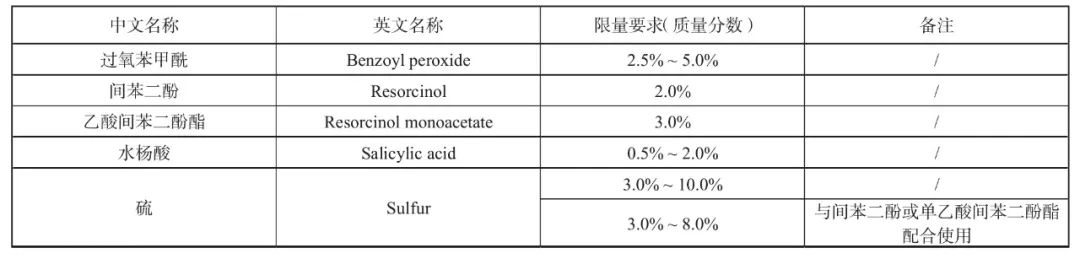
Table 6 functional statement approved by Canadian acne care product monograph

3 supervision status of acne removing cosmetics in China
3.1 product filing management
In China, cosmetics have a very clear boundary with drugs, medical devices and other products, and any products with medical effects are not cosmetics. Based on the principle of risk management, cosmetics are divided into special cosmetics and ordinary cosmetics. Among them, acne removing cosmetics belong to ordinary cosmetics. Before the products are listed or imported, they should be registered according to the measures for the administration of cosmetics registration and filing[14]Regulations on the administration of cosmetics registration and filing materials[15]And submit materials to the corresponding drug regulatory department for filing. However, acne removing cosmetics are special cosmetics with the functions of sunscreen, hair loss prevention, freckle removal and whitening at the same time, so they should apply for registration according to the requirements of special cosmetics.
3.2 raw material management
3.2.1 management of used raw materials
Although China has not formulated a list of acne removing ingredients, it has strict requirements for the use of cosmetic ingredients. . The use of new raw materials during the safety monitoring period shall also be authorized by the new raw material registrant and recorder. On the other hand, hormone and antibiotic raw materials with safety risks are classified as prohibited raw materials for cosmetics in the code[16]。
It is worth noting that salicylic acid and other acne removing ingredients included in other countries are also included in the list of restricted components in China's "specification"[17]In China, salicylic acid, as a restricted component for cosmetics, is only applicable to resident products, skin washing products and hair washing products. Among them, the use limit in resident products and skin washing products is 2%. In addition, the specification also stipulates that except for shampoo, salicylic acid shall not be used in the production of cosmetics for children under three years old, and all cosmetics using this raw material must be marked with "this product contains Salicylic acid; children under three years old must not use it" in the product label. The reason why the above restrictions are proposed is that acne removing cosmetics, which are used as "OTC" drugs, the foreign product management of the Ministry of medicine, "NPDs" over-the-counter drugs or "NHPs" natural health products in the United States, Japan and Canada respectively, have different degrees of preventive or therapeutic effects on human skin acne and acne, while in China, cosmetics do not have any medical effects and have higher safety requirements. In addition, acne removing cosmetics only play a certain role in reducing or slowing down the occurrence of acne and improving the skin state after the occurrence of acne, but cannot eradicate the acne and acne on the skin. The classification rules and catalogue of cosmetics also further clarified that products that achieve acne elimination through regulating hormone levels, killing (anti-bacterial, anti-inflammatory) and anti-inflammatory effects are not cosmetics[2]。
In addition, in China, some drugs with therapeutic effects cannot be used as cosmetic efficacy raw materials. . Considering the differences between cosmetics and drugs in the purpose of use, method of use and principle of action on human body, in order to further ensure the safety of cosmetics, the State Drug Administration issued the "announcement on updating the catalog of prohibited ingredients for cosmetics" in May 2021, adding peroxybenzoyl as a prohibited ingredient for cosmetics[18]。
3.2.2 management of new raw materials
In terms of the management of new raw materials, China implements the filing management of new raw materials with acne removing function. However, considering the fact that acne removing cosmetics are strictly managed in the United States, Japan and South Korea as "OTC drugs", "foreign products of the Ministry of medicine" or "functional cosmetics", China stipulates that the safety data requirements of new acne removing functional raw materials are higher than those of other recorded NEW raw materials, and they are consistent with the new raw materials with sunscreen, anti-corrosion, coloring, hair dyeing, freckle whitening functions that implement registration management[19]。
3.3 efficacy claim management
In order to protect the legitimate rights and interests of consumers, promote social co governance, and promote the high-quality development of the cosmetics industry, after the official implementation of the regulations, the State Drug Administration successively issued a series of guidance documents, such as the classification rules and catalogue of cosmetics, the specification for the evaluation of the efficacy declaration of cosmetics, and the management measures for the labeling of cosmetics, to regulate the efficacy declaration and evaluation of cosmetics.
The regulation stresses that the registrants and recorders of cosmetics are responsible for the efficacy claims of cosmetics, and requires that the efficacy claims of cosmetics should have sufficient scientific basis[1]When applying for product registration and product filing, cosmetic registrants and recorders shall upload the summary of the basis for acne elimination efficacy claim to the website designated by the State Drug Administration for social supervision. As for the choice of efficacy evaluation methods, the standard for the evaluation of cosmetic efficacy claims stipulates that the type of evidence for the evaluation of acne removing efficacy of cosmetics must be human efficacy evaluation tests[20]。
In addition, the label of acne removing cosmetics claims that it should meet the requirements of the regulations and the measures for the administration of cosmetics labels. It is not allowed to use antibacterial, anti-inflammatory and other words that explicitly or implicitly have medical effects and effects. The content of the label must not contain words that are false, misleading, or contrary to social order and good customs[21]。
4 challenges and suggestions for the regulation of acne removing cosmetics in China
4.1 clarify the registration and filing management requirements for multifunctional new raw materials
. But in fact, the same cosmetic raw material may have multiple functions due to its special structure. For example, salicylic acid can soften and exfoliate cutin. It can be used as an effective ingredient for acne removal. At the same time, it can also inhibit the growth of microorganisms in cosmetics. It is a commonly used preservative. In the process of registration and filing of new cosmetic raw materials, in order to exempt a large number of toxicological test projects, some enterprises can obtain the right to use new raw materials in a short time, deliberately conceal the anti-corrosion, freckle whitening and other functions of new acne removing raw materials, forcibly enjoy policy benefits, and file new raw materials, which brings potential risks. Therefore, it is recommended that the regulatory authorities issue guidance on the registration and filing of multi-functional new raw materials, require the registrants and registrants of new cosmetic raw materials to conduct a comprehensive and full study of the functions of new raw materials, and clarify that if new raw materials have both the functions of filing scope and registration scope, they must first apply for registration; New raw materials with acne removing and other filing functions shall prepare toxicological test data according to the requirements of the situation where the acne removing function is located.
4.2 standardize the efficacy evaluation method of acne removing cosmetics
The specification contains the methods for determining the sun protection factor (SPF value), waterproof performance, long wavelength ultraviolet protection index (PFA value) and anti UVA ability of sunscreen cosmetics. The State Drug Administration also issued the test methods for the efficacy of cosmetics in freckle removal and whitening and the efficacy of cosmetics in preventing hair loss in March 2021[22]. At present, some methods for evaluating the efficacy of acne removal are designed on the basis of evaluating the principle of cell proliferation and differentiation, the inhibitory effect of inflammatory factors, etc., and the test principle itself is not consistent with the purpose of cosmetics. It is suggested that industry associations should clarify the principle of acne removing cosmetics and issue group standards for relevant test methods, so as to guide enterprises to standardize the efficacy evaluation of acne removing cosmetics.
4.3 develop a list of prohibited words declared on cosmetic labels
The former State Food and Drug Administration issued the guidelines for the nomenclature of cosmetics in 2010[23]The declarable words, prohibited words and expressions in the name of cosmetics were clarified. However, the prohibited words contained in the guide are very limited, and have been used since its release and have not been updated. In the process of supervision, local regulatory authorities have different understandings of certain claims, and the review criteria are also different, such as whether acne removing cosmetics can claim Shumin. What's more, some undesirable enterprises take advantage of this loophole to deliberately use some marginal words related to the role of medical treatment, disturbing the market order and misleading consumers. With the official release and implementation of the "Regulations" and supporting regulatory documents, a new regulatory system for cosmetics has been established. It is urgent to develop a list of prohibitions for cosmetics labels with a wide coverage in combination with the current market development. The management of the list should be dynamic, clarify the mechanism of adding and removing forbidden words, and actively mobilize cosmetics supervisors, practitioners and consumers to participate in the updating process of the list. .
4.4 continue to strengthen the supervision and sampling inspection of cosmetics
. In China, from the State Drug Administration to the provincial and Municipal Drug Supervision and administration departments, they conduct random inspection of cosmetics on the market every year, and publish the results of sampling inspection and the investigation and treatment of illegal enterprises involved. Analyzing the results of cosmetic supervision and sampling in 2020, it was found that some acne removing cosmetics still had illegal addition of anti infective drugs such as chloramphenicol, lincomycin, clindamycin, bifonazole, antihistamine drugs such as cyproheptadine, diphenhydramine, cimetidine, and hormone components such as clobetasopropionate[24,25,26,27,28]In this regard, the regulatory authorities should continue to strengthen the supervision and sampling of cosmetics[29]When necessary, organize special sampling inspection of acne removing cosmetics, carry out full coverage supervision from production to circulation, concentrate on rectifying illegal and illegal behaviors such as illegal addition of cosmetics, and improve the targeted hit rate.
The article comes from perfume cosmetics 2022, (01);
