
Analysis of the current situation of the approval and registration application of new traditional Chinese medicine in China in recent years
Flood peak1Chu Dandan1Xuhuifang1Ma Lin1Li Hao1Liu Wei1,2
1. School of management, Beijing University of traditional Chinese medicine 2 Achievement transformation center of Beijing University of traditional Chinese Medicine
Abstract:By collecting the data of the approval of new Chinese medicine from 2012 to 2019 and the registration application of new Chinese medicine from 2015 to 2020, this paper classifies and sorts out the number of new Chinese medicine approval and application, registration classification, application subject, dosage form distribution, treatment field and source, analyzes its current situation in a multidimensional manner, discusses the characteristics and existing problems of new Chinese medicine application, and provides corresponding suggestions. From 2012 to 2019, the number of approved new drugs of traditional Chinese medicine showed a downward trend, but the approval rate increased; From 2015 to 2020, the number of new drug registration applications for traditional Chinese medicine decreased significantly, with the largest number of new drug registration applications for Category 6 and no new drug registration applications for category 2 and 4; ; The new drug type is mainly ordinary oral preparations, and the treatment field is concentrated in the field of major common diseases; The sources of new drugs are mainly clinical prescriptions and scientific research achievements of scientific research institutions. In general, the quality of new drug applications for traditional Chinese medicine has improved, but the number of applications is at a low point. All relevant parties need to take multiple measures to jointly promote the research and development of new drugs for traditional Chinese medicine.
In recent years, the state has issued a series of policy documents to guide the work of traditional Chinese medicine, clearly taking the creation of new drugs of traditional Chinese medicine as one of the key tasks of the development of traditional Chinese medicine. In particular, at the end of 2020, the State Drug Administration issued the implementation opinions of the State Drug Administration on promoting the inheritance, innovation and development of traditional Chinese medicine, which put forward higher standards and requirements for the research and development of new drugs of traditional Chinese medicine, and also brought new historical development opportunities for the research and development of new drugs of traditional Chinese medicine. In recent years, scholars have carried out some research on the research and development of new drugs of traditional Chinese medicine, but most of the research on the status of approval and registration applications is concentrated before 2015, and there is a lack of comprehensive research on the status of registration applications of new drugs of traditional Chinese medicine after 2015
1.1 data sources
The basic data of the approval and registration application of new Chinese medicines are mainly from the accepted varieties directory, clinical trial database and annual drug review report published on the official website of the drug evaluation center (CDE) of the State Drug Administration (http://www.cde.org.cn/), and further search and collect detailed information through the official websites of relevant units, drugintelligence and other platforms.
1.2 statistical methods
In this paper, Excel software was used for statistical analysis of the collected data, and descriptive statistics and comparative analysis were reasonably carried out according to the research needs.
1.3 data sorting description
According to the provisions of the drug registration administration law (2007 Edition): the varieties of registration classification 1-6 are new drugs, and the registration classification 7 and 8 are declared according to the new drug application procedure. Therefore, the data collected in this paper include only 1-6 categories, and the selected sample period is 2015-2020. In addition, the sources of new drug varieties are obtained through the official website and online information retrieval of the application enterprises, and there may be individual omissions.
2.1 review completion
According to the data published in the CDE annual drug review report, a total of 1280 reviews and 401 approvals of new Chinese medicines were completed from 2012 to 2019, with an average approval rate of 31.33%. See Table 1 for the specific approval completion of three application types, namely, investigational new drug (ind), new drug application (NDA) and generic new drug application (anda). It can be seen from table 1 that the application approval rates from high to low are ind, anda and NDA, and the approval rate of IND is much higher than the other two types, reaching 48.47%. Further analyze the change trend of the number of completed reviews and approval rates over time, as shown in Figure 1 and Figure 2. The number of completed reviews of ind and NDA has shown a significant downward trend since 2016, while the number of completed reviews of Anda has shown a downward trend since 2014. At present, the number of completed reviews of the three types of applications is at a trough; The approval rate of ind has shown an overall upward trend. NDA has shown an obvious upward trend since 2016, while anda is still in a low approval rate state after a sharp decline in 2016. This is because the former State Food and Drug Administration issued the "announcement on carrying out self inspection and verification of clinical trial data of drugs" in July 2015 for the authenticity and standardization of clinical trial data of drugs, strictly investigated the falsification of clinical trial data of new drugs, and found that the quality problems of clinical trials of new drugs of traditional Chinese medicine were more prominent through the on-site comprehensive verification of clinical trial data of drugs
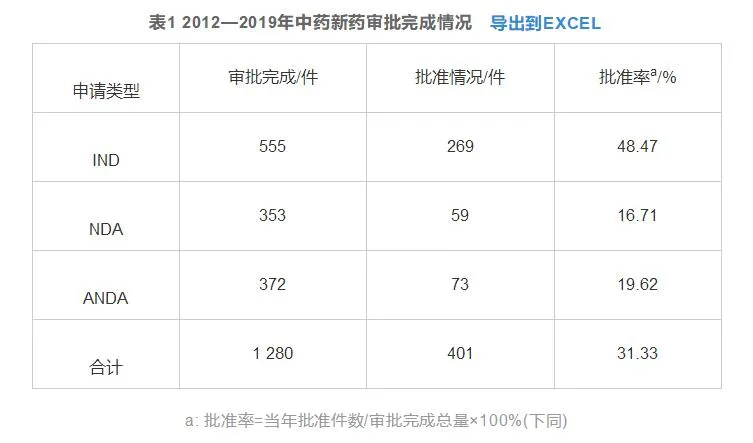
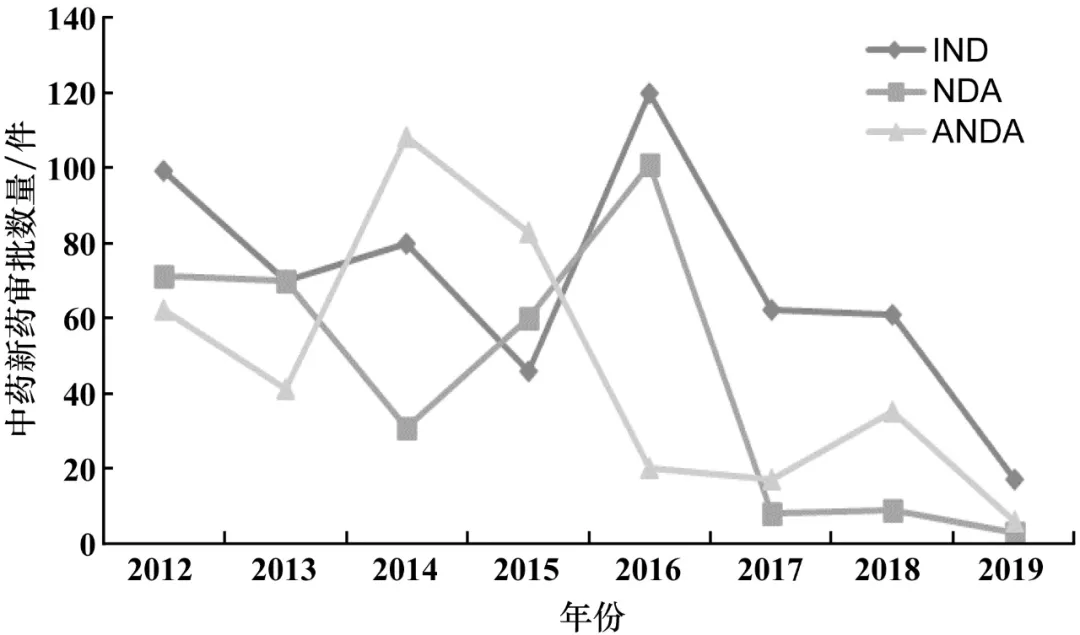
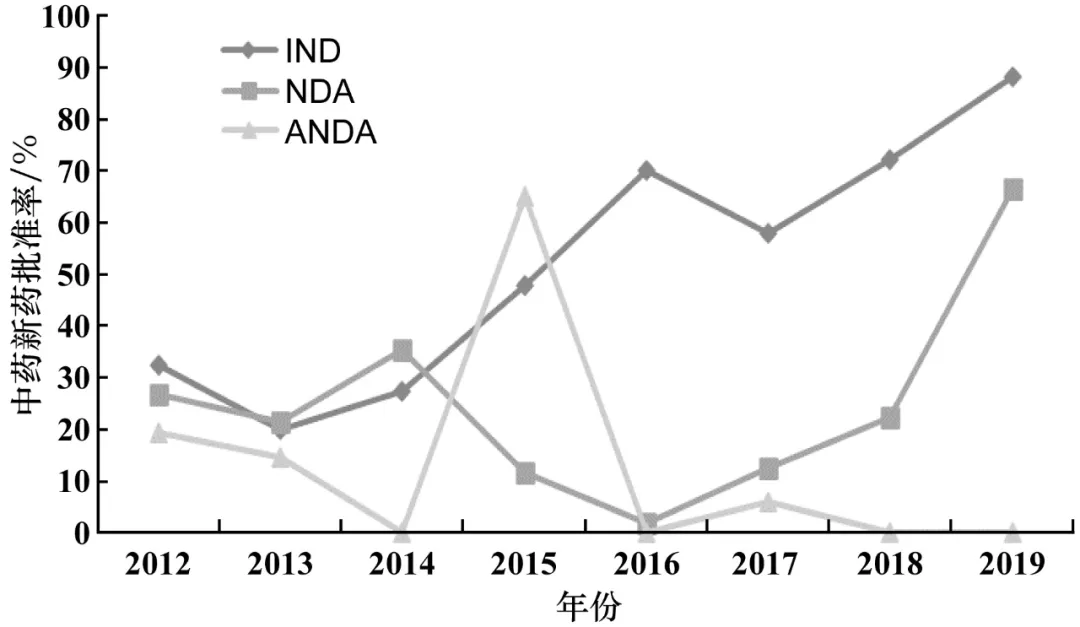
Figure 2 Approval rate of new drugs of various types of traditional Chinese medicine from 2012 to 2019
2.2 number and classification of registration applications
From 2015 to 2020, CDE accepted a total of 218 applications for registration of new Chinese medicines, including 181 ind and 27 NDA applications. . The registration classification of drugs is accompanied by the research and development, approval, production, marketing and sales of new drugs of traditional Chinese medicine. Different drug classifications have a profound impact on the selection of new drugs, scientific and technological support, drug pricing and clinical medication
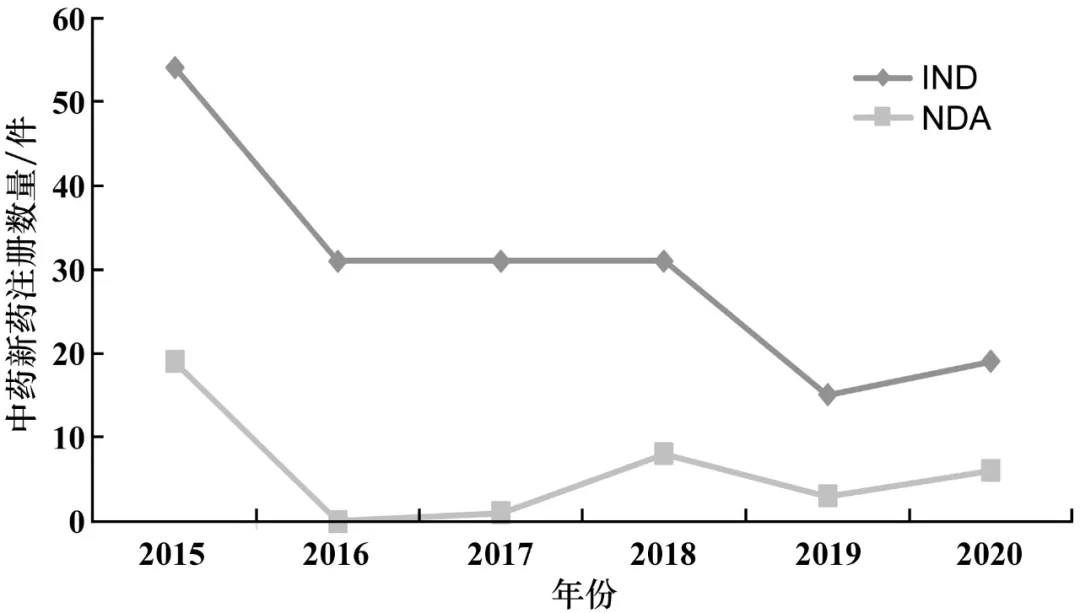
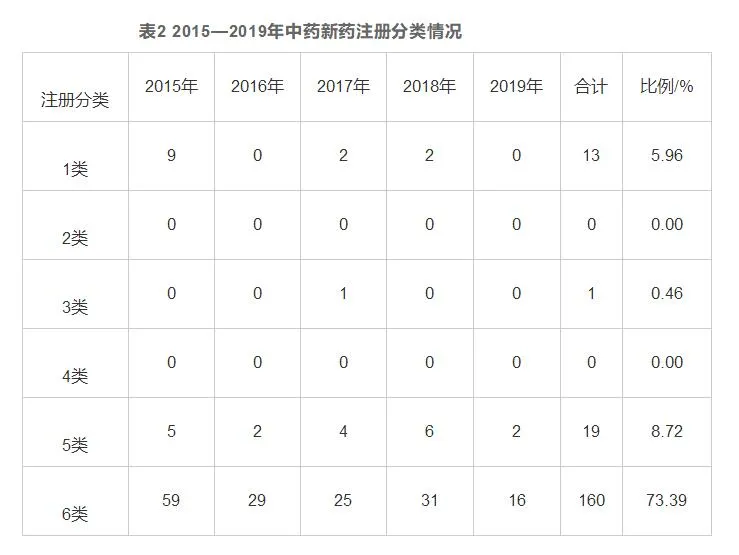
In September 2020, the State Drug Administration newly issued the requirements for registration classification and application materials of traditional Chinese medicine, which stipulates the new registration classification of traditional Chinese medicine. Therefore, the registration classification in 2020 will not be analyzed. According to the provisions of the drug registration administration law promulgated and implemented in 2007, there are 9 categories of registration classification of traditional Chinese medicine, among which the varieties with registration classification of 1-6 are new drugs. See Table 2 for the registration classification from 2015 to 2019. The number of applications for registration of new drugs of category 6 (traditional Chinese medicine and natural medicine compound preparations) was the largest, accounting for 73.39%, followed by new drugs of category 5 (active parts and preparations) and new drugs of category 1 (active ingredients and preparations), accounting for 8.72% and 5.96% respectively. .
As shown in Table 3, the joint declaration proportion of IND is 24.31%, and that of NDA is 40.54%. The joint declaration proportion of NDA is much higher than that of ind. According to the types of units, the application subjects are divided. A total of 65 applications for registration of new Chinese medicine drugs have been participated by scientific research institutions and hospitals, including 28 as the first application unit, with an overall participation rate of 29.82%. The degree of participation can be further improved. . Among them, Jiangsu and Beijing accounted for more than 12%, significantly higher than other regions.
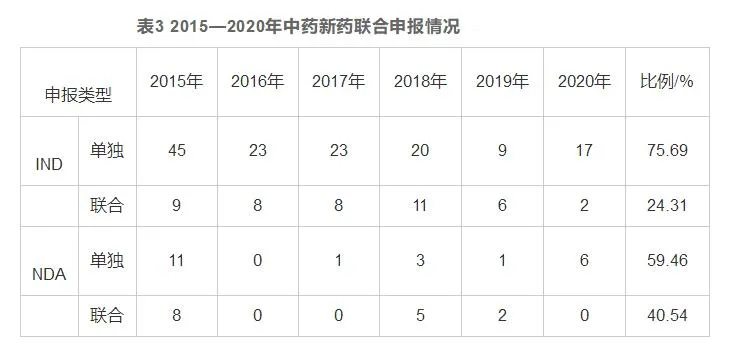
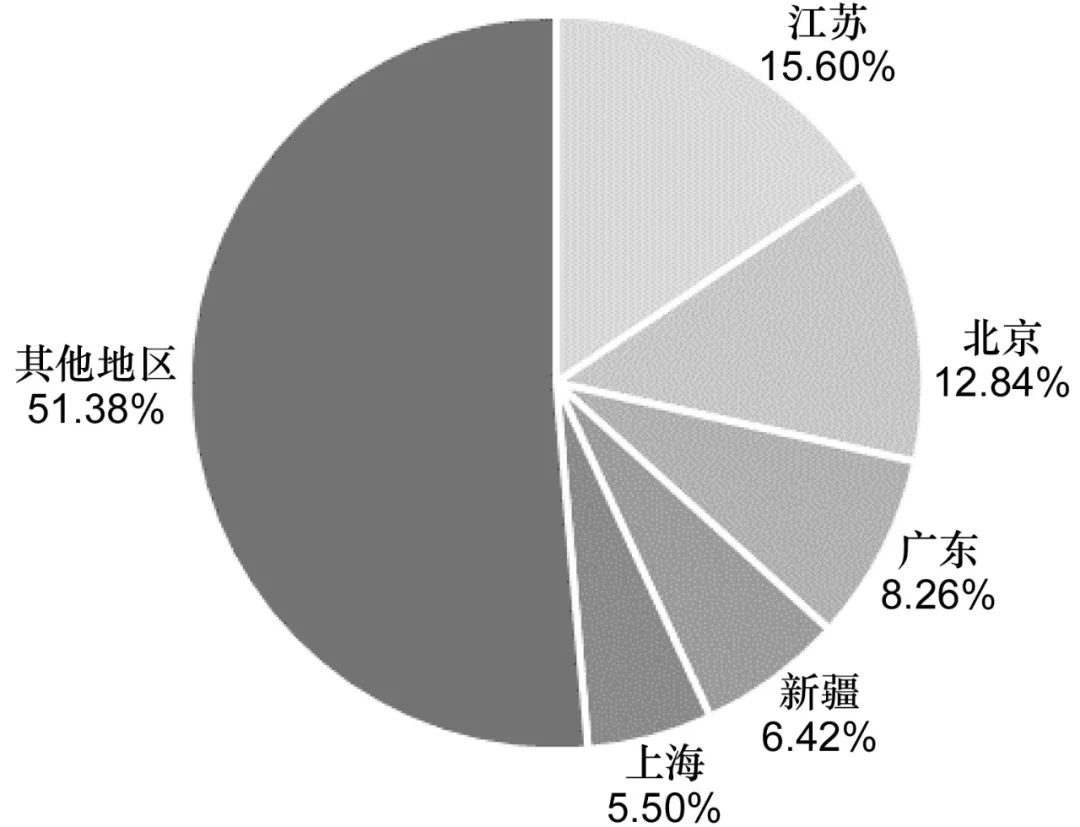
Figure 4 Regional distribution of new drug registration applications for traditional Chinese medicine from 2015 to 2020
3.1 distribution of dosage forms and treatment fields
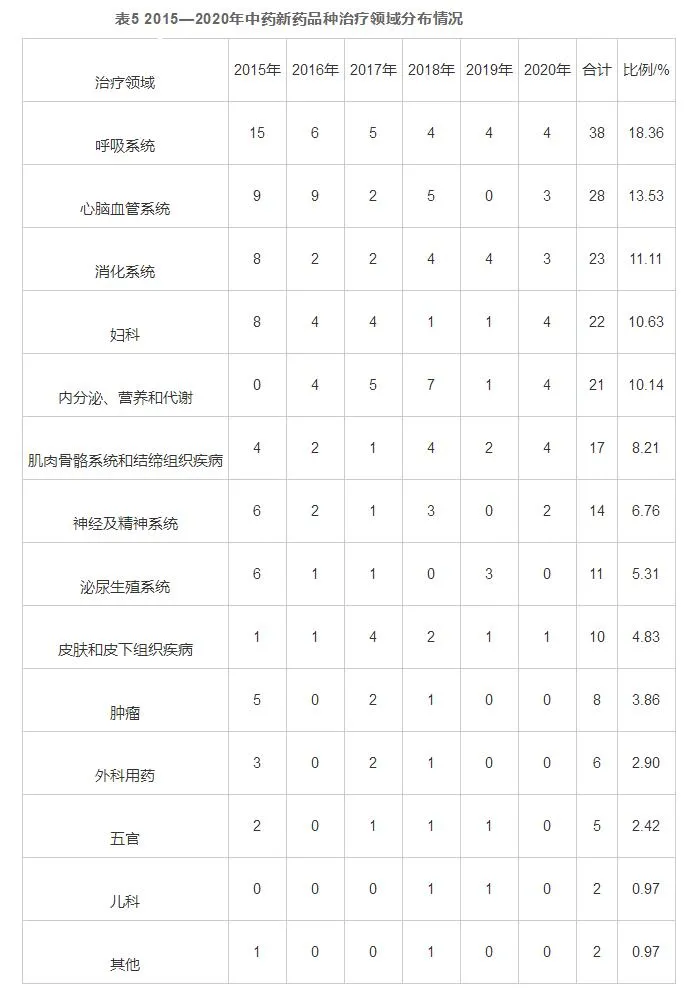
From 2015 to 2020, CDE accepted a total of 207 new varieties of traditional Chinese medicine. . According to the 11th edition of the international classification of diseases newly issued by the World Health Organization, combined with the characteristics of disease prevention and treatment of traditional Chinese medicine, the treatment field is divided into 14 categories, and the varieties of new traditional Chinese medicine are classified according to this standard. See Table 5 for the classification. Respiratory system, cardio cerebrovascular system, digestive system, gynecology and endocrine, nutrition and metabolism are the main therapeutic fields of new Chinese medicine varieties, accounting for up to 63.77%, but it is also found that the proportion of new drugs in pediatrics, which has been advocated by the state, is very low, only 2.
Traditional Chinese medicine is a kind of medicinal substance and its preparation used under the guidance of traditional Chinese medicine theory
4.1 the enthusiasm for research and development of new Chinese medicine still needs to be further stimulated
From 2012 to 2019, the number of approved new drugs of traditional Chinese medicine in China has changed greatly every year. The number of approvals of ind, NDA and anda has shown a downward trend, but the approval rates of ind and NDA are currently significantly increasing. This shows that due to the influence of the clinical trial data verification policy and other factors, the number of new drug registration applications for traditional Chinese medicine is still at a historical low level, and the quality of new drug applications for traditional Chinese medicine has been significantly improved, but the quality of research and development of generic drugs of traditional Chinese medicine needs to be further improved to improve the number of applications and the pass rate. The increase of ind and NDA approval rates shows that the standardization and scientificity of the research and development of new Chinese medicine have been significantly improved, and the research and development ability and level of the application units have been significantly improved. However, the long-term low number of applications for registration of new Chinese medicine also indicates that the environment for the research and development of new Chinese medicine needs to be further optimized, and the enthusiasm of various research and development subjects needs to be further stimulated. The main reasons for the wait-and-see state of the research and development of new drugs of traditional Chinese medicine are as follows: ① the pharmaceutical field has the inherent characteristics of high research and development investment, long cycle and high risk. In particular, the pass rate of the review of new drugs of traditional Chinese medicine is low and its intellectual property rights are difficult to be effectively protected, so the research and development risk to be borne is higher. ② The profit margin of Chinese patent medicine is lower than that of chemical medicine and biological medicine, but the sales expense rate of the traditional Chinese medicine industry is higher, resulting in the weak profitability of traditional Chinese medicine enterprises and vulnerable to policy impact, and it is difficult to maintain a stable source of funds to carry out the research and development of new traditional Chinese medicine
4.2 the application for registration of new drugs of traditional Chinese medicine is dominated by six categories of new drugs
. At the same time, the classification analysis of the registration of new traditional Chinese medicine drugs from 2015 to 2019 found that six categories of new traditional Chinese medicine drugs have always been the main body of the research and development of new traditional Chinese medicine drugs, while there was no registration application for two and four categories of new traditional Chinese medicine drugs in the statistical period. This is because the six categories of new drugs mainly come from clinical experience or in-hospital preparations. They have been widely used in clinic. Their human effectiveness and safety are more reliable, and they have more general clinical needs. The research and development risk is relatively low. At the same time, this is also the main encouraged direction of the research and development of new Chinese medicine
4.3 the regional distribution of new drug registration applications for traditional Chinese medicine is quite different
Through the analysis of the number of registered application units and their regions from 2015 to 2020, the joint declaration proportion of NDA is significantly higher than that of ind. This is because the purpose of IND is to obtain the approval of clinical trials, and its follow-up needs a lot of research and development costs, which has a high risk. While the purpose of NDA is to obtain the production of approved drugs, the clinical trials have been completed, and the certainty is higher, so the willingness of pharmaceutical enterprises to participate is higher. In addition, Jiangsu, Beijing, Guangdong, Xinjiang, and Shanghai, the top five provinces and autonomous regions in terms of registered applications, accounted for more than 48% of the total. Xinjiang has made full use of local Uygur medicine resources and developed a large number of traditional Chinese medicine with national characteristics, which provides enlightenment for the development of other ethnic medicine; In Jiangsu, Beijing and other regions, due to the gathering of local pharmaceutical enterprises, scientific research institutions and large-scale top three hospitals, the scientific research strength of traditional Chinese medicine is strong, and scientific and technological innovation is more active, which has brought more abundant new drug output.
4.4 the dosage form, therapeutic field and source characteristics of new varieties of traditional Chinese medicine are obvious
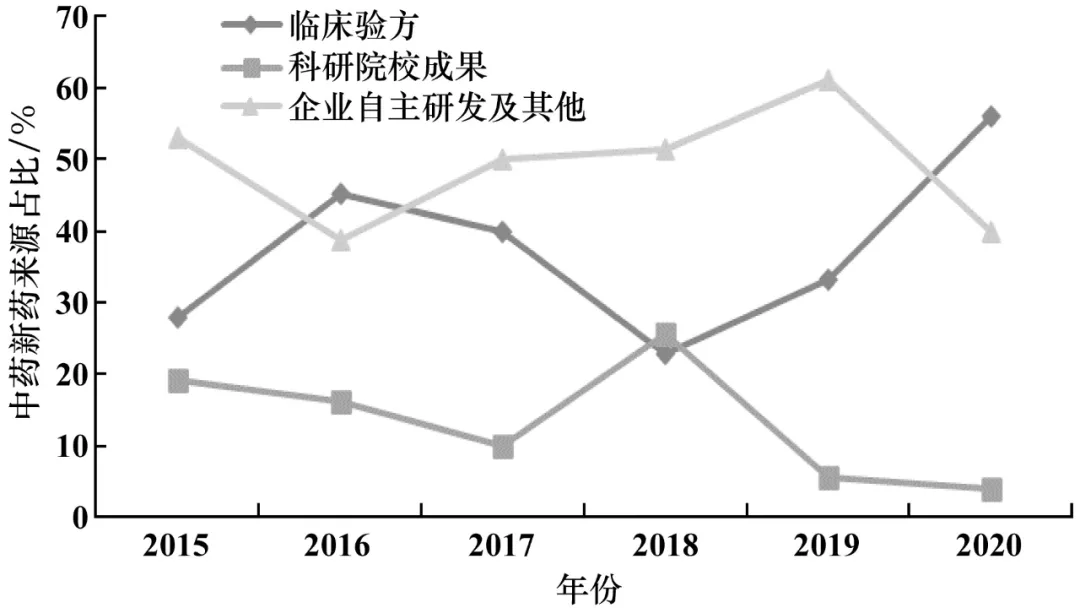
From 2015 to 2020, the dosage forms of new varieties of traditional Chinese medicine in China were mainly ordinary oral preparations, which showed that the preparation technology of ordinary oral dosage forms was more mature, its safety and effectiveness were more guaranteed, and its application was more extensive. ; On the other hand, to meet the medication habits of different populations, the use of traditional Chinese medicine is more convenient. The therapeutic fields of new varieties of traditional Chinese medicine are mainly concentrated in the respiratory system, cardio cerebrovascular system, digestive system, gynecology and endocrine, nutrition and metabolism. On the one hand, because these treatment fields are advantageous fields of traditional Chinese medicine and the market demand is strong, the market competitiveness of these new traditional Chinese medicine drugs is stronger after they are approved for listing, and the expected income of pharmaceutical enterprises is higher; On the other hand, except for gynecology, other fields belong to the field of common major diseases, which is also the key direction of national new drug creation support and encouragement. The research and development of new Chinese medicine in this field can obtain more scientific and technological support and financial support
5.1 increase investment in scientific and technological research and development
5.2 pay attention to the cultivation of R & D talents
5.3 strengthen post listing re evaluation
5.4 further strengthen cooperation between all parties
5.5 actively participate in system construction
Copyright statement: the article is from the Chinese Journal of new drugs 2021,30 (14), 1260-1265;