
pick To:Hawthorn is a traditional Chinese medicine, which has the effects of strengthening the stomach and digestion, promoting qi and blood stasis, removing turbidity and regulating fat. . Modern pharmacological research shows that Hawthorn can promote gastrointestinal motility and soften cardiovascular and cerebrovascular effects. In addition, it also has the functions of regulating immunity, antioxidation, antitumor, bacteriostasis, etc. Because Hawthorn has the characteristics of multi-source, multi-function and multi processed products, and the index component in Chinese pharmacopoeia is only citric acid, the chemical composition and pharmacological effects of Hawthorn are summarized, and according to the quality marker(Q-Marker)The concept of phytochemical composition is analyzed from the aspects of specificity, chemical composition and effective composition, and the measurability of chemical compositionQuercetin, Hyperoside, rutin, kaempferolVitexin-4′-RhamnosideVitexin, Vitexin rhamnosideAvailable asQ-MarkerTo provide a basis for the quality evaluation of hawthorn.
1 chemical composition
1.1 Flavonoids


1.2 Organic acids
Organic acids mainly include citric acid, malic acid, linolenic acid, palmitic acid and linoleic acid, 《Chinese Pharmacopoeia》2020The content of citric acid is regarded as an important quantitative index to evaluate the quality of Hawthorn[13-23]。The specific chemical composition is shown in table2The specific structure is shown in Fig2。


1.3 Triterpenoids
Triterpenoids are produced by6. The triterpenoids in Hawthorn include Ursane type, cycloatunane type, oleanane type, lanoline type and lupane type[24-29]。The specific chemical composition is shown in table3The specific structure is shown in Fig3。

1.4 Lignans
Lignans are a group of compounds composed of2Molecular or3The natural organic compounds, which are polymerized by molecular phenylpropyl groups in different forms, are mostly free, and a few are bound with sugars to synthesize glycosides and exist in the wood and resin of plants, so they are named. Most of the lignans in Hawthorn are found in the nucleus, and the rest are only a small amount in Hawthorn Leaves[30-31]。The specific chemical composition is shown in table4Shown in, The specific structure is shown in Fig4。

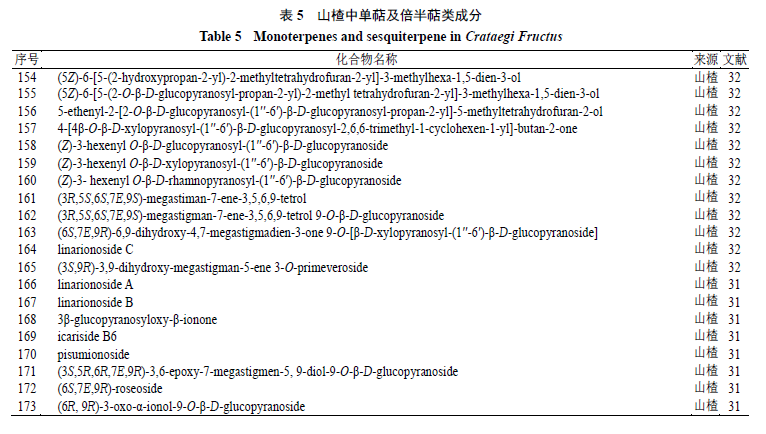
1.5 Monoterpene and sesquiterpene[32]
Monoterpenes and sesquiterpenes are derived from2~3Compounds composed of isoprene units are the main components of essential oils. The specific chemical composition is shown in table5The specific structure is shown in Fig5。

1.6 Volatile components
1.7 amino acid
2 pharmacological action
2.1 Digestive system impact
2.2 Anticoagulant effect
2.3 Cardiovascular and cerebrovascular effects
2.3.1 Effect of regulating blood lipid Hawthorn saponin can enhance the binding of low-density lipoprotein with the plasma membrane of the liver, thus achieving the effect of regulating blood lipids[43]Hawthorn flavonoids can reduce cholesterol in serum of hyperlipidemic rats(TC)And triglycerides(TG)Hawthorn flavone administration group also significantly increased the serum high-density lipoprotein cholesterol in rats(HDL-C)And lower serum low-density lipoprotein cholesterol in rats(LDL-C)Role of[44]Hawthorn and hawthornHawthorn flavone may enhance the low density lipoprotein receptor(LDLR)ASoccurrence[45]When the concentration of total phenolic acid extract from hawthorn seed reaches a certain level, it has good pancreatic lipase inhibitory activity in vitro and can show good lipid regulating activity in vitro[46]Hawthorn pectin pentose can reduce theHMG-COA, andACATThe enzyme activity increased simultaneouslyCYP7A1The expression of IL-6 significantly decreased the serum of high-fat miceTC、LDL-CLevels and liverTClevel[47]Hawthorn preparation has a potential relationship with intestinal flora function in regulating dyslipidemia[48]Hawthorn flavonoids can regulateFAS、HSL、TGH、SREBP-1cThe expression of gene transcription (especiallyHSL、SREBP-1cGenes), which together regulate animal lipid metabolism[49]Hawthorn flavonoids can inhibit the secretion of leptin from adipocytes, and inhibit the secretion of complete plasminogen activator inhibitor from adipocytes1(PAI-1), regulating the metabolic disorder of the body[50]The patients with hyperlipidemia were treated with Shanzha Jiangzhi Decoction86For example,30Days for1Course of treatment, CO administration2A course of treatment, the results were remarkable51Example, effective30Example, invalid5For example, the total effective rate reached94.1%[51]。
2.3.2 Anti atherosclerotic effect Atorvastatin calcium combined with Compound Hawthorn oral liquid in the treatment of carotid atherosclerotic plaque formation can significantly reduce the atherosclerotic plaque area, carotid intima-media thickness, improve blood lipid indicators, and reduce the serumTC、LDL, apolipoproteinBLevels, significantly increased high-density lipoprotein cholesterol, apolipoproteinAlevel[52]. The anti-inflammatory effect of the compatibility of Polygonum cuspidatum and hawthorn extract was significantly enhanced[53]Hawthorn can also inhibit vascular inflammation in high-fat diet mice[54]。
2.3.3 Hypotensive effect Hawthorn water extract can significantly reduce high salt induced hypertension, which may be due to the fact that malate and aspartate can provide sufficient precursors for the synthesis of nitric oxide and increase nitric oxide(NO)Concentration, decreaseH2O2And the concentration of malondialdehyde, which increases catalase activity in renal medulla[55]Hawthorn can inhibit norepinephrine(NA)Induced extracellularCa2+Vasoconstriction due to increased influx, To vascular smooth muscle cells(VSMCs)Acts as a calcium channel blocker[56]. according to the systematic review andMetaAnalyze and evaluate the effect of Hawthorn single preparation on blood pressure, If you insist on using12Zhou, hawthorn can significantly reduce blood pressure in patients with mild hypertension[57]。
2.3.4 Anti myocardial ischemia and reperfusion injury effect..the study of the mechanism of myocardial ischemia and reperfusion injury in rats with acute myocardial infarction and acute myocardial ischemia-reperfusion injury in rats with acute myocardial infarction and acute myocardial ischemia-reperfusion injury in rats with acute myocardial ischemia-reperfusion injury in rats with acute (LDH)At the same time, it can also reduce the intracellular malondialdehyde in cardiomyocytes(MDA)Content and increase the superoxide dismutase in the inner muscle of cells(SOD)And reduced glutathione(GSH)[58-60]Hawthorn flavonoids can inhibit the generation of free radicals in the myocardium, which has a certain protective effect on ischemic myocardium[61]Pathway analysis showed that hawthorn flavonoids might improve myocardial ischemia by regulating calcium overload, oxidative stress, tricarboxylic acid cycle, and renal function[62]。
2.3.5 Other cardioprotective effects Hawthorn organic acids onH2O2InducedH9C2The mechanism of action may be related to effectively improving the activity of intracellular antioxidant enzymes and inhibiting oxidative stress injury[63]Hawthorn acid can protect cardiomyocytes by antioxidation and inhibiting intracellular calcium overload[64]Hawthorn extract also has a protective effect on digoxin induced arrhythmia in rats[65]。When aconitine was poisoned, hawthorn seed flavonoid extract significantly delayed the occurrence of ventricular premature beats, increased the consumption of aconitine required to induce arrhythmia, and protected the heart[66](VEGF)AndNOContent related[67]。Hawthorn extract can also activateMReceptor reduces cardiomyocyte contractility[68]Hawthorn oligoanthocyanins can stimulate the differentiation of mouse cardiovascular stem cells[69]。
2.3.6 Cerebrovascular protection Kaempferol in Hawthorn plays an important role in combating cerebral ischemia-reperfusion injury, and the duration of preventive administration of kaempferol is positively correlated with the anti injury effect[70]The preventive and improving effects of hawthorn flavonoids on ischemic stroke are also related to improving brain energy metabolism disorder, antioxidant effect, reducing the occurrence of brain cell edema, and reducing the damage of brain nerve cells and glial cells[71]The preparation containing Hawthorn may be through increasing serumPSubstance(SP), decreased vasoactive intestinal peptide(VIP)[72]。
2.4 Liver protection
2.5 Hypoglycemic effect
2.6 Antibacterial action
2.7 antitumor activity
2.7.1 Promoting cancer apoptosis Polyphenols from Hawthorn inhibit human breast cancer by inducing cell cycle arrest and promoting apoptosisMCF-7cell[85]. triterpenoid rich fraction induces human breast cancer via mitochondrial death pathwayMDA-MB-231apoptosis[86]Hawthorn inhibits melanoma in mice byB16F10Tyrosinase activity of the cells thereby reducing melanogenesis[87]Hawthorn flavonoid extract on human liver cancerHep-G2Cell and human intestinal cancerCaco-2Cell growth was inhibited in a dose-dependent manner[88]Effects of Hawthorn polysaccharide extract on human colon cancerHCT116Cell proliferation was significantly inhibited[89]. extracted from Hawthorn1Aromatic compounds can induce human hepatoma cell linesHepG2andHep3BApoptosis of[90]Total flavonoids from hawthorn fruit can inhibit laryngeal cancer through calcium overload in vitroHep-2Cells play an inhibitory role[91]。
2.7.2 Inhibition of cancer cell proliferation Hawthorn acid and oleanolic acid can inhibit intracellular glycogen phosphorylase(GP)Activity, so that the glycogen metabolism of cells is blocked, and the energy source required for cell life activities is reduced, thereby inhibiting human lung adenocarcinomaA549Cell growth[92]。
2.7.3 Inhibition of nitrosamine synthesis Polyphenols in hawthorn have the ability to eliminate nitrite, that is, they can block the synthesis of nitrosamine and its carcinogenic effect, and have no effect on human lymphocytesDNAThe inhibition rate of damage reached71.5%, proving its anticancer effect[93]。
2.7.4 Induction of autophagy in nasopharyngeal carcinoma cells Maslinic Acid can inhibitPI3K-p110α、p-Aktandp-mTORProtein expression, leading to its downstream autophagy related proteinsLC3、Atg5And then induce the formation of autophagosomes and inhibit the proliferation of nasopharyngeal carcinoma cells, thus playing an anti nasopharyngeal carcinoma role[94]。
2.8 Impact on the immune system
2.9 Antioxidant effect
The content of total polyphenols and total flavonoids in methanol extract of Hawthorn were the highest, and the scavengingDPPHFree radicalsABTSThe free radical ability and iron reduction ability are the strongest[97]Hawthorn pectin can significantly improve the antioxidant enzyme system of mouse liverGlutathione(GSH)、Glutathione peroxidase(GSH-Px)(CAT)And Superoxidase(SOD)Activity of, onO2−•、DPPHand•OHthis3All kinds of free radicals showed significant scavenging effects[98]Hawthorn extract has strong antioxidant capacity, After Drosophila ingestion, related antioxidant genes in vivomRNAThe expression level was significantly up-regulated, and transcriptional translation got moreSOD、CATSo as to effectively reduce the excessive free radicals in Drosophila, reduce the oxidative damage caused by free radicals, delay the aging process of Drosophila, and extend the life of Drosophila[99]Hawthorn extract can activateNrf2/AREsignaling pathway, By inducingGSTIsozymesNQO1andHO-1Enzymes, protect immortalityTHLE-2Hepatocytes protected from oxidative damage[100]。
2.10 other
2.11 toxicity
Hawthorn has various effects and little toxicity. Mice take it orallyLD50Are greater than126 gCrude drug/kg[105]The experiment showed that the daily cumulative dose of Hawthorn substitute tea to rats was that of clinical adults (according to60 kgCalculated) the daily dose to be recommended108Times, the general condition, blood biochemical indexes, liver and kidney pathological tissues of rats showed no toxic reaction at this dose[106]。
3 HawthornQ-Markerforecast
3.1 Based on chemical composition specificityQ-MarkerPredictive analysis
The genus Crataegus of Rosaceae is mainly distributed in the north temperate zone, and it is distributed in Asia, Europe, central and North America and Northern South America. According to literature statistics, there are plants of this genus in the world1000. Flavonoids are the main metabolites and medicinal chemical components of hawthorn, which are derived from the shikimic acid pathway of plants. The production of specific flavonoids depends on many factors, including genetic, environmental conditions and the formation of compounds in plants[109]Vitexin-4′-Rhamnoside is an exclusive ingredient in Hawthorn[110]The possible synthetic pathway is that the dihydroflavonoid, naringenin, can be synthesized in flavone synthase(FNS)2,3Site dehydrogenation[111]Forming double bonds to generate the flavonoid apigenin, apigenin in8-CPosition glycosylation to form Vitexin, Vitexin in4′-CPosition glycosylation to form Vitexin-4′-. Because of the carboglycosidationOnly in the dihydroflavone stage, andC-Key always precedesO-Bond formation, the flavones that have been oxyglucosylated cannot undergo carboglucosylation, while the carboglucosylated flavones can undergo oxyglucosylation in the next biosynthesis[112]。In conclusion, Vitexin-4′-RhamnosideCan be used as hawthornQ-Marker, as shown in Fig6Shown in.

3.2 Based on chemical composition and effectivenessQ-MarkerPredictive analysis
Increasing effect benchmark on the basis of chemical benchmark, and gradually building the quality standard system of traditional Chinese medicine with effect benchmark as one of the core means and indicators, to supplement and improve the deficiencies of the current quality control mode mainly based on chemical drugs, may be an important development direction of quality control of traditional Chinese Medicine[113]。
3.2.1 Correlation between ingredients and traditional efficacy Hawthorn medicine was first published in the newly revised materia medica of the Tang Dynasty, which was called "red claw wood, red Hawthorn also". Compendiumofmateriamedica in the Ming Dynasty was first recorded in the name of hawthorn. 《Chinese Pharmacopoeia》2020The efficacy of Hawthorn included in the edition is to dissipate food and strengthen the stomach, promote qi and dissipate blood stasis, remove turbidity and reduce lipid. It is used for meat stagnation, epigastric fullness, diarrhea and abdominal pain, blood stasis and amenorrhea, postpartum blood stasis, heartache, chest pain, hernia pain, and hyperlipidemia. The anti food and anti stagnation effect of jiaoshanzha is enhanced. It is used for meat stagnation and diarrhea. ”Consistent. Hawthorn flavonoids can reduce blood viscosity and inhibit platelet aggregation, which is consistent with the traditional efficacy of "dispersing blood stasis". Hawthorn flavone is the main component of reducing blood lipid and anti atherosclerosis, which is consistent with the traditional efficacy of "reducing turbidity and lipid". Therefore, quercetin, Hyperoside, rutin, kaempferol and other components in organic acids and flavonoids can be used asQ-MarkerMain options.
3.2.2 Correlation between ingredients and traditional medicinal properties The nature, taste and meridian tropism of traditional Chinese medicine is a basic attribute, and it is also an important basis for clinical prescription. Hawthorn is mild in nature, sour and sweet in taste, and it can guide the spleen, stomach and liver meridian. According to the theory of traditional Chinese medicine, sour taste has astringent and astringent effects. Its chemical components are mostly organic acids. Sour taste enters the liver and belongs to the liver meridian. According to the ancient physicians, hawthorn belongs to spleen and stomach meridians according to its function of eliminating food accumulation and gastric distension, while modern research has found that Hawthorn sour components and some organic acids can help digestion, so its spleen, stomach meridians and liver meridians are related through these components. So organic acids can be used asQ-MarkerReference selection for.
3.3 Based on the measurability of chemical compositionQ-Markerforecast
3.4 Based on different compatibilityQ-Markerforecast
4 Conclusion and Prospect
Conflict of interest
References (omitted)
Come ; Jun, Xu Xu, Zhang Tiejun. Chemical constituents, pharmacological effects and quality marker (q-marker) prediction of hawthorn [J] . Chinese herbal medicine, 2021, 52 (9): 2801-2818