Pick To:Cassia obtusifolia is a traditional Chinese medicinal material with dual edible and medicinal values. It is mainly distributed in the south of the Yangtze River and mainly produced in Anhui, Guangxi, Sichuan and other places. In recent years, with the more and more extensive application of cassia seed in drugs and health care products, the research on its various types of chemical components and pharmacological effects has gradually deepened. Based on the review of the chemical constituents and pharmacological effects of Semen Cassiae, combined with the quality marker of traditional Chinese Medicine(quality marker,Q-Marker)Q-MarkerFor prediction analysis, emodin, rhein, chrysophanol, aloe emodin, emodin methyl ether, hesperidin, cassioside, cassiosideC, erythrofuscin Gentiobioside, cassia glycosideB2.
Cassia obtusifolia is a leguminous plantCassia obtusifolia L.Or Cassia obtusifoliaC. tora L.The dried and mature seeds of Cassia obtusifolia are known for their ability to brighten the eyes. They are also known as Cassia obtusifolia, cassia equinovarus, pseudomung bean, etc. Decisively Mingzi was first published in Shennong materia medica classic and listed as a top-grade medicine. It has been listed as one of the traditional Chinese medicine products with the same source of medicine and food by the Ministry of health[1]It has high medicinal value and is widely used in the field of medical care. Cassia seed is slightly cold and tastes sweet, bitter, and salty. It is good at entering the liver, kidney, and large intestine. It has the effects of moistening the intestines, defecating, regulating fat, and brightening the eyes. It is commonly used in clinical raw and processed products, and the processing method is generally clear frying. Scholars at home and abroad have conducted numerous studies on the chemical components of Semen Cassiae, and found that it contains a variety of chemical components and shows a variety of pharmacological activities, such as blood pressure, lipid regulation, liver protection and eyesight, bacteriostasis, antioxidation, etc., which are mainly used to treat eye diseases, constipation, hyperlipidemia, hypertension and diabetes. As the application scope of cassia seed is more and more extensive, the requirements for its quality are also higher and higher. 《Chinese Pharmacopoeia》[2]Only chrysophanol and hesperidin are the quality evaluation indicators of Semen Cassiae2Species, the index components are too single, and the quality control of cassia seed only considering anthraquinones is not comprehensive. The quality of traditional Chinese medicine is the safety guarantee of clinical use of traditional Chinese medicine. Its quality will directly affect the safety and effectiveness of clinical application, and will be affected by the origin, variety, processingThere are differences in the effective components and content of Cassia obtusifolia L[3],Therefore, it is necessary to find a more comprehensive and overall method to evaluate and control the quality of cassia seed. In recent years, academician liuchangxiao[4]Quality marker of traditional Chinese Medicine(quality marker,Q-Marker). In this paper, the chemical constituents and pharmacological effects of Semen Cassiae were summarizedQ-MarkerConcept, from the aspects of plant affinity, chemical composition specificity, effectiveness, measurability and the impact of processing on chemical compositionQ-Marker.
1 chemical composition
The chemical components of Cassia obtusifolia and cassia glabra are basically the same, but there are only differences in the content of individual components[5]Cassia seed contains a variety of chemical components, mainly including anthraquinones, naphthopyranones, glycosides, fatty acids, polysaccharides and other components, as well as non saponified substances, amino acids, inorganic elements and other compounds.
1.1 anthraquinones
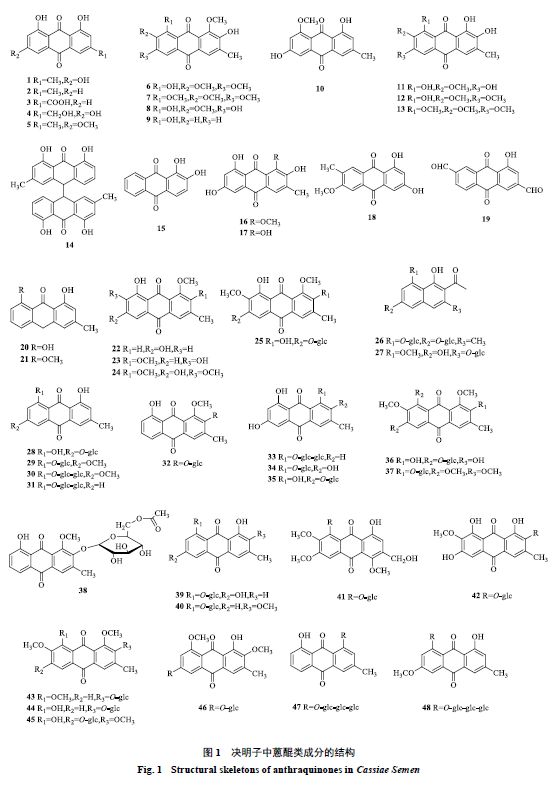
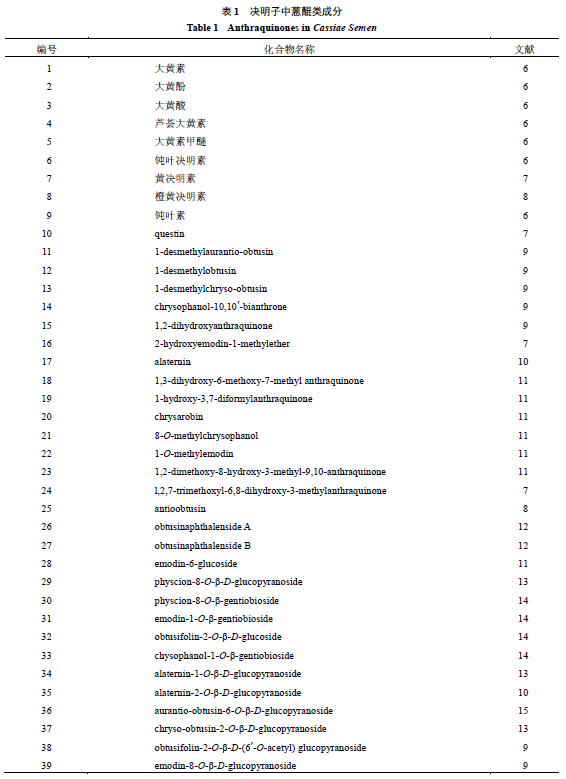
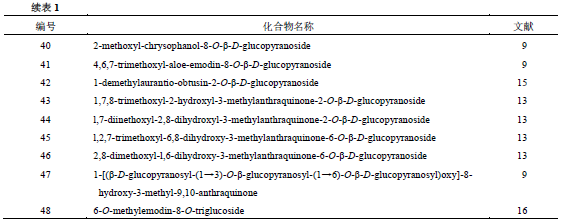
anthraceneQuinones are the main active components of cassia seed, which can be divided into free and bound types2The parent nucleus of anthraquinone is mainly Rhein type with relatively stable structure. The parent nucleus of anthraquinone is often substituted by hydroxyl, hydroxymethyl, methyl, methoxy, and carboxyl groups. At the same time, it can be combined with sugars in free form to form glycosides in plants. The number of sugars is generally in1~4The sugar types of Cassia anthraquinone are mainly glucose and gentian disaccharide. It has been isolated from Cassia obtusifolia40For more than anthraquinones, see Fig1, see table for compound names1。
1.2 Naphthopyranones and glycosides
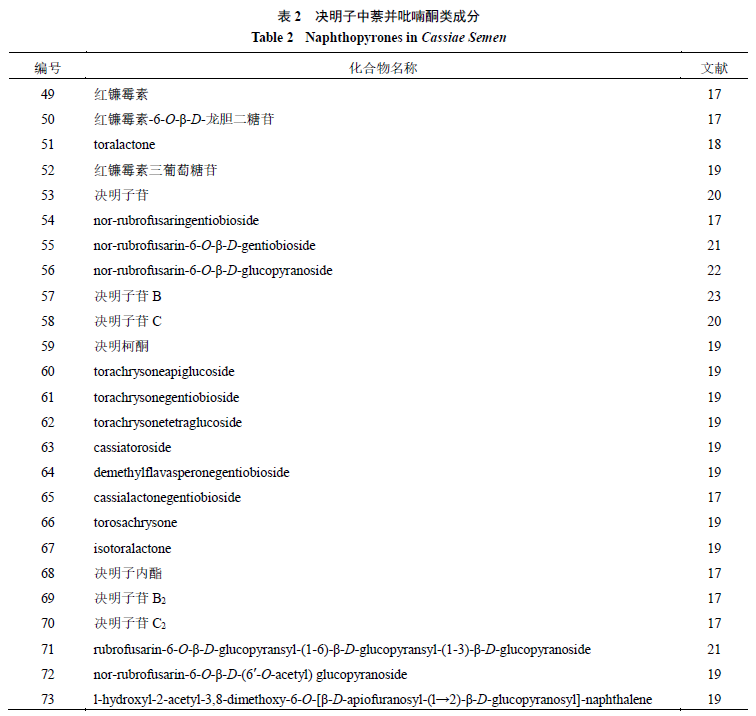
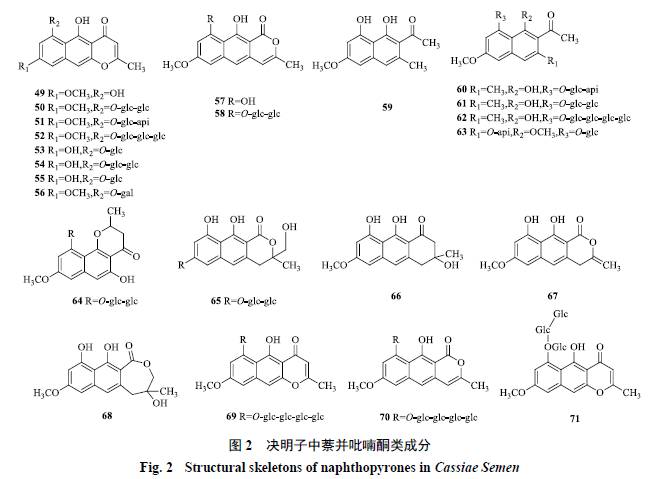
Naphthopyranones are a specific component of Cassia genus and another functional component of cassia seed. They are closely related to the pharmacological activity of cassia seed and mainly have hepatoprotective and anti hepatotoxic effects. Naphthopyranones are mostly in the form of glycosides. The sugar types are mainly glucopyranose and Gentiobiose, and the representative components are Cassia glycoside and cassia glycosideC, erythrofuscin Gentiobioside, etc. see table for compound names2The specific composition and structure are shown in Fig2。
1.3 Fatty Acids
Cassia seed is rich in fatty acids, which are composed of linoleic acid(Z)-9-Octadecenoic acid (oleic acid) and hexadecanoic acid (palmitic acid) are the main components, while other components mainly include linolenic acid[24]、9-Methyl hexadecenoate[25], octadecadienoic acid9,12-Octadecadienoic acid methyl ester[26]、9-Octadecenoic acid methyl ester[26], octadecanoic acid, eicosanoic acid, docosanoic acid, tetradecanoic acid[27], hexadecanoic acid methyl ester (palmitic acid), heptadecanoic acid methyl ester[26], methyl linoleate, methyl palmitate[25], methyl oleate, methyl octadecanoate (stearic acid), ethyl oleate, methyl eicosanoate (peanut acid), methyl eicosanoate[26], docosanoic acid methyl ester (sorbic acid), tetradecanoic acid methyl ester[26]The processed products of cassia seed also contain eicosenoic acid methyl ester[25]。
1.4 Polysaccharides
Cassia seed contains a large number of polysaccharide components, which is another active ingredient besides anthraquinones[28]At present, most of the galactomannans isolated by domestic and foreign scholars are galactomannans[29]For example, gelatin is mainly composed of mannose, glucose and galactose; Partially glucuronic xylan[6]And pectin polysaccharides, and the rest are hemicellulose, arabinoglucosan, multi branched glucuronic xylans, etc.
1.5 Other classes
In addition to the above main components, some researchers found that3Chromone carboside[16], respectivelyobtusichromoneside A、obtusichromone-side B、obtusichromoneside CThe unsaponifiable substances in cassia seed mainly include hexadecane to thirty-one alkane, stigmasterolβ-Sitosterol, cholesterol1,3-Dihydroxy-3-Methyl anthraquinone, caproic acid, malic acid and campesterol; Cassia seed8The amount of essential amino acids reached3.36%[30], mainly isoleucine, leucine, valine, methionine, phenylalanine, lysine, threonine and tryptophan, and many other nonessential amino acids, such as glutamate, aspartate, serine, cystineγ-Hydroxyarginine, etc[31]Inorganic elements mainly includeMo、Ni、Ca、K、P、Mg、Zn、Mn、Sr、Cr、V、Fe、Naetc.[32]。
2 pharmacological action
2.1 Hypotensive effect
Studies have shown that the water and alcohol extracts of cassia seed have obvious blood pressure lowering effects[33]. tanyingjie[34]Taking spontaneously hypertensive rats as a model, cassia water extract, captopril and distilled water were used to intervene. The results showed that Cassia water extract could significantly reduce systolic and diastolic blood pressure in rats2The effect of high-dose group was better than that of low-dose group. Later, yequanying et al[35]withN-Nitro-L-The hypertensive rats induced by arginine methyl ester were used as the model. The blood pressure of cassia seed extract group and hypertension model group were compared, and the serum glutamic oxaloacetic transaminase, urea, serum creatinine, nitric oxide and angiotensin converting enzyme in liver and kidney were detected at the same time(angiotensin converting enzyme,ACE)Activity and other indicators, the blood pressure of cassia seed water extract group was significantly reduced, and the angiotensin converting enzyme activity in liver and kidney was effectively reduced, and the liver and kidney function was improvedThe results showed that the antihypertensive mechanism of Cassia water extract included upregulation of endothelial nitric oxide synthase, antioxidation and inhibitionACEIn addition, the methanol extract of Cassia obtusifolia and the anthraquinone glycoside component orange Cassia glucoside have inhibitory effects onACEIt has potential hypotensive effect[36]It is proved by animal experiments[37]Anthraquinone glycosides, oligosaccharides and proteins in cassia seedThe antihypertensive effect of anthraquinone glycoside was higher than that of anthraquinone glycosideOligosaccharides > proteins. Another researcher extracted antihypertensive peptide from cassia seed thermoprotease hydrolysate for the first timeFHAPWK[38], proofFHAPWKCan be compared withACESeveral key residues of the active site interact, inhibitingACEActivity, playing an antihypertensive role.Lietc.[39]Through the study of the mechanism of action of hesperidin in Semen Cassiae to relax systemic arteries, it was first demonstrated that hesperidin relaxes isolated rat intestinal arteries, and is a potential vasodilator, which can relax systemic arteries through endothelial phosphatidylinositol3-Kinases(phosphatidylinositol- 3-kinase,PI3K)/alkaline phosphatase/Nitric oxide synthase/Nitric oxide signaling pathway relaxes systemic arteries, which depends on endothelial integrity and nitric oxide production, and may play a positive role in the treatment of hypertension.
2.2 Effect of regulating blood lipid
Cassia seed anthraquinones are effective parts for regulating blood lipids, mainly including emodin, chrysophanol, aloe emodin, emodin methyl ether, rhein, orange cassia, etc.The main components of cassia seed anthraquinones are emodin, chrysophanol, aloe emodin, emodin methyl ether, rhein, and orange cassia, etc.The main components of cassia seed anthraqui[40]. Xiong Ying[41]Conducted experimental research on the prevention and treatment of hyperlipidemia with anthraquinone glycosides, and monitored triacylglycerol(triglyceride,TG)、(total cholesterol,TC), high density lipoprotein cholesterol(high density lipoprotein cholesterol,HDL-C)And low-density lipoprotein cholesterol(low density lipoprotein cholesterol,LDL-C)The results showed that a certain dose of Cassia anthraquinone glycoside could reduce theTC、TG、LDL-C, riseHDL-CAt the same time, it is presumed that anthraquinones may achieve the effect of lipid regulation by reducing lipid absorption and increasing its excretion. Liuguohua et al[42]Anthraquinones lipid regulating components in cassia seed were studied in detail, and were isolated from cassia seed extract by chromatography3Compounds were identified as glucosides that may be hydroxyanthraquinone.Meietc.[43]To explore the therapeutic effect of cholesterol lowering probiotics and cassia seed anthraquinone on nonalcoholic fatty liver disease, the results showed that the combination of the two could significantly reduce blood lipids by increasing the cholesterol produced in the process of fat metabolism7α-Hydroxylase, low-density lipoprotein receptor, and peroxisome proliferator activated receptor(peroxisomeproliferator-activated receptor,PPAR)αProtein expression, while downregulating3-hydroxyl-3-Methylglutaryl coenzymeaReductasePPAR-γAnd regulate hepatic lipid metabolism. Cassia seed extract also has significant lipid-lowering activity. Sterol regulatory element binding proteinPathway activity to inhibit cholesterol biosynthesis and play the role of lipid regulation[44]. cassia seed95%Ethanol extract can promote fat metabolism and reduce lipid levels in plasma and liver by activating lipoprotein lipase and heparinized plasma lipolytic enzyme activities[45]In addition, cassia polysaccharide and protein can also play a certain role in regulating lipid[46]。
2.3 Antidiabetic and complication effects
Studies have shown that[47]The cassia seed extract can reduce blood glucose and pre treat diabetic complications. Cassia seed extract can significantly improve insulin resistance and enhance insulin sensitivity of skeletal muscle in diabetic rats. The mechanism may be related to serine/Threonine kinaseB1(Liver kinase B1,LKB1)-Adenylate activated protein kinase(AMP- activated proteinkinase,AMPK)-Glucose transporter isoforms4(glucose transporter 4,GLUT4)[48]. cassia seed50%Ethanol extract can promoteGLUT4Translocation improves glucose metabolism, therebyPlay a hypoglycemic role[49]Anthraquinones and naphthopyranones in the alcohol extract of Cassia obtusifolia may be the main components of Cassia obtusifolia to exert hypoglycemic effect[50]There are hundreds of diabetic complications, including the damage of large blood vessels and microvessels, and related diseases of heart, brain, kidney, peripheral nerves, eyes, feet, etc. kidney disease is one of the main complications of diabetes. Songyunmei[51]It was found that cassia seed anthraquinone glycosides had a protective effect on kidney injury induced by diabetes, and the mechanism may be through reducing kidney injury factors-1Content, inhibit the expression of renin and angiotensin in vivo, and then inhibit the process of kidney injury, playing a protective role. Other studies have proved that[50]Cassia seed extract can protect kidney by down regulating the expression of receptor for advanced glycation end products in kidney tissue.Leeetc.[52]In vitro bioassay revealed that in cassia seed3Naphthopyrrolidone glycosides (Cassia glycosidesrubrofusarin-6-O-β-D-gentiobioside、toralactone-9-O- 13-D-gentiobioside)It can inhibit the activity of advanced glycation end products and slow down the process of diabetic complications. alaternin 2Ingredients can be used asα-Glucosidase and protein tyrosine phosphatase1B(protein tyrosine phosphatase 1B,PTP1B)Inhibitors, slow down the rate of glucose absorption as well as hinderPTP1BEffect on insulin, with potential hypoglycemic activity[53]。
2.4 Hepatoprotective effect
It has long been reported that cassia seed can resist hepatotoxicity, such as Cassia glycoside and Fusarium oxysporum-6-O-β-D-Gentiobioside and erythrofuscin-6- O-β-D-Celery glycosyl-(1→6)-O-β-D-Glucoside can resist the toxic effects of carbon tetrachloride and galactosamine on mouse hepatocytes[54]The water-soluble components of cassia seed also have a positive effect on carbon tetrachloride induced acute liver injury in mice. Experiments have proved that cassia seed water-soluble components can inhibit alanine aminotransferase, aspartateThe content of transglycosidase and malondialdehyde increased, promoted the content of glutathione peroxidase increased, and protected hepatocytes[55]Studies have shown that the total anthraquinones of cassia seed can affect the proliferation and apoptosis of hepatocytes and promote the repair and regeneration of hepatocytes[9]. pujiawei et al[56]To explore the effect of total anthraquinones of cassia seed on lipopolysaccharide induced acute liver injury in rats, it was found that total anthraquinones of cassia seed through high mobility group proteinB1MediateTollLike receptor4, nuclear factorκB(nuclear factor-κB,NF-κB)Pathway, inhibit the activation of this pathway, reduce the inflammatory response, and thus play a protective role in the liver. In addition, cassia glycosidesCCan upregulate nuclear factor erythrocytes-2-Correlation factor2, quinone oxidoreductase1And heme oxygenase1Protection of the liver by the expression of[57]These experimental results show that cassia seed has bioactive components that protect the liver.
2.5 Effects on ocular diseases
Research shows that[58]. Ocular hypertension is a common complication in diabetic patients, shaohongzhan[59]Cassia water decoction was used to prevent postoperative ocular hypertension in patients with vitreoretinal surgery. The results showed that the number of patients with ocular hypertension in the Cassia group was significantly lower than that in the control group, and continued use of Cassia water decoction hadPatients with high intraocular pressure were treated, and the cure rate was88%It shows that cassia seed can reduce the incidence of high intraocular pressure in diabetic patients after vitreoretinal surgery, improve the cure rate, and protect the eyes. Zhang Xin et al[60]The intervention of cassia seed polysaccharide in glaucoma rats found that no matter the dose was high or low, it could restore the retinal structure, and the retinal cells were not damaged in the medium and high dose groups, confirming the eye protection effect of cassia seed polysaccharide, which may be related to the inhibition of inflammatory lesions of microglia. Cassia seed extract can reduce the generation of oxygen free radicals, increase the glutathione level in lens tissue, improve the peroxidation and oxidative stress state of mouse lens, and protect the lens[61]。
2.6 Antioxidant effect
. Liuyueli et al[62]Taking fatty liver rats as a model, the antioxidant capacity of cassia seed was investigated. Cassia seed extract in the medium and high dose groups could significantly reduce the levels of malondialdehyde and nitric oxide in rat liver tissue, and the high dose group significantly enhanced the activity of total superoxide dismutase, showing strong antioxidant capacity. Li Lei et al[63]The network pharmacology method was used to study the antioxidant components and the mechanism of action of Semen Cassiae11Antioxidant active ingredients, mainly anthraquinones and naphthopyranones,11Ingredients act on34It can play an antioxidant role by regulating reactive oxygen species metabolism, participating in cellular redox reaction, regulating cell proliferation and other ways. Aloe emodin has strong scavenging ability for oxygen free radicals, and mediates mitogen activated protein kinase, protein kinaseC、NF-κBAnd other signaling pathways, these pathways are related to cellular redox reactions, which may be Aloe VeraMechanism of emodin in antioxidation[64]. first reported by research[65]The protein hydrolysate of cassia seed has antioxidant activity, and it still maintains free radical scavenging activity and is non-toxic after simulated gastrointestinal digestion and heat treatment, so it can be used as an antioxidant. Guoxiaoqiang et al[66]The antioxidant activity of water-soluble polysaccharides from Semen Cassiae was studiedSugar has strong scavenging ability for hydroxyl radicals, and the mass concentration of polysaccharide system reaches0.022 mg/mLIt has obvious inhibitory effect on superoxide anion.
2.7 Regulation of intestinal function
Anthraquinones from cassia seed are the main active ingredients regulating intestinal function[67]And polysaccharides and cellulose have a certain effect of moistening the intestines and defecating. [68]The effects of Cassia obtusifolia extract on intestinal tract were studied in mice with dryness constipation. The results showed that Cassia obtusifolia n-butanol extract and petroleum ether extract had a certain cathartic effect, which could shorten the first stool time and increase excretion, and the Cassia obtusifolia n-butanol extract was mainly anthraquinone glycosides and naphthopyranone glycosides. Liu Xu et al[69]To investigate the effect of cassia seed on colonic motor function in constipated mice, it was found that cassia seed gavage treatment could inhibit colonic aquaporin3.
2.8 Antibacterial action
Cassia seed has certain antibacterial effect on bacteria and fungi. Xiongweidong et al[70]The natural antibacterial activity of cassia seed, Polygonum cuspidatum and other traditional Chinese medicines containing anthraquinones was studied by antibacterial test. It was found that cassia seed has strong antibacterial activity against Escherichia coli, aerogenic bacteria, Staphylococcus aureus, pneumococcus, penicillin, etc., among which anthraquinone component emodin has strong inhibitory effect on Staphylococcus aureus and pneumococcus[71]Chrysophanol and emodin methyl ether have certain immunomodulatory effects in addition to bacteriostatic effects[54]In addition, cassia seed water extract has inhibitory effect on some skin fungi, and its alcohol extract can inhibit Staphylococcus aureus, typhoid and paratyphoid bacilli, and diphtheria bacilli[72]In addition to its antibacterial effect on human pathogenic bacteria, cassia seed also has a certain inhibitory effect on plant pathogenic bacteria. The ethanol extract and chloroform extract of cassia seed have a good inhibitory effect on Sclerotinia sclerotiorum, Colletotrichum gloeosporioides, Curvularia, Staphylococcus aureus and Fusarium[73]。
2.9 Other roles
Cassia seed extract and its components have significant preventive and protective effects on nervous system diseases and affect human monoamine oxidase(human monoamine oxidase,hMAO)Activity, especially high selectivityInhibition ofhMAO-AActivity, which can prevent anxiety and depression[74];With experimental proof[75]Emodin and emodin methyl ether are dopamineD3RAgonists and vasopressinV1AAntagonists, which have a certain protective effect on the nervous system. In addition,Yuetc.[76]Anthraquinones from cassia seedobtusifolinandaurantio-obtusinIt can be used as a lead compound for the development of new thrombin inhibitors and is a strong thrombin inhibitor.Yuenetc.[77]It was found that Cassia compound may be related to5-After the binding of serotonin receptor, it activates the receptor to control appetite and plays an anti obesity role. Other studies have reported that emodin methyl ether is a potential drug component for the treatment of cervical cancer[78]。
3 Toxicity study
Cassia obtusifolia has a wide range of pharmacological activities, but more and more adverse reactions also appear at the same time. In recent years, the toxicity research of Cassia obtusifolia has been deepening, and relevant experiments have shown that[79]Cassia seed may have some subchronic toxicity, which mainly occurs in the digestive system, liver, kidney and reproductive system. The toxic components may be anthraquinones[80].Yangetc.[81]Its potential hepatotoxicity was further investigated by monitoring ratsTC、TG、LDL、HDLIt was found that the water extract of Cassia obtusifolia could make the lipid metabolism disorder in rats, and then cause certain damage to the liver. The potential hepatotoxic phytochemicals were emodin, rhein, hesperidin and other components.
4 Cassia obtusifoliaQ-MarkerPredictive analysis
The quality of traditional Chinese medicine is the basis for the clinical safety and effectiveness of traditional Chinese medicine, which was proposed by academician liuchangxiaoQ-MarkerThe new concept provides a new idea for the quality control of traditional Chinese medicine and the establishment of quality standards. traditional Chinese medicineQ-MarkerIt is a chemical substance that is inherent in traditional Chinese medicine and traditional Chinese medicine products (such as traditional Chinese medicine decoction pieces, traditional Chinese medicine decoction, traditional Chinese medicine extract, traditional Chinese medicine preparation) or formed during processing and preparation, and is closely related to the functional attributes of traditional Chinese medicine. It is used as a marker substance to reflect the safety and effectiveness of traditional Chinese medicine for quality control. Therefore, according to the literature analysis, MingziQ-MarkerThe prediction is conducive to the establishment of a scientific and comprehensive quality control method for cassia seed.
4.1 Cassia obtusifolia based on plant affinity and chemical composition specificityQ-MarkerPredictive analysis
Cassia seed comes from Cassia obtusifolia and cassia minor, which belong to the genus Cassia in the legume family. Cassia plants are found all over the world600More than species, mainly distributed in tropical, subtropical and temperate regions, cassia plants in China are10There are more than kinds of Chinese medicinal materials, including cassia seed, senna leaf, wild lentil, etc. The chemical constituents of Cassia are diverse, and the compounds monoanthraquinone and its glycosides have been isolated85Anthrenol and anthrone derivatives13Naphthopyranones26Flavonoids73Alkaloids16PCs. phenylpropanoids12Terpenoids11There are stilbene compounds, polysaccharides, fatty acids, amino acids, etc[82]Anthraquinones, flavonoids and naphthopyranones are the main secondary metabolites of cassia, among which anthraquinones and naphthopyranones are considered to be the main active substances of Cassia[83]。
. Yang Dongfang et al[84]right22In batches of Cassia obtusifolia from different origins and collection methods5Comparing the free anthraquinone components of Cassia obtusifolia from different sources, it was found that the chemical components and contents of Cassia obtusifolia from different degrees were different, which indicated that its chemical components were related to the ecological environment such as the origin and geographical location. Studies have shown that[85]The contents of total anthraquinones, bound anthraquinones, free anthraquinones, and anthraquinone aglycones of Cassia obtusifolia, cassia xiaocassia, raw Cassia obtusifolia, and fried Cassia obtusifolia were different. Therefore, the distribution of anthraquinones with different structures in various groups was analyzedThe situation can also reflect the kinship and evolutionary relationship between these populations. In addition, naphthopyranone compounds are a class of specific components in cassia, and most of them can be isolated from cassia seed, with high content, and are the effective active components of cassia seed. Based on the above analysis of the difference and specificity of chemical composition distribution of Cassia obtusifolia, anthraquinones and naphthopyranones can be used as Cassia obtusifoliaQ-MarkerImportant references for screening.
4.2 Cassia seed based on the evidence of chemical composition and effectivenessQ-MarkerPredictive analysis
4.2.1 Correlation between ingredients and traditional efficacy 《Chinese Pharmacopoeia》2020. Cassia obtusifolia belongs to heat clearing and purging gunpowder, which has a strong effect of clearing liver fire and purging heat. Modern pharmacological research shows that cassia seed anthraquinones are the main active ingredients to moisten the intestines and relieve constipation. Emodin, chrysophanol, emodin methyl ether, aloe emodin have regular diarrhea and moisten the intestines and relieve constipation[86]In addition, anthraquinone glycosides can enhance the intestinal excretion function and achieve catharsis effect, which is consistent with the traditional efficacy of cassia seed for moistening intestines and defecating. Cassia obtusifolia is a kind of heat clearing and eye clearing powder. Its heat clearing and eye clearing effects are mainly reflected in the pharmacological effects of hypotension, anti-inflammatory, antibacterial, liver protection and eye protection. Orange Cassia can reduceNO, prostaglandinE2The production of LPS, which reduces lipopolysaccharide inducedRAW264.7Nuclear factorκB, indicating that it has certain anti-inflammatory effects[87]Moreover, hesperidin can relax systemic arteries and dilate blood vessels, and has a certain therapeutic effect on dizziness caused by hypertension[39]Aloe emodin can reduce blood pressure at low dose[88]In addition, Cassia obtusifolia polysaccharide has antioxidant, liver protection and eye protection effects. Studies have shown that the polysaccharide composition has a restorative effect on retinal structure and reduces the degree of retinal damage. Q-MarkerIn addition, the activity of Cassia polysaccharide indicated that it could also be included inQ-MarkerThe main selection scope of.
4.2.2 Correlation between ingredients and traditional medicinal properties "Nature, taste and meridian tropism" is an important part of the theory of traditional Chinese medicine property. The property comes from the effective ingredients, biological activities and pharmacological effects contained in the drug itself. It is an important basis for guiding the clinical use of traditional Chinese medicine, and can be used to determineQ-MarkerOne of the indicators of. Cassia seed is slightly cold, sweet and bitter, and belongs to the liver and large intestine. According to the theory of traditional Chinese medicine properties, the material basis of "sweet taste" and "bitter taste" should have the taste characteristics and functional attributes of "sweet taste" and "bitter taste". The "sweet taste" can supplement and slow down energy and harmony. The chemical components of sweet taste drugs are mainly sugars, saponins, fats, vitamins, proteins, sterols and amino acids[89]The "bitter taste" can release energy and dryness, and its chemical components are mainly alkaloids, volatile oils, glycosides, quinones, flavonoids and bitter elements. Cassia seed is slightly cold, so it is a bitter cold medicine, and its chemical components are mainly alkaloids and glycosides[90]According to the above analysis, the "sweet" and "bitter" components of cassia seed are mainly glycosides and polysaccharides, which can be used as cassia seedQ-MarkerImportant references for selection.
4.2.3 Correlation between ingredients and modern pharmacodynamic uses Diabetes and hyperlipidemia are common to modern people2. Modern clinical research has proved that cassia seed has a positive effect on the prevention and treatment of these two diseases, and has a significant role in regulating blood lipids and anti diabetic complications. Cassia seed anthraquinones are the main components of regulating blood lipids. Anthraquinone glycosides can reduce cholesterol absorption and reduce the serum of hyperlipidemic ratsTC、TGandLDL-CLevel of action. Zhang Jiaxiong et al[91]Isolated from the n-butanol extract of cassia seed6Effective monomeric compounds, including obtusin, orange cassia, obtusin glycoside, obtusin glycoside, daidzein, andcassitoroside, it was found that hesperidin could enhance LDL receptor byLDLRGene transcription level to regulate blood lipids. There is evidence that emodin, hesperidinchryso-obtusin-2-O-β-D-glucosideWith inhibitionARActive effect, affecting the development of diabetic complications, cassia glycoside, cassia glycosideC, Fusarium erythromycin-6-O-β-D-Glucoside, ambrosin and emodin can inhibitAGEs, which hinders the occurrence of diabetic complications, including Fusarium oxysporum-6-O-β-D-Glucoside pairNF-κBActivation andfibronectinAnd transforming growth factorβ1It has a significant inhibitory effect on the expression of TGF - β 1 and can prevent and treat diabetic nephropathy[92]According to the analysis, emodin, orange cassia, anthraquinone glycosides and other anthraquinones as well as Cassia glycosides and cassia glycosidesCEquinaphthopyranones are the main material basis of cassia seed for regulating blood lipid and anti diabetes, which can be used as cassia seedQ-MarkerFilter objects for.
4.3 Cassia seed based on component measurabilityQ-MarkerPredictive analysis
Component measurability is a traditional Chinese MedicineQ-MarkerOne of the screening basis is the necessary condition for establishing quality evaluation standards. The commonly used qualitative and quantitative means is chromatographic analysis technology. According to the previous analysis, anthraquinones, naphthopyranones and cassia polysaccharide in cassia seed are the main pharmacodynamic material basis of cassia seed, so it is considered as cassia seedQ-MarkerThe main choice of. Luo Yi et al[17]adoptHPLC-IT-TOF MSThe chemical constituents of Semen Cassiae were identified by combined technology, and a total of17Ingredients, including7Naphthopyranones7Anthraquinones and3A method for the determination of Cassia glycosides in Cassia obtusifolia LC, cassia glycosideB2And erythrofuscin gentianDiglycosides of three naphthopyranone componentsHPLCContent determination method[93]。Weixiqin et al[94]A single test and multiple evaluation method for the content of anthraquinone aglycones and naphthopyranone aglycones in cassia seed was established6The results were accurate and reliable. Ji Lei et al[95]The fingerprint of Cassia obtusifolia was established by ultra performance liquid chromatography (UHPLC), and it was preliminarily confirmed that the content of10Compounds, including Cassia glycosidesB2, cassia glycosideC2, Fusarium erythromycin-6-O-β-Gentiobioside, cassia glycosideC, orange cassia, rhein, yellow cassia, emodin, chrysophanol, emodin methyl ether. Shenyulong et al[96]Establish simultaneous determination4AnthraquinonesHPLCThe method can be used for the quality evaluation of cassia seed. At present, the determination method of cassia seed polysaccharide has great limitations. The polysaccharide has many kinds of components and complex structure, and it is difficult to isolate, purify and identify the structure. There are still great difficulties in the qualitative and quantitative determination of polysaccharide[97]The determination of cassia seed polysaccharide is mostly based on the analysis of monosaccharide composition after polysaccharide hydrolysis, and the basic composition and characteristics of polysaccharide are understood through standard monosaccharide according to the molar ratio. Wan Qiang et al[98]Spectrophotometric andHPLCDerivatization method was used to determine the monosaccharide content after polysaccharide hydrolysis12Cassia seed polysaccharide from a batch of medicinal materialsHPLCFingerprint, the composition characteristics of the analyzed Cassia polysaccharide. Dengshilu et al[99].
The content of anthraquinones and naphthopyranones in cassia seed is high, and it can be easily determined by chromatography, which can be used as a screening methodQ-MarkerAt the same time, it is necessary to conduct in-depth research on its chemical composition to improve the specificity of the determination method. Cassia seed polysaccharide is closely related to its effectiveness, and cassia seed can be consideredQ-MarkerHowever, the specific and structural quantitative determination methods of cassia seed are relatively scarce and need further development and research.
4.4 Cassia seed based on the influence of processing on chemical compositionQ-MarkerPredictive analysis
Relevant studies have been reported[100-101]The fingerprints of raw and fried cassia seed were established by high performance liquid chromatography, and the differences between them were compared to investigate the influence of processing on the chemical composition of cassia seed. The analysis found that the chemical composition of cassia seed changed significantly before and after processing, the content of some glycosides decreased significantly, the content of some aglycones increased significantly, and some remained unchanged or decreased. Lairiming[102]The content of anthraquinones in raw cassia seed, stir fried processed products and microwave processed products were compared. The content of bound anthraquinones in raw products was higher than that in processed products, and the content of free anthraquinones in processed products was much higher than that in raw products, and the microwave method had a greater impact on the content of chemical components. Ge Dachun et al[103]HPLC was used to determine the content of6The content of four kinds of free anthraquinones was detected, and the processing method was clear frying method. Compared with the raw products, the content of hesperidin and rhein changed little, the content of chrysophanol and emodin methyl ether decreased, the content of anthraquinones and emodin in Cassia increased, while Yang Bing et al[104]establishHPLCMethods the contents of Semen Cassiae in different frying degrees were determined11The contents of three components, orange cassia, cassia, cassia, cassia, emodin, chrysophanol and emodin methyl ether showed little change7The components of anthraquinone aglycones showed an increasing trend, which was consistent with the previous experimental results. Therefore, it is presumed that the changes in the content of chemical components may be related to the processing method, time and temperature, and directly affect the content of chemical components; Cassia glycoside and cassia glycoside after fryingB2, cassia glycosideCAnd erythrofuscin-The content of four naphthopyranoside glycosides of Gentiobioside decreased significantly, which may be due to the decomposition of glycosides by heating. Processing will affect the content change of the effective components of cassia seed, but the original effective components still exist, so anthraquinone components emodin, chrysophanol, emodin methyl ether, orange cassia and naphthopyranoside components cassia seed glycoside and cassia seed glycoside can be selectedB2, cassia glycosideCAnd erythrofuscin-Gentiobioside is cassia seedQ-MarkerThe main object of.
5 epilogue
Cassia obtusifolia is a typical heat clearing and purging powder, which has a long history of application, rich resources, and the characteristics of drug food homology make it have broad development prospects. Cassia seed contains anthraquinones, naphthopyranones, fatty acids, polysaccharides and other chemical components, showing a wide range of physiological activities, but most of them focus on the effects of blood pressure, lipid regulation, antioxidation, liver protection and so on. It is necessary to strengthen the research on the chemical components of cassia seed, develop new pharmacological effects, and gradually extend to clinical research, expand the scope of application of cassia seed. In addition, cassia seed has certain toxicity when taken for a long time, which limits the application of cassia seed. We must increase its toxicological research and increase the safety of clinical medication. The quality of cassia seed is affected by many factors, such as origin, variety, processing and so on, which makes its chemical composition and efficacy different. For example, affected by processing, raw cassia seed is good at clearing liver heat and moistening intestines, while fried cassia seed is good at calming liver and nourishing kidney. .
On the basis of summarizing and analyzing the chemical constituents and pharmacological effects of cassia seedQ-MarkerGuided by the new concept, from the aspects of plant affinity, chemical composition specificity, chemical composition effectiveness, composition measurability and processing influence5Against Mingzi in all aspectsQ-MarkerThe prediction and screening of anthraquinones such as emodin, rhein, chrysophanol, aloe emodin, emodin methyl ether, hesperidin, and naphthopyranones such as Cassia glycoside and cassia glycoside were preliminarily analyzed and demonstratedC, erythrofuscin Gentiobioside, cassia glycosideB2Is the main filter object. The quality of traditional Chinese medicine is closely related to the effectiveness and safety of traditional Chinese medicine. Excellent quality is an important standard for clinical application,Q-MarkerTheory is of great significance to establish more perfect quality standards. Meanwhile, based on cassia seedQ-MarkerThe quality of Cassia obtusifolia was further clarified by combining the prediction analysis of Cassia obtusifolia with modern biological technologyQ-MarkerIs an important research direction.
References (omitted)
Come Source: dongyujie, jiangyuanqi, Liu Yi, Chen Jinpeng, Gai Xiaohong, Tian Chengwang, Chen Changqing. Chemical constituents, pharmacological effects and quality marker prediction analysis of Cassia obtusifolia [J]
